
Website speed plays a crucial role in SEO because search engines like Google prioritize fast-loading sites in their rankings.
A slow website increases bounce rates, reduces user satisfaction, and limits your chances of appearing on the first page. In 2026, performance metrics such as Core Web Vitals continue to influence visibility and organic traffic growth.
Faster websites not only rank higher but also build trust and encourage users to stay longer. Improved speed directly impacts conversions, helping businesses turn visitors into loyal customers.
Why Website Speed Matters for SEO
In today’s digital world, speed is no longer a luxury — it is an expectation.
When users click on a website, they expect it to load instantly. If it doesn’t, they leave. This behavior directly impacts your search engine rankings, traffic growth, and revenue potential.
If you’re wondering why website speed matters for SEO, the answer lies in how search engines measure user experience and reward fast, responsive websites.
In 2026, website speed is one of the most critical technical SEO factors influencing organic visibility and conversion rates.
This guide explains how website speed affects rankings, engagement, and business growth — and what you can do to improve it.
What Is Website Speed?
Website speed refers to how quickly a web page loads and becomes fully interactive for users.
It includes:
- Time to first byte (TTFB)
- First contentful paint (FCP)
- Largest contentful paint (LCP)
- Total blocking time (TBT)
- Cumulative layout shift (CLS)
Search engines evaluate these performance indicators to determine user experience quality.Faster websites create smoother experiences.
Slower websites increase frustration and abandonment.
Website Speed as a Ranking Factor
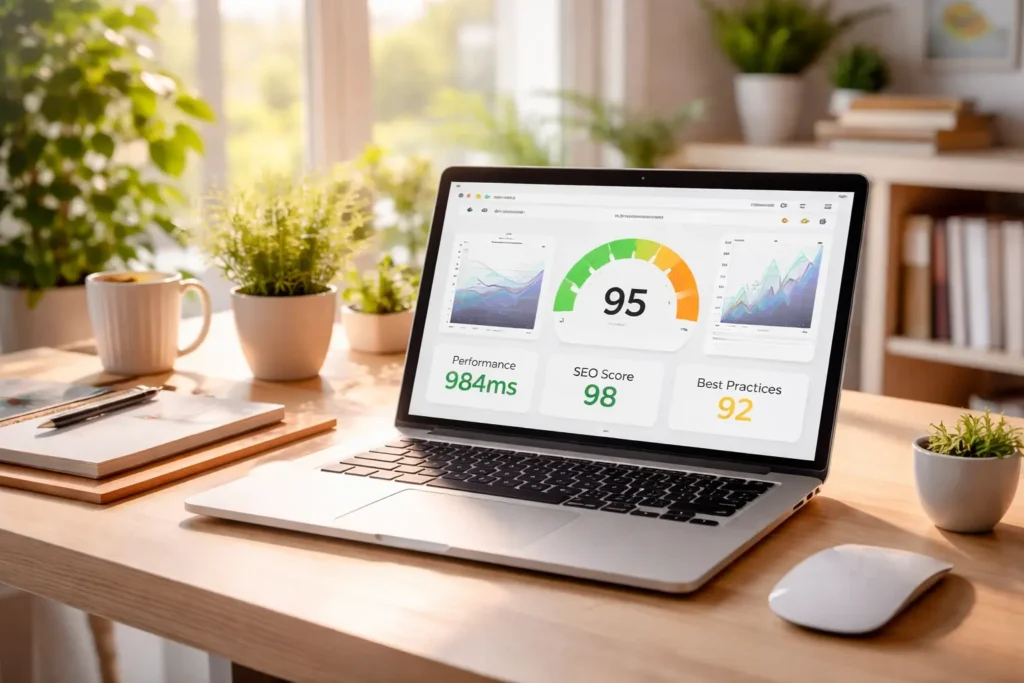
Search engines officially consider page speed a ranking factor.
Why?
Because search engines prioritize user satisfaction.
If users consistently leave slow websites quickly, search engines interpret this as a poor experience.
Fast websites:
- Improve crawl efficiency
- Reduce bounce rates
- Increase engagement
- Support higher rankings
Speed directly influences search visibility.
User Experience and Engagement Signals

Website speed significantly impacts user behavior.
Research consistently shows:
- Users abandon pages that take longer than 3 seconds to load.
- Every additional second of delay reduces conversion rates.
- Slow pages increase bounce rate dramatically.
When users leave quickly, engagement metrics decline.
Search engines track:
- Bounce rate
- Time on page
- Pages per session
Poor engagement signals lower content value in algorithm evaluations.
Speed supports stronger engagement metrics.
Mobile-First Indexing and Speed

Search engines now prioritize mobile-first indexing.
This means:
Your mobile website performance directly influences rankings.
Mobile users often rely on slower networks.
If your mobile site loads slowly:
- Rankings suffer
- User experience declines
- Conversions decrease
Mobile speed optimization is essential in 2026.
Responsive, lightweight design improves SEO performance.
Website Speed and Crawl Efficiency

Search engines use bots to crawl websites.
If your website is slow:
- Crawlers process fewer pages
- Indexing becomes inefficient
- New content may be delayed
Faster websites allow search engines to crawl more pages within the same time frame.
Improved crawl efficiency strengthens overall SEO health.
Impact on Conversion Rates

Website speed influences not just rankings — but revenue.
Slow websites:
- Reduce checkout completion
- Decrease form submissions
- Lower engagement
Fast websites:
- Increase trust
- Improve usability
- Boost conversion rates
Even a one-second improvement in load time can significantly increase sales.
SEO and conversions are interconnected.
Core Web Vitals and SEO
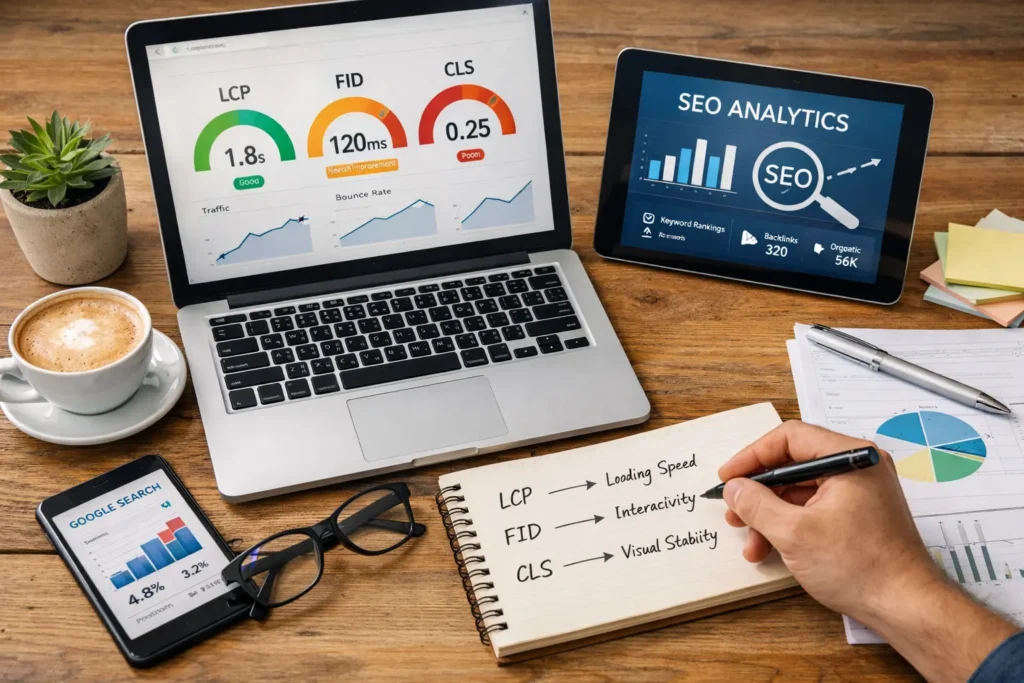
Core Web Vitals are performance metrics used to evaluate page experience.
Key metrics include:
- Largest Contentful Paint (LCP)
- First Input Delay (FID)
- Cumulative Layout Shift (CLS)
These metrics measure:
- Loading performance
- Interactivity
- Visual stability
Optimizing Core Web Vitals strengthens ranking potential.
Technical performance impacts organic visibility.
How Slow Speed Harms SEO

A slow website can cause:
- High bounce rate
- Reduced time on page
- Lower crawl frequency
- Declining search rankings
- Negative brand perception
In competitive industries, even small speed disadvantages can reduce visibility.
Performance is a competitive differentiator.
Common Causes of Slow Website Speed

Understanding the causes helps fix the problem.
Common issues include:
- Large uncompressed images
- Excessive plugins
- Poor hosting quality
- Heavy JavaScript files
- Lack of caching
- Unoptimized code
Identifying bottlenecks improves load time efficiency.
How to Improve Website Speed for SEO

Improving speed requires technical optimization.
1. Optimize Images
Compress large images without sacrificing quality.
Use modern formats like:
- WebP
- AVIF
Smaller file sizes reduce load time.
2. Choose Reliable Hosting
Low-quality hosting slows performance.
Invest in:
- Fast servers
- Solid uptime
- Scalable infrastructure
Hosting quality directly affects page speed.
3. Enable Caching
Caching stores website data temporarily for faster loading.
Browser caching and server caching reduce repeat load time.
Caching improves user experience.
4. Minimize Code
Reduce:
- Unnecessary CSS
- Excessive JavaScript
- Unused scripts
Cleaner code loads faster.
5. Use Content Delivery Networks (CDNs)
CDNs distribute content across global servers.
This reduces load time for users in different geographic locations.
Global performance improves SEO reach.
6. Optimize Mobile Experience
Mobile optimization includes:
- Responsive design
- Lightweight elements
- Minimal pop-ups
Mobile-first performance supports ranking growth.
Website Speed and Competitive Advantage
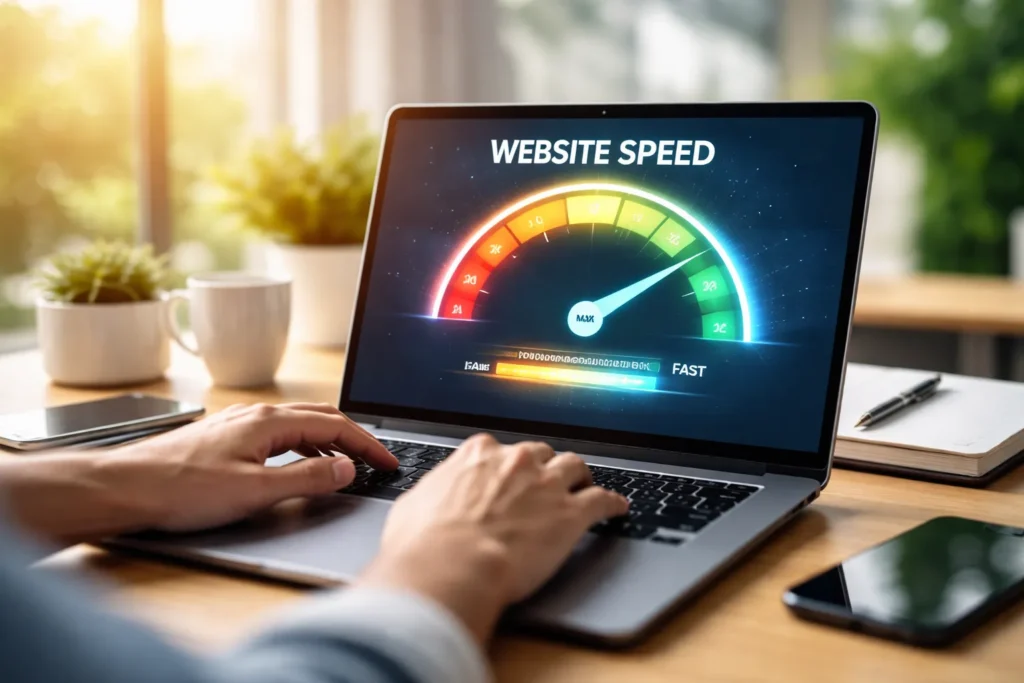
In competitive markets, small advantages matter.
If two websites have similar content quality, the faster site often ranks higher.
Speed enhances:
- User retention
- Engagement
- Brand perception
Technical optimization supports marketing success.
Speed vs Content: Which Matters More?
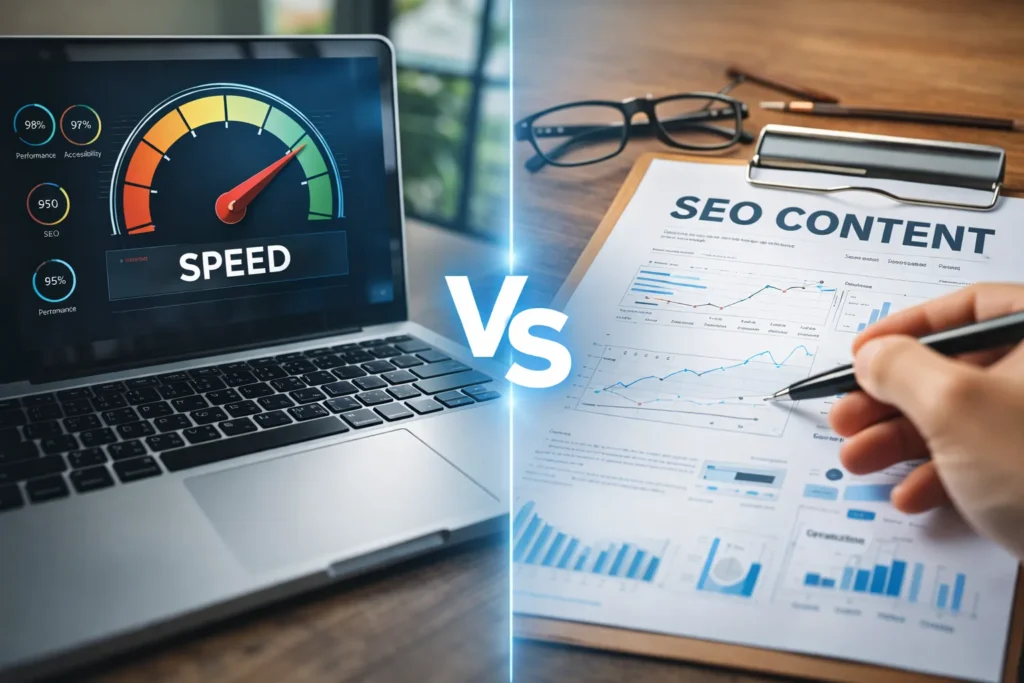
Both matter.
High-quality content drives relevance.
Fast performance supports accessibility.
A fast website with poor content will not rank long-term.
A slow website with strong content may struggle to compete.
The best SEO strategy combines:
- Valuable content
- Technical optimization
- Strong user experience
Balance creates sustainable growth.
Measuring Website Speed
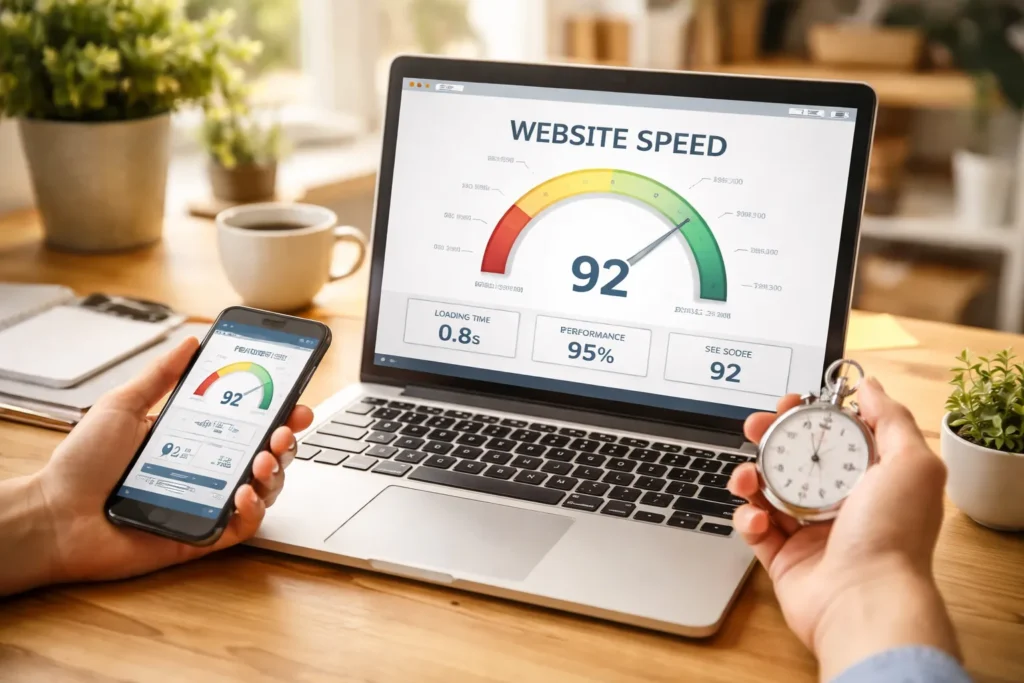
Use performance tools to evaluate:
- Page load time
- Mobile performance
- Core Web Vitals
- Page speed insights
Regular audits identify improvement opportunities.
Continuous optimization prevents ranking decline.
Long-Term SEO Benefits of Fast Websites
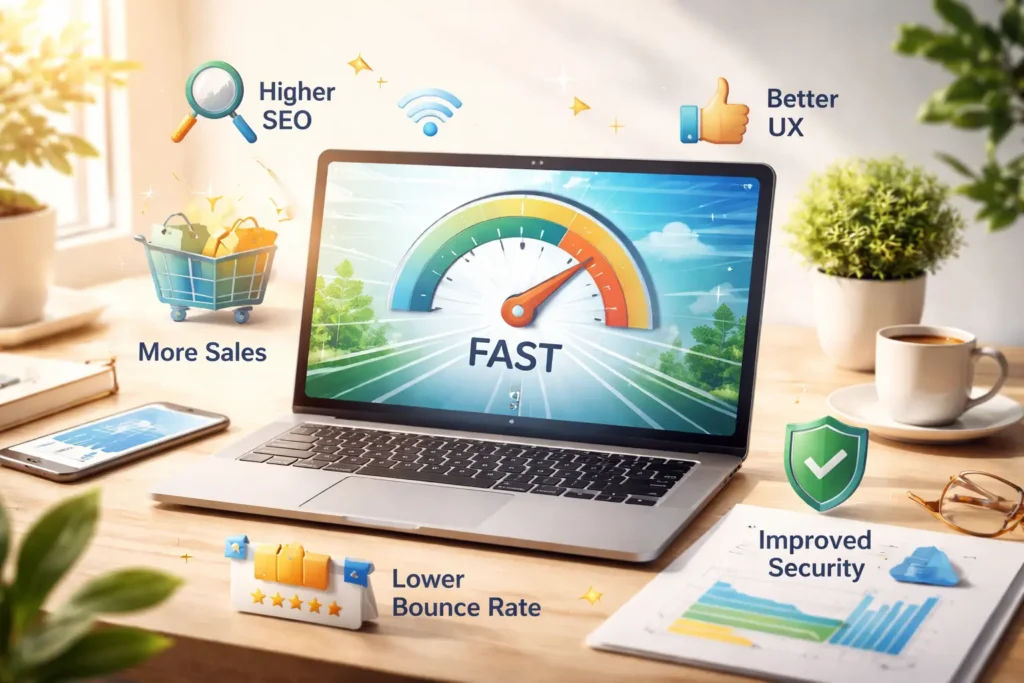
Fast websites experience:
- Lower bounce rates
- Higher session duration
- Better crawl coverage
- Stronger ranking stability
- Improved conversion rates
Speed contributes to overall domain authority.
Long-term performance depends on technical excellence.
Frequently Asked Questions
Is website speed really a ranking factor?
Yes. Search engines prioritize fast-loading websites as part of user experience evaluation.
How fast should a website load?
Ideally within 2–3 seconds for optimal user engagement.
Does speed affect mobile rankings more?
Yes. Mobile performance is crucial due to mobile-first indexing.
Can small businesses improve speed easily?
Yes. Image optimization, better hosting, and caching significantly improve performance.
Final Thoughts
Understanding why website speed matters for SEO is essential for digital success in 2026.
Website speed affects:
- Search rankings
- User experience
- Engagement metrics
- Conversion rates
- Crawl efficiency
Fast websites win attention.
Slow websites lose opportunities.
SEO is no longer just about keywords and backlinks.
Technical performance is a core pillar of ranking success.
Optimize speed. Improve experience. Strengthen visibility. Drive growth.