
High-quality content is the cornerstone of effective SEO in 2026. Search engines increasingly prioritize content that provides real value, answers user intent, and engages readers. Well-researched, original content not only improves rankings but also builds trust and authority in your niche.
Incorporating relevant keywords naturally, along with clear structure and multimedia elements, enhances both user experience and search visibility. Regularly updating content ensures it remains current and competitive.
Additionally, content that encourages shares and backlinks signals credibility to search engines. Ultimately, focusing on quality over quantity drives sustainable traffic growth and long-term SEO success.
Why Quality Content Matters for Rankings
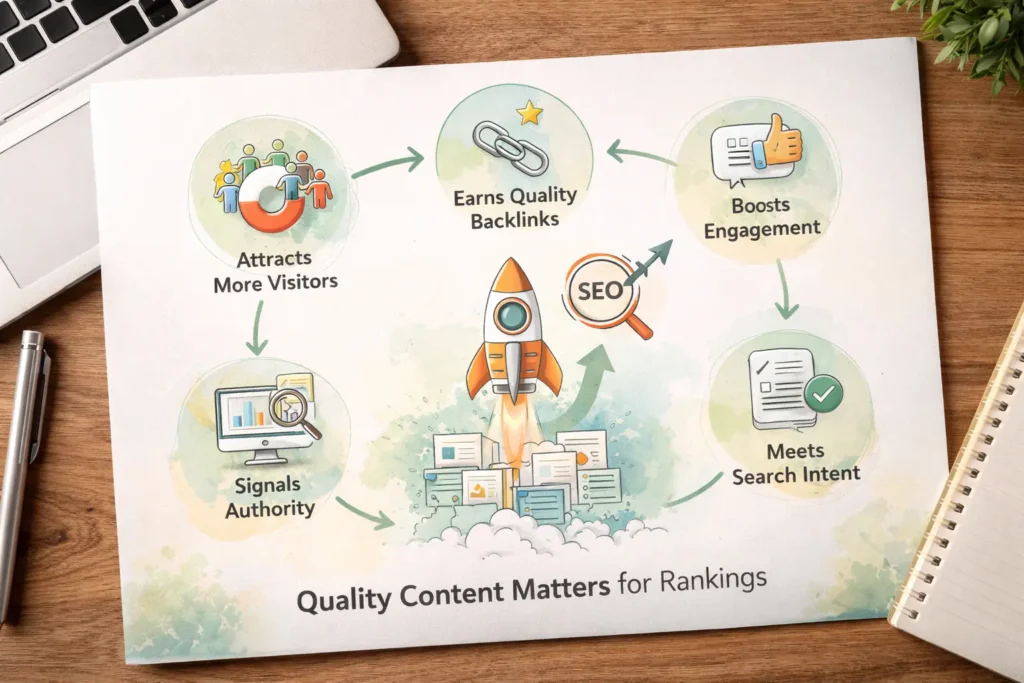
Search optimization strategies have evolved significantly in modern times. While keywords and backlinks still play important roles, one factor consistently stands above the rest:
Content quality.
If you are wondering why quality content matters for rankings, the answer lies in how modern search engines evaluate and prioritize information.
In 2026, ranking high on search engines requires more than targeting keywords. It requires delivering meaningful, structured, and authoritative content that truly satisfies user intent.
This guide explains how quality content influences search rankings, user engagement, trust, and long-term digital growth.
What Is Quality Content in SEO?

Quality content is content that:
Fully answers user queries
Provides accurate and trustworthy information
Is well-structured and easy to read
Demonstrates expertise and authority
Offers real value beyond surface-level details
It is not about word count alone.
It is about relevance, clarity, depth, and usefulness.
Search engines strive to show users the best and most suitable answers. High-quality content aligns directly with that goal.
How Search Engines Evaluate Content Quality

Search engines use advanced algorithms to evaluate content based on multiple signals.
Key factors include:
Relevance to search intent
Topical depth
User engagement metrics
Page experience
Authority signals
Structured formatting
Content that provides comprehensive, clear, and helpful information is more likely to rank higher.
Quality supports both user satisfaction and algorithmic evaluation.
Search Intent and Content Relevance

One of the main reasons quality content matters for rankings is search intent alignment.
Search intent explains why a user is searching and what they hope to achieve.
There are four primary types:
Informational
Navigational
Transactional
Commercial investigation
Quality content matches intent precisely.
For example:
If someone searches “how to improve SEO rankings,” they expect detailed guidance — not a promotional sales pitch.
When content aligns with intent, engagement improves, which positively influences rankings.
User Engagement Signals

Search engines analyze how users interact with content.
Engagement signals include:
Time spent on page
Bounce rate
Click-through rate (CTR)
Return visits
Informative content improves user retention and leads to deeper website interaction.
Low-quality content often results in quick exits.
Engagement metrics indirectly signal value to search engines.
Topical Authority and Content Depth

Publishing shallow articles with minimal information rarely ranks well in competitive niches.
Search engines reward topical authority.
Topical authority means covering a subject comprehensively through multiple related articles and structured internal linking.
For example:
A website publishing in-depth guides on SEO, content marketing, and keyword research builds stronger authority than one publishing isolated short posts.
Quality content contributes to domain credibility.
E-E-A-T and Content Trustworthiness

Modern search algorithms evaluate:
Experience
Expertise
Authoritativeness
Trustworthiness
Quality content demonstrates expertise through:
Accurate data
Practical insights
Clear explanations
Structured organization
Trustworthy content increases both user confidence and ranking potential.
Authority influences long-term search visibility.
Backlinks and Content Quality

Backlinks remain an important ranking factor.
However, backlinks are easier to earn when content is valuable.
High-quality content:
Gets referenced by other websites
Is shared on social platforms
Attracts organic mentions
Low-quality content rarely earns natural backlinks.
Quality amplifies link-building potential.
Content Structure and Readability

Search engines prioritize content that is:
Well-organized
Easy to scan
Structured with headings
Clear and concise
Readable content improves user experience.
Using:
Clear headings
Bullet points
Short paragraphs
Logical flow
Enhances both engagement and ranking performance.
Structure improves crawlability and comprehension.
The Impact on Conversion Rates

Quality content not only improves rankings but also increases conversions.
When content:
Solves problems
Builds trust
Demonstrates expertise
Users are more likely to take action.
Better rankings drive traffic.
Better content converts traffic.
Ranking and revenue are interconnected.
Why Thin Content Fails in 2026
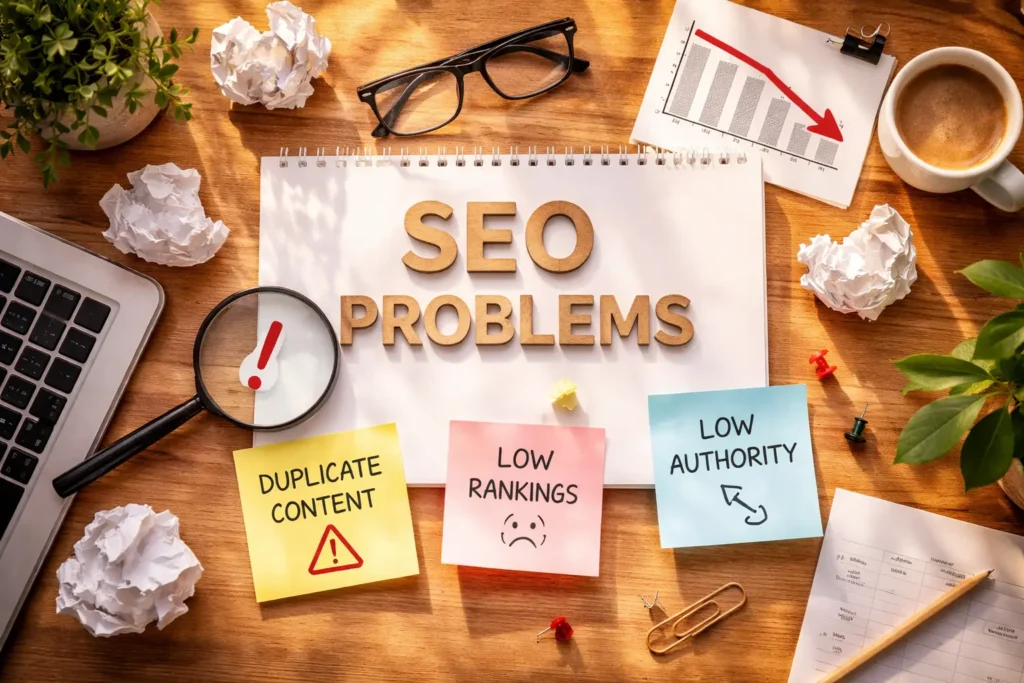
Thin content includes:
Short, surface-level articles
Keyword-stuffed posts
Duplicate content
AI-generated low-value text
Search engines increasingly filter low-value pages.
Publishing thin content may:
Reduce domain authority
Lower trust signals
Decrease overall ranking performance
Quality over quantity remains essential.
Content Freshness and Updates

Quality content is not static.
Regular updates improve:
Accuracy
Relevance
Ranking stability
Refreshing outdated content maintains competitiveness.
Search engines favor up-to-date information in many industries.
Content maintenance supports long-term SEO health.
Long-Term Traffic Benefits
High-quality content delivers compounding results.
For example:
Month 1: Publish 4 optimized articles
Month 6: 24 articles generating traffic
Month 12: 48 articles building authority
Each piece strengthens overall domain visibility.
Quality content builds digital assets that generate consistent traffic without per-click cost.
Competitive Advantage Through Content

In competitive industries, quality differentiates brands.
Many businesses produce content.
Fewer produce exceptional content.
Exceptional content:
Provides deeper insights
Includes practical frameworks
Answers related questions
Anticipates user needs
Higher value content stands out in search results.
Authority outperforms volume.
Common Content Mistakes That Hurt Rankings

Avoid these errors:
Over-Optimizing for Keywords
Keyword stuffing reduces readability.
Ignoring User Experience
Poor formatting lowers engagement.
Publishing Without Strategy
Random topics dilute authority.
Skipping Internal Linking
Disconnected articles reduce SEO power.
Avoiding these mistakes strengthens ranking potential.
How to Create Quality Content That Ranks

Step 1: Conduct thorough keyword research
Step 2: Understand user intent
Step 3: Outline structured sections
Step 4: Provide in-depth explanations
Step 5: Add supporting data or examples
Step 6: Optimize headings and metadata
Step 7: Update content regularly
Strategic execution ensures high-ranking potential.
Quality Content vs Quantity Debate

Publishing frequently can help, but only when quality remains high.
One comprehensive 1,500-word guide can outperform five shallow 300-word posts.
Search engines value usefulness, not volume.
Consistency plus quality drives sustainable growth.
Frequently Asked Questions
Does longer content rank better?
Longer content often performs well when it provides depth and relevance, but length alone does not guarantee rankings.
How does content affect SEO?
Content influences rankings through relevance, engagement, authority, and backlink potential.
Can poor content hurt rankings?
Yes. Thin or low-quality content can reduce trust and overall domain authority.
How often should content be updated?
Review and update important pages at least annually, or more frequently in fast-changing industries.
Final Thoughts
Understanding why quality content matters for rankings is fundamental to modern SEO success.
Quality content:
- Aligns with user intent
- Improves engagement
- Builds authority
- Attracts backlinks
- Strengthens trust
- Increases conversions
In 2026, search engines prioritize value-driven, structured, and authoritative content.
Ranking is no longer about shortcuts.
It is about delivering genuine value consistently.
Invest in quality. Optimize strategically. Build authority.