
Search is evolving. People no longer just type keywords—they speak their queries through smartphones, smart speakers, and AI assistants. This shift has transformed how search engines interpret intent and how businesses structure content for discovery.
Voice search optimization isn’t just a passing trend. It’s a strategic evolution in SEO that businesses must adopt to stay competitive in 2026.
What Is Voice Search Optimization?

Voice search optimization (VSO) is the process of designing your website and content to align with spoken queries rather than typed keywords. It ensures your business can be discovered and understood by voice-enabled devices and AI-driven assistants.
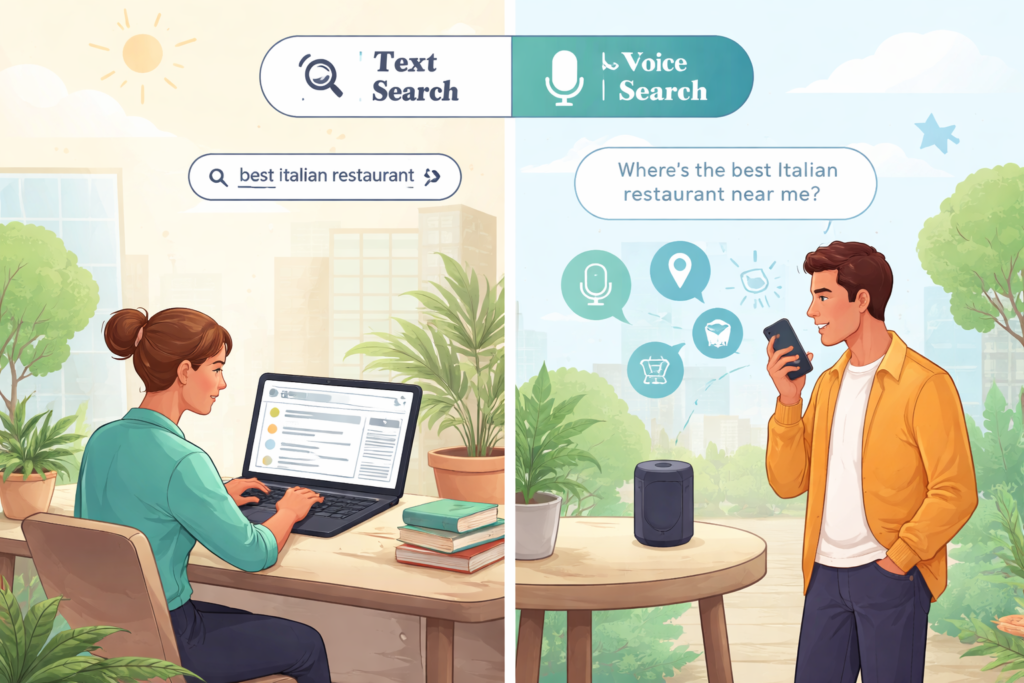
Unlike typed searches like:
“best digital marketing agency”
Voice searches are conversational, such as:
“What is the best digital marketing agency for small businesses?”
VSO focuses on matching content to natural speech patterns, intent, and clarity.
Why Voice Search Matters in 2026

The rise of voice search is driven by:
Widespread smartphone use
Smart speaker adoption
AI assistants in cars and devices
Faster mobile internet
Convenience of hands-free searching
People tend to use voice search while:
Driving
Cooking
Multitasking
Looking for quick answers
Voice queries are often longer, more precise, and intent-focused, emphasizing local relevance and immediate solutions.
How Voice Search Differs from Traditional SEO
Traditional SEO | Voice Search SEO
Short keywords | Conversational queries
Focus on ranking positions | Focus on direct answers
Desktop-centric | Mobile-first experience
Click-through traffic | Featured snippets & answer boxes
Voice SEO is less about keyword repetition and more about delivering clear, structured, and contextually relevant answers.
Key Features of Voice Search Queries

Voice searches are:
Conversational in tone
Often start with “who,” “what,” “where,” “when,” “why,” or “how”
Focused on fast, accurate answers
Frequently location-based
Example:
Typed: “SEO agency near me”
Voice: “Which SEO agency near me has the best reviews?”
This requires content that is both structured and contextually precise.
How to Optimize for Voice Search
To optimize for voice search, use natural, conversational language and target long-tail, question-based keywords. Structure content with clear FAQ sections and concise answers, while ensuring fast mobile performance and strong local SEO for better visibility.
Write Conversational Content

Use natural language that mirrors how people speak. Avoid robotic phrasing and focus on clarity:
Instead of: “Our company provides comprehensive SEO services.”
Use: “We help businesses improve their search visibility with expert SEO services.”
Structure Around Questions

Voice assistants prefer content answering questions directly. Use headings like:
What is voice search optimization?
How does voice search work?
Why is voice SEO important?
Provide concise answers immediately under each heading.
Optimize for Featured Snippets

Voice assistants often pull answers from featured snippets. To improve chances:
Use short paragraphs (40–60 words)
Include bullet points and numbered lists
Offer clear, concise summaries
Focus on Local SEO

Many voice searches have local intent. Strategies include:
Maintain accurate Google Business Profile details
Use local keywords naturally
Create location-based landing pages
Ensure consistent Name, Address, Phone (NAP) data
Enhance Mobile Performance

Since most voice searches occur on mobile:
Ensure fast loading speed
Use responsive design
Simplify navigation
Optimize Core Web VitalsImplement Structured Data (Schema)
Implement Structured Data (Schema)

Structured data helps search engines and AI understand your content. Apply schema to:
FAQs
Services
Articles
Organization information
Reviews
Boost E-E-A-T Signals

Voice assistants prioritize trustworthy sources. Demonstrate:
Industry expertise
Author credibility
Accurate, well-researched content
The Role of AI in Voice Search

AI and natural language processing power voice search. These systems evaluate:
Query context
User intent
Semantic meaning
Conversation history
Effective voice optimization emphasizes relevance, authority, and clarity—not keyword stuffing.
Common Voice Search Mistakes

Writing long, dense paragraphs
Ignoring conversational phrasing
Neglecting local SEO signals
Overlooking structured data
Publishing thin content
Correcting these improves voice search visibility and selection.
Future of Voice Search and SEO

Voice search reflects a broader trend toward conversational and AI-driven search. Businesses must adapt by focusing on:
Voice-first queries
Intent-driven content
Structured, easy-to-read answers
AI-friendly content formatting
Optimizing for voice is now a core part of modern SEO strategy.
Benefits of Voice Search Optimization

Companies that implement VSO gain:
Higher visibility in answer results
Better local discovery
Increased authority and trust
Competitive advantage
Future-proof SEO strategy
Voice search optimization enhances overall search performance and ensures businesses stay relevant in a voice-first digital landscape.
Frequently Asked Questions
What is voice search optimization?
Voice search optimization is the process of adapting content to match conversational, spoken search queries.
Does voice search replace traditional SEO?
No. It complements SEO and requires additional conversational optimization.
Is voice search important for small businesses?
Yes. Local voice queries present major opportunities for small and service-based businesses.
How can I start optimizing for voice search?
Begin by restructuring content into question-based formats and improving mobile and local SEO.
Final Thoughts
Voice search optimization explained simply: it is about aligning your content with how people speak, not just how they type.
As AI-powered assistants become more common, conversational queries will continue to grow.
To stay competitive in 2026 and beyond, businesses must:
Use natural language
Provide concise answers
Optimize for local intent
Strengthen technical foundations
Structure content clearly
Voice search is not the future — it is already here.
The brands that adapt their SEO strategies to conversational search behavior will dominate the next phase of digital visibility.