
When comparing paid ads and SEO for long-term sustainable business growth, SEO generally delivers stronger lasting value. Paid ads can generate immediate traffic and quick conversions, but results stop as soon as the budget runs out.
In contrast, SEO builds organic visibility, authority, and trust over time, creating a steady flow of qualified traffic without ongoing ad spend. While SEO requires patience and consistent effort, it compounds in value and reduces customer acquisition costs in the long run.
Paid ads are ideal for short-term campaigns, product launches, or testing offers. For sustainable growth, however, investing in SEO provides more stability, credibility, and long-term return on investment.
Paid Ads vs SEO: Which Is Better Long Term?
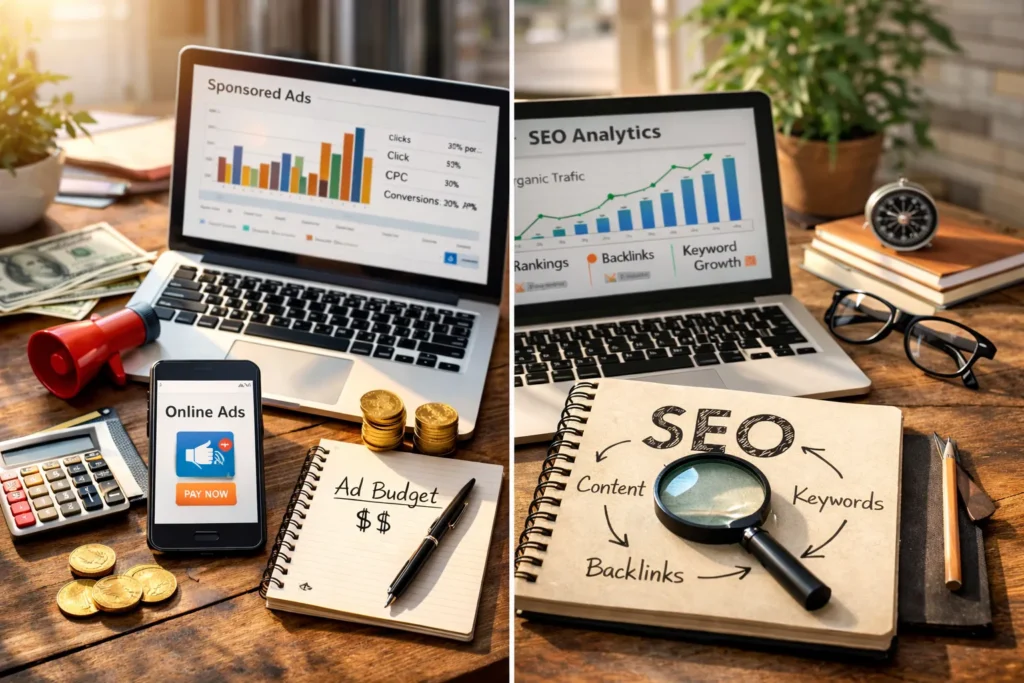
One of the most common strategic questions businesses ask is:
Paid ads vs SEO — which is better long term?
Both strategies generate traffic. Both drive leads. Both increase revenue. However, their impact over time is very different.
Paid advertising delivers speed.
SEO builds sustainability.
Choosing the right long-term strategy depends on your goals, budget, industry, and growth timeline.
In this guide, we’ll break down the real differences between SEO and paid ads and explain which strategy wins over the long term.
Understanding Paid Advertising
Paid advertising includes platforms like:
- Google Ads
- Social media advertising
- Display advertising
- Performance marketing campaigns
With paid ads, businesses bid for visibility. Once campaigns are live, traffic can start immediately.
The biggest advantage of paid ads is speed.
You can appear at the top of search results within hours.
However, when you stop paying, traffic stops instantly.
Paid advertising is transactional. It buys visibility.
Understanding SEO (Search Engine Optimization)
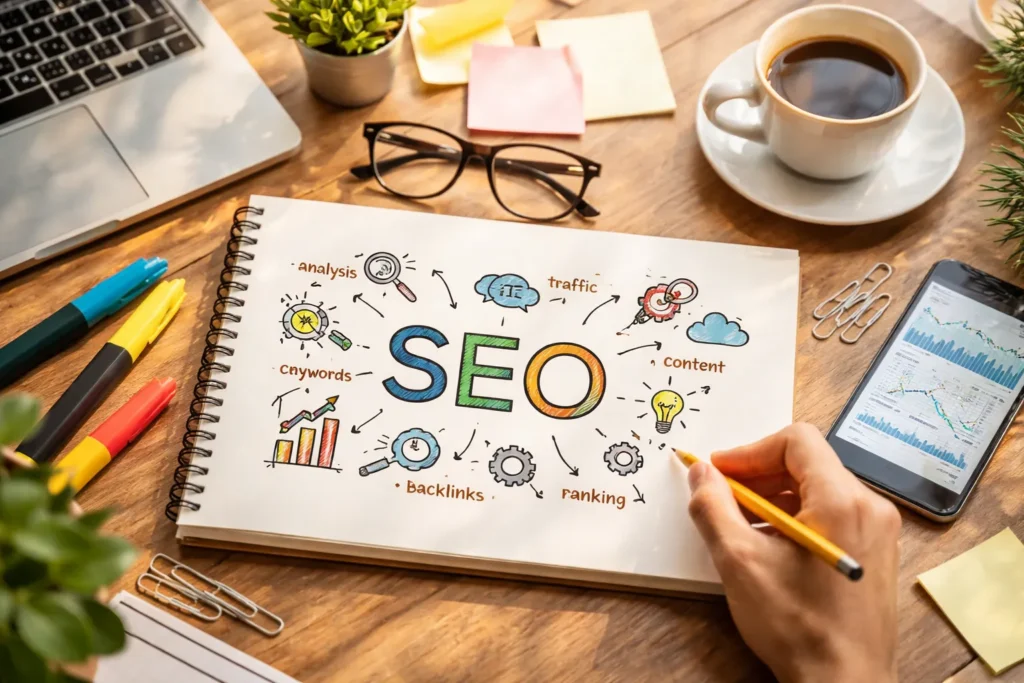
SEO focuses on optimizing your website to rank organically in search engine results.
SEO includes:
- Keyword optimization
- Content marketing
- Technical SEO
- Link building
- User experience improvements
- Topical authority development
Unlike paid ads, SEO takes time. Results often require months of effort.
However, once rankings are achieved, traffic continues without direct cost per click.
SEO builds a digital asset.
The Core Difference: Renting vs Owning
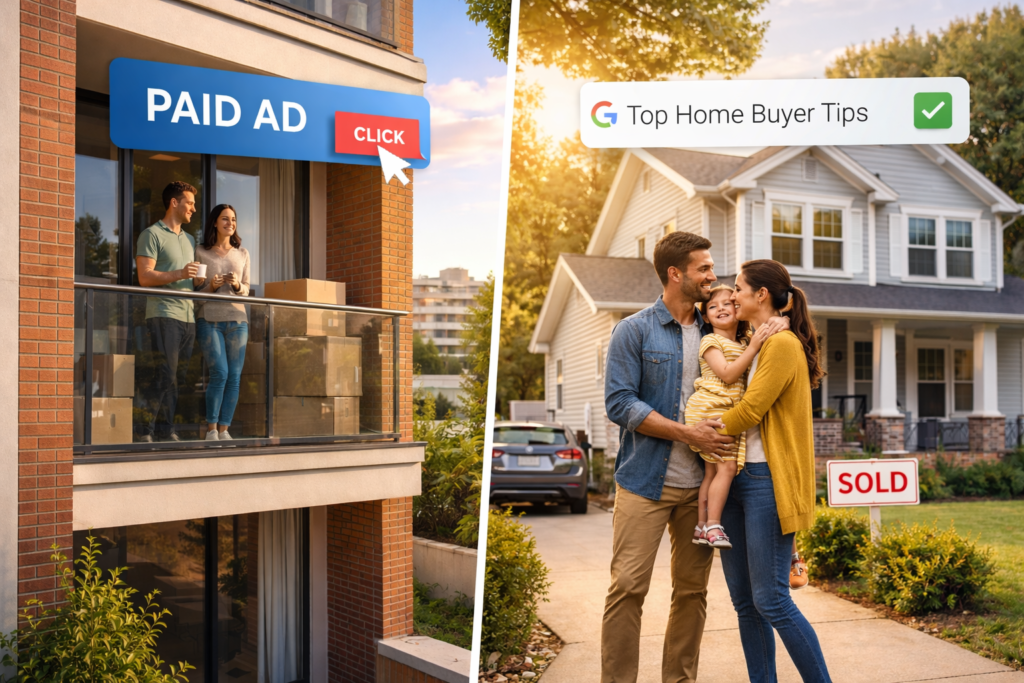
A simple way to understand the long-term difference:
Paid Ads = Renting traffic
SEO = Owning traffic
When you run ads, you are paying for temporary exposure.
When you invest in SEO, you are building long-term visibility.
This distinction shapes long-term sustainability.
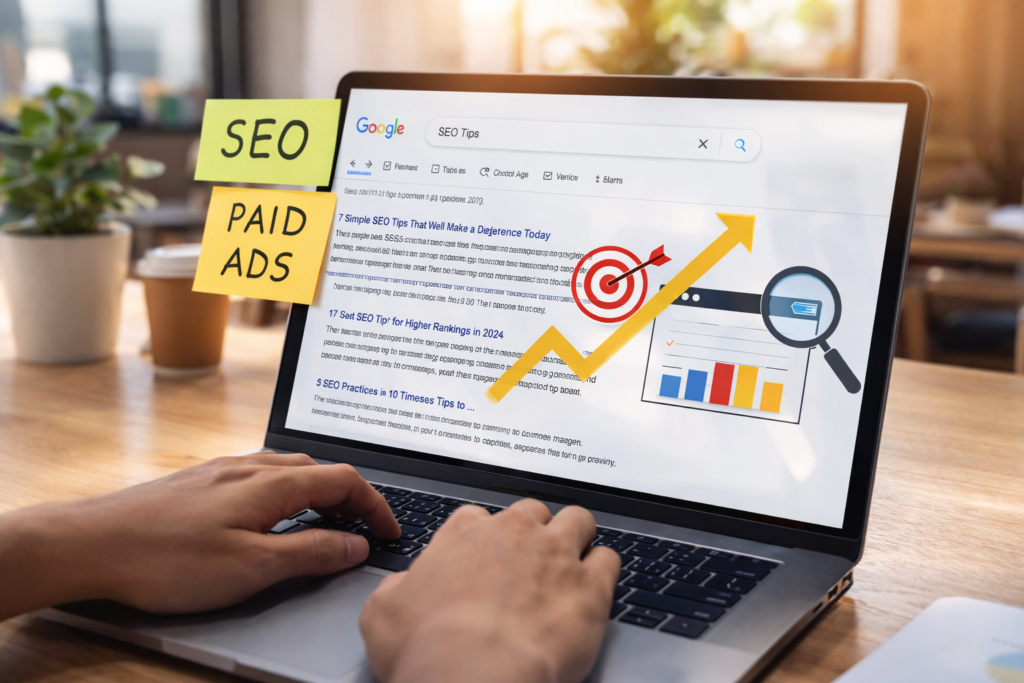
Traffic Stability Over Time
Paid Ads
- Immediate traffic
- Highly controllable
- Stops when budget ends
- Requires ongoing investment
SEO
- Gradual traffic growth
- Compounding results
- Continues generating traffic without per-click cost
- Builds long-term authority
From a long-term perspective, SEO provides more stable traffic.
Cost Comparison Over the Long Term

Paid ads require continuous budget allocation.
Over 12–24 months, total ad spend can exceed the cost of building organic visibility.
SEO requires upfront investment in:
- Content creation
- Optimization
- Technical improvements
- Authority building
However, long-term maintenance costs are typically lower than continuous ad spend.Paid ads are operational expenses.
SEO is an investment.
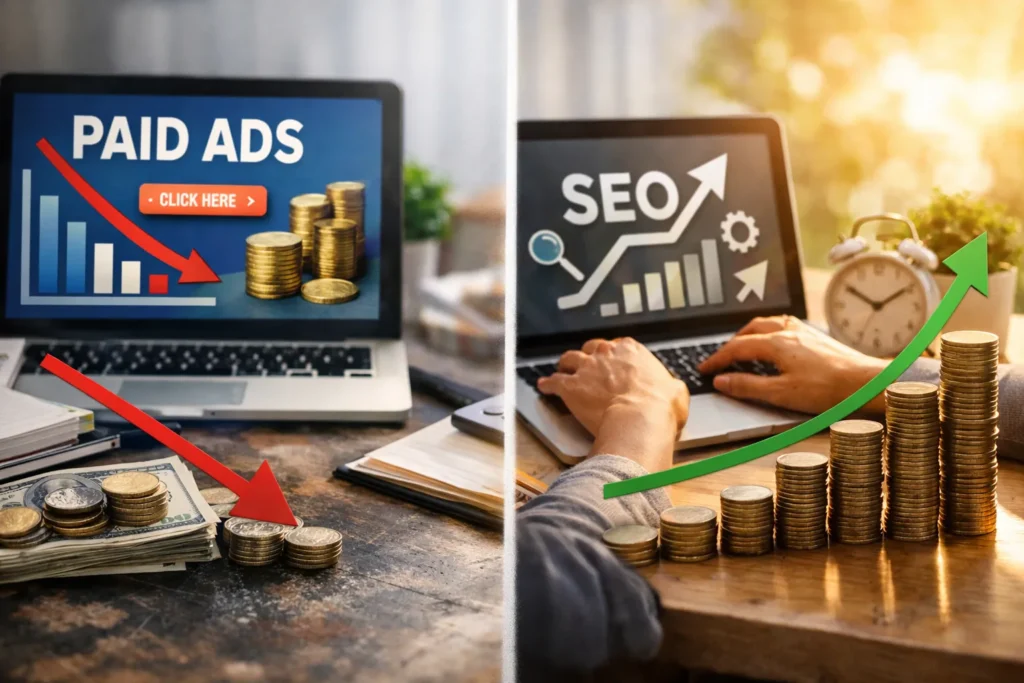
ROI: Short-Term vs Long-Term
Paid Ads ROI
- Faster results
- Immediate lead generation
- High scalability
- Dependent on budget
SEO ROI
- Slower initial returns
- Strong long-term compounding
- Lower cost per acquisition over time
- Sustainable visibility
In early stages, paid ads may outperform SEO.
In long-term scenarios, SEO often delivers stronger cumulative ROI.
Scalability and Predictability

Paid ads are highly scalable.
You can:
- Increase budget
- Expand targeting
- Launch new campaigns instantly
SEO scalability is slower but sustainable.
Scaling SEO requires:
- Expanding content clusters
- Building authority
- Increasing topical coverage
Paid ads offer predictable scaling.
SEO offers organic growth over time.
Brand Authority and Trust

Organic rankings often carry more credibility.
Users tend to trust organic results more than ads.
SEO helps:
- Build brand authority
- Establish expertise
- Improve long-term trust
- Increase brand searches
Paid ads generate visibility.
SEO builds reputation.
In long-term branding strategy, SEO holds stronger value.
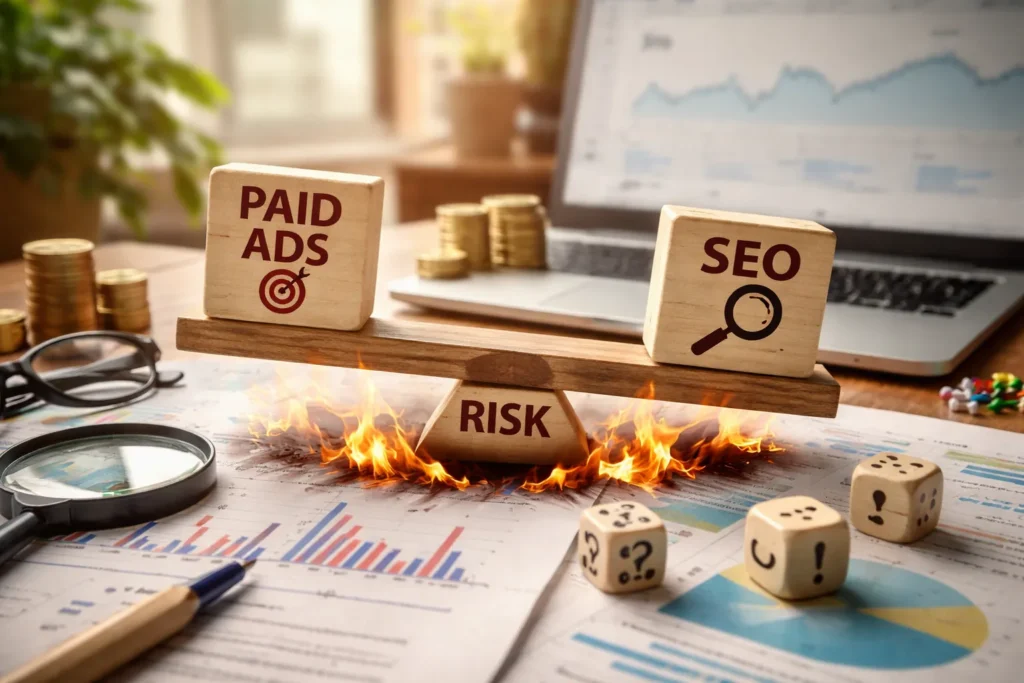
Risk Factors
Paid Advertising Risks
- Rising competition
- Increasing cost per click
- Budget dependency
- Algorithm changes
If ad costs rise significantly, profitability decreases.
SEO Risks
- Algorithm updates
- Ranking fluctuations
- Time investment without guaranteed results
However, diversified SEO strategies reduce long-term risk.
Competitive Advantage Over Time

In highly competitive industries:
Paid ads create immediate competition.
Any competitor with a higher budget can outbid you.
With SEO:
Strong authority and domain trust create barriers to entry.
Long-term SEO investment creates competitive moats.
When Paid Ads Are Better Long Term

Paid ads may be better long term if:
- You operate in a fast-changing market
- You need constant testing
- Your product lifecycle is short
- You depend on seasonal demand
- You require instant lead generation
Paid ads offer flexibility and adaptability.
When SEO Is Better Long Term

SEO becomes stronger long term if:
- You want consistent organic traffic
- You aim to reduce acquisition costs
- You focus on authority building
- You have long sales cycles
- You prioritize sustainable growth
SEO compounds over time.
The Hybrid Strategy: Best of Both Worlds

In reality, the best long-term strategy combines both.
Use paid ads for:
- Immediate traffic
- Campaign testing
- Product launches
- Lead generation
Use SEO for:
- Long-term authority
- Sustainable traffic
- Content marketing
- Brand credibility
Together, they create balanced growth.
3-Year Perspective: Paid Ads vs SEO
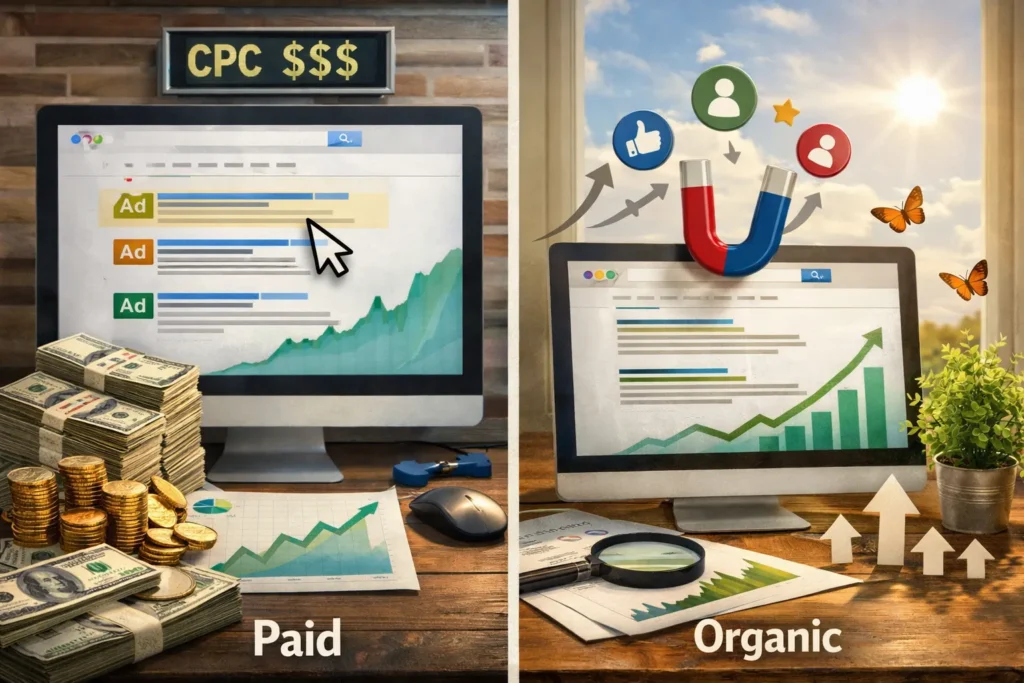
Imagine two businesses:
Business A invests only in paid ads for three years.
Business B invests in SEO while using limited paid ads strategically.
After three years:
Business A must continue paying for traffic.
Business B generates significant organic traffic without per-click costs.
Over time, SEO reduces dependency on advertising budgets.
Which Is Better Long Term?
The honest answer:
SEO is generally better long term for sustainable traffic and reduced acquisition costs.
However, paid ads remain critical for:
- Speed
- Testing
- Competitive positioning
- Immediate revenue
Long-term success comes from strategic integration — not choosing one exclusively.
Frequently Asked Questions
Is SEO better than paid ads long term?
In most cases, yes. SEO provides sustainable traffic without ongoing per-click costs.
Should small businesses use paid ads or SEO?
Small businesses benefit from combining both strategies.
Do paid ads impact SEO?
Paid ads do not directly improve organic rankings but can increase brand visibility and engagement.
How long does SEO take compared to paid ads?
Paid ads deliver immediate results. SEO typically takes several months.
Final Thoughts
So, paid ads vs SEO — which is better long term?
If you want sustainable growth, reduced long-term costs, and lasting brand authority, SEO often wins.
If you need speed, flexibility, and immediate lead generation, paid ads are essential.
The smartest strategy in 2026 is not choosing one over the other.
It is aligning both strategies with:
- Clear business goals
- Measurable ROI
- Sustainable growth planning
- Budget allocation efficiency
Paid ads accelerate growth.
SEO secures it.
Long-term success belongs to businesses that build assets — not just traffic.