
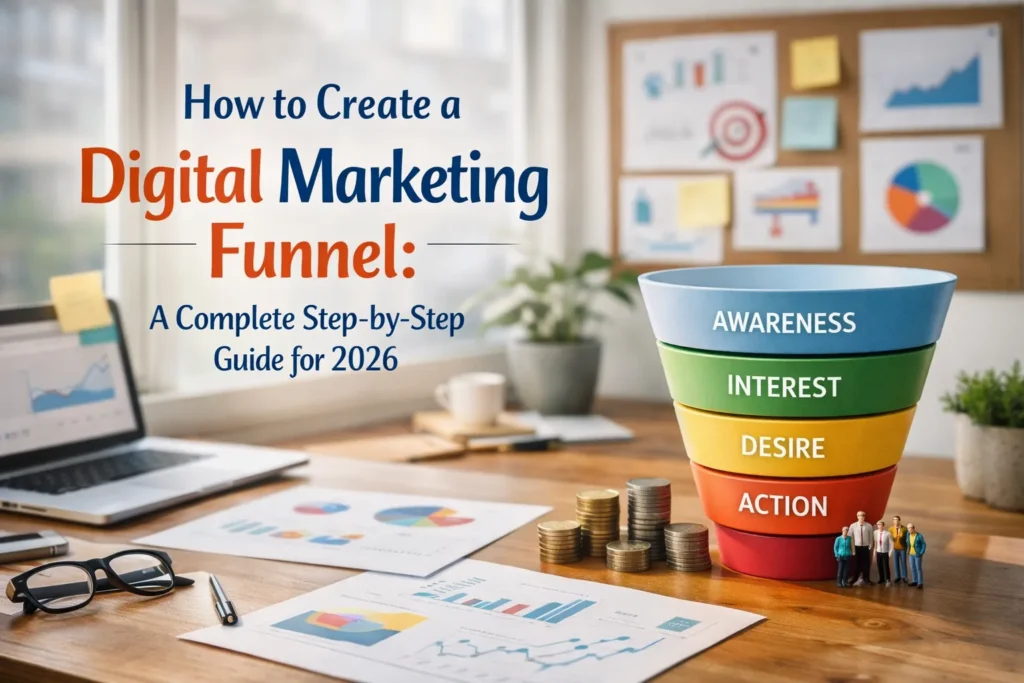
A digital marketing funnel is a structured process that guides potential customers from discovering your brand to becoming loyal buyers. Start by creating awareness through SEO, social media content, and paid ads that attract the right audience.
Next, capture leads using valuable offers like free guides, email subscriptions, or landing pages. Nurture these leads with helpful emails, educational content, and retargeting campaigns to build trust. Then encourage conversions with clear calls-to-action, limited offers, and optimized sales pages.
After purchase, focus on retention through follow-ups, customer support, and loyalty programs. By analyzing data and improving each stage regularly, your funnel becomes more effective and increases long-term business growth.
How to Create a Digital Marketing Funnel
Generating traffic is not enough to grow a business. Many companies attract visitors but fail to convert them into paying customers.
This is where a digital marketing funnel becomes essential.
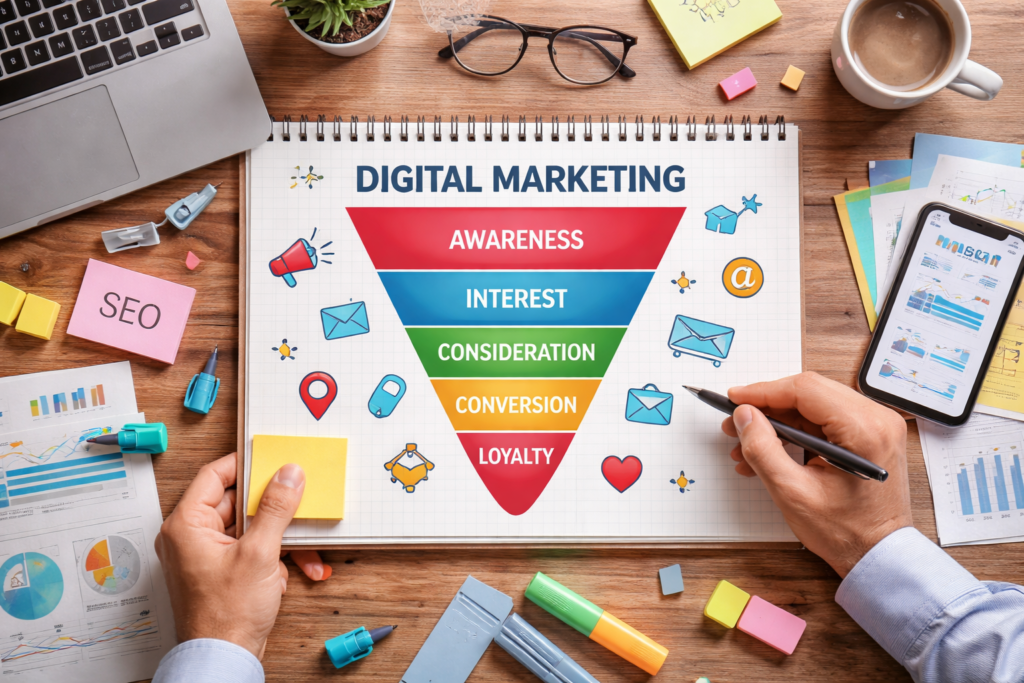
If you’re searching for how to create a digital marketing funnel, this guide will walk you through each stage — from awareness to conversion — and show you how to build a structured system that turns interest into revenue.
A digital marketing funnel is a strategic framework that guides potential customers through a step-by-step journey until they make a purchase.Without a funnel, marketing efforts remain disconnected.
With a funnel, every action supports conversion.
What Is a Digital Marketing Funnel?
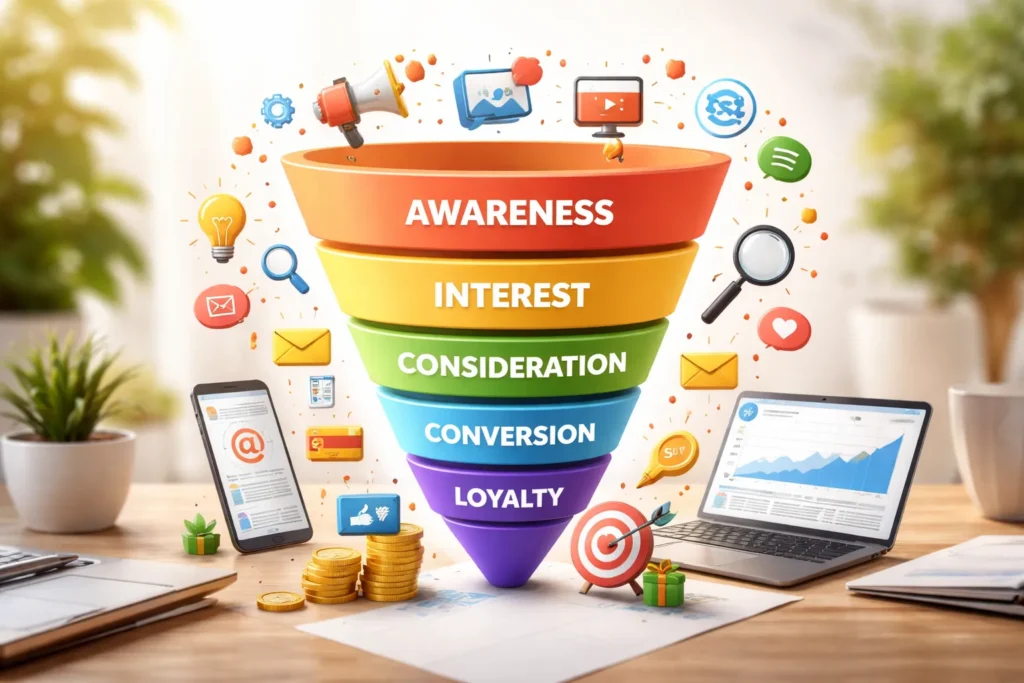
A digital marketing funnel represents the journey customers take from first discovering your brand to becoming loyal buyers.
It is called a “funnel” because:
- Many people enter at the top.
- Fewer move to the middle.
- Only a percentage convert at the bottom.
The goal is to optimize each stage to increase conversion rates.
The 3 Core Stages of a Digital Marketing Funnel
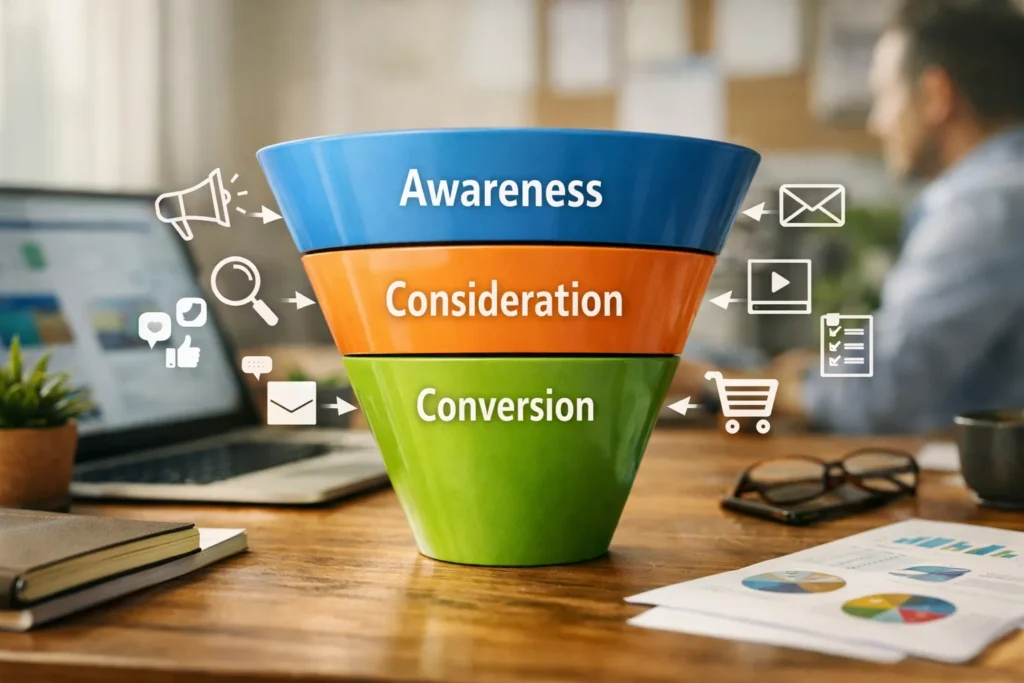
While funnels can vary, most follow three primary stages:
- Awareness (Top of Funnel – TOFU)
- Consideration (Middle of Funnel – MOFU)
- Conversion (Bottom of Funnel – BOFU)
Each stage requires a different strategy and messaging approach.
Stage 1: Awareness – Attract the Right Audience

The awareness stage focuses on visibility.
At this point, potential customers:
- Recognize a problem
- Search for information
- Explore options
Your goal is to capture attention.
Channels for Awareness Stage
- Search engine optimization (SEO)
- Blog content
- Social media marketing
- Paid advertising
- Video marketing
Content should educate, not sell aggressively.
Examples include:
- Blog articles
- Educational videos
- Informative social posts
- Free guides
The objective is to build trust and attract targeted traffic.
Stage 2: Consideration – Build Interest and Trust

In the consideration stage, users know they have a problem and are evaluating solutions.
Your role is to position your brand as the best choice.
This stage focuses on nurturing.
Strategies for Consideration Stage
- Email marketing sequences
- Case studies
- Comparison guides
- Webinars
- Testimonials
- Retargeting ads
Content becomes more detailed and persuasive.
You demonstrate expertise and differentiate your solution from competitors.
Trust building is critical here.
Stage 3: Conversion – Drive Action

The conversion stage is where prospects become customers.
At this point, they are ready to decide.
Your focus should be on clarity and ease.
Conversion Tools
- Optimized landing pages
- Strong calls-to-action
- Limited-time offers
- Free consultations
- Product demos
- Discount incentives
Eliminate friction.
Make purchasing simple and fast.
Step-by-Step: How to Create a Digital Marketing Funnel
Let’s break it down into actionable steps.
Step 1: Define Your Target Audience
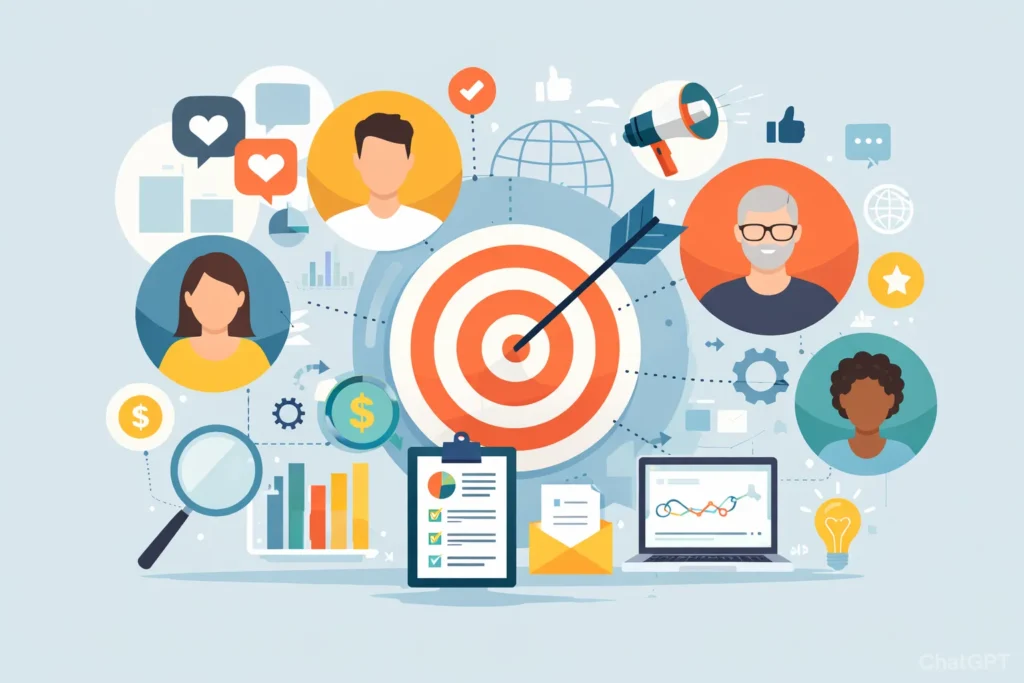
Before building a funnel, identify:
- Who your ideal customer is
- Their pain points
- Their buying behavior
- Their objections
Create detailed buyer personas.
The clearer your audience, the stronger your funnel.
Step 2: Identify Your Funnel Goal
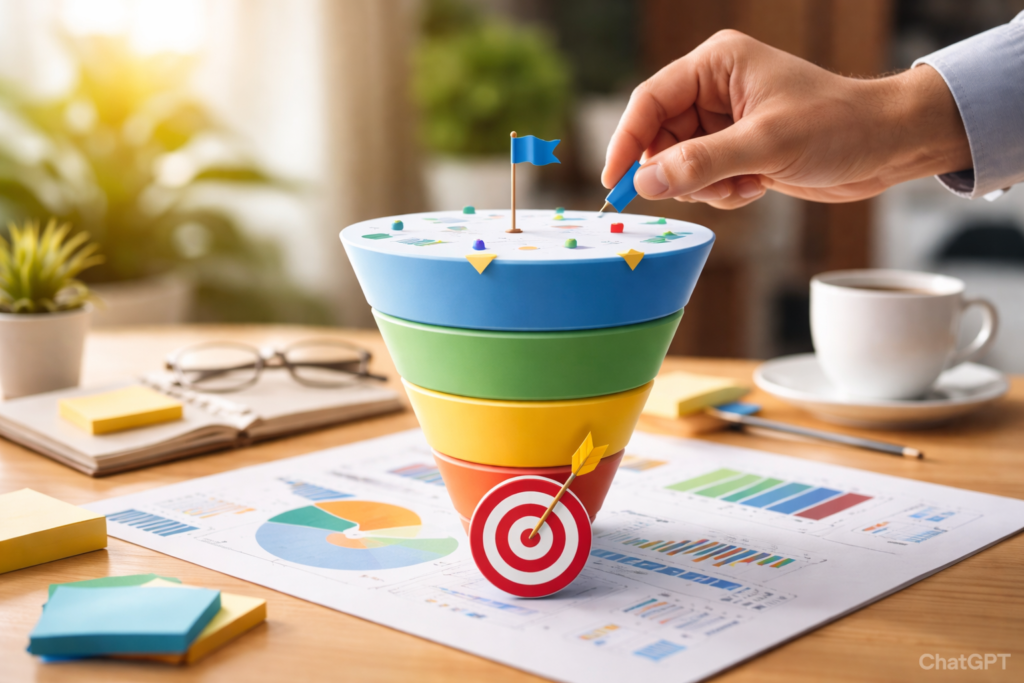
Decide what you want users to do.
Examples:
- Purchase a product
- Book a consultation
- Subscribe to a service
- Request a quote
Every funnel must have one primary goal.
Step 3: Create Awareness Content

Develop content that addresses customer problems.
Use:
- SEO-focused blog posts
- Social media campaigns
- Paid traffic ads
- Educational videos
The goal is traffic generation.
Step 4: Capture Leads

Traffic without capture is wasted opportunity.
Use lead magnets such as:
- Free downloads
- Email subscriptions
- Webinars
- Free trials
Lead capture moves users into the consideration stage.
Step 5: Nurture Leads

Once leads are captured, nurture them through:
- Email automation
- Retargeting campaigns
- Personalized messaging
- Valuable follow-up content
Nurturing builds credibility.
Step 6: Optimize Conversion Pages

Your conversion page should:
- Clearly state the value
- Address objections
- Include testimonials
- Feature strong CTAs
- Be mobile-friendly
- Load quickly
Small improvements significantly increase conversion rates.
Step 7: Measure and Optimize

Track key performance indicators such as:
- Conversion rate
- Cost per acquisition (CPA)
- Click-through rate (CTR)
- Funnel drop-off rates
- Return on investment (ROI)
Data analysis identifies weak points in the funnel.
Optimization is continuous.
Types of Digital Marketing Funnels
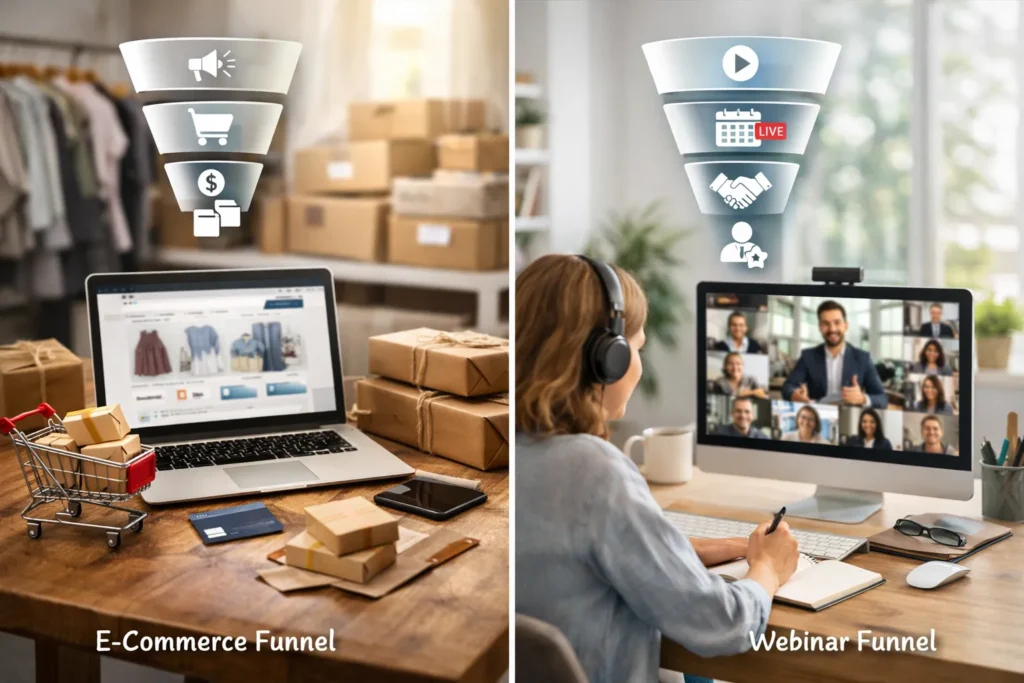
Different businesses require different funnel structures.
Lead Generation Funnel
Focuses on capturing contact information and nurturing leads over time.
Ideal for:
- Service-based businesses
- B2B companies
Consulting firms
E-Commerce Funnel
Designed to convert visitors into immediate buyers.
Includes:
- Product pages
- Cart recovery emails
- Remarketing ads
Webinar Funnel
Used to educate prospects and sell high-value offers.
Includes:
- Registration page
- Reminder emails
- Post-webinar offer
Choose the funnel model aligned with your business model.
Common Funnel Mistakes
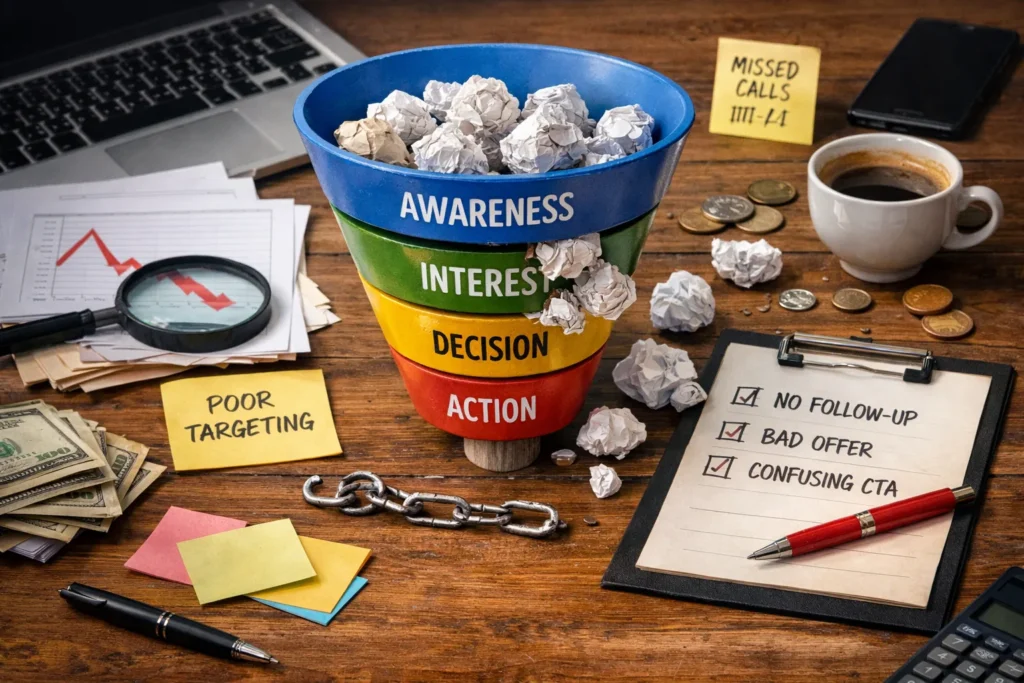
Businesses often struggle with funnel effectiveness due to:
Lack of Clear Targeting
Wrong audience reduces conversions.
Weak Lead Magnets
Unattractive offers limit email capture.
Poor Follow-Up
No nurturing equals lost opportunities.
Complicated Checkout Process
Friction reduces conversions.
Ignoring Data
No optimization leads to stagnation.
Avoiding these mistakes improves funnel performance.
How Long Does It Take for a Funnel to Work?

Funnels do not deliver perfect results instantly.
Typically:
- Paid traffic funnels can show results within weeks.
- SEO-driven funnels may take months to mature.
Continuous testing improves efficiency over time.
Why Digital Marketing Funnels Drive Business Growth

Funnels create structure.
They ensure:
- Traffic flows strategically
- Leads are nurtured
- Sales processes are optimized
- Marketing budgets are efficient
Without a funnel, marketing is fragmented.
With a funnel, growth becomes predictable.
Frequently Asked Questions
What is a digital marketing funnel in simple terms?
It is a step-by-step system that guides potential customers from awareness to purchase.
Do small businesses need a funnel?
Yes. Funnels help organize marketing efforts and improve conversion rates.
Can one funnel serve all products?
Not always. Different products may require tailored funnels.
Is automation necessary?
Automation improves efficiency, especially for lead nurturing.
Final Thoughts
Understanding how to create a digital marketing funnel is essential for sustainable online growth.
A successful funnel:
- Attracts the right audience
- Builds trust through nurturing
- Converts prospects into customers
- Optimizes continuously using data
In 2026, businesses that build structured, data-driven funnels outperform competitors relying on disconnected marketing tactics.
Marketing success is not about random traffic.
It is about guiding customers strategically from first interaction to final purchase.
When designed properly, a digital marketing funnel transforms attention into revenue — consistently and predictably.