

Choosing the right digital marketing channels in 2026 starts with understanding your target audience — where they spend time, how they consume content, and what influences their buying decisions.
Define clear business goals such as brand awareness, lead generation, or sales growth before selecting platforms. Analyze your budget and resources, as channels like paid ads deliver faster results while content marketing builds long-term authority.
Study competitors to see which channels are working in your industry. Use data analytics and performance metrics to test and optimize campaigns continuously.
Focus on platforms that align with your content format, whether it’s video, blogs, or short-form posts. Finally, adopt a balanced strategy that combines organic and paid efforts for sustainable growth and measurable ROI.
How to Choose the Right Digital Marketing Channels
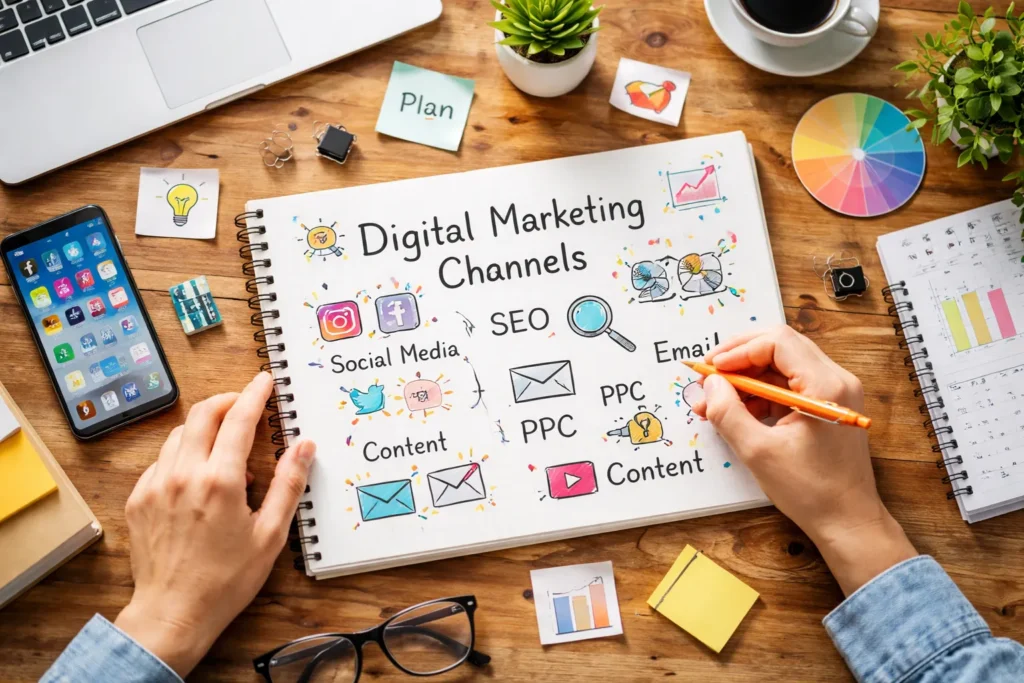
With so many online platforms available today, businesses often feel overwhelmed when deciding where to invest their marketing budget.
Should you focus on SEO?
Run paid ads?
Invest in social media?
Build an email list?
Choosing the wrong channel can waste time, money, and effort.
If you’re searching for how to choose the right digital marketing channels, this guide will provide a strategic framework to help you make informed decisions based on your goals, audience, and budget.
In 2026, successful businesses don’t try to be everywhere — they focus on the channels that deliver measurable results.
Why Channel Selection Matters

Not all digital marketing channels work equally for every business.
Channel effectiveness depends on:
- Industry type
- Target audience behavior
- Budget size
- Sales cycle length
- Business goals
The right channel accelerates growth.
The wrong channel drains resources.
Strategic selection increases return on investment (ROI) and improves customer acquisition.
Step 1: Define Clear Business Goals

Before selecting any channel, define your primary objective.
Common digital marketing goals include:
- Brand awareness
- Lead generation
- Online sales
- Website traffic growth
- Customer retention
- Authority building
Each goal aligns better with certain channels.
For example:
- SEO supports long-term traffic growth.
- Paid ads drive immediate leads.
- Email marketing improves retention.
Clear goals simplify channel decisions.
Step 2: Understand Your Target Audience

Your audience determines where you should market.
Ask:
- Where do they spend time online?
- Do they search on Google for solutions?
- Are they active on social media?
- Do they respond to email marketing?
- Are they influenced by video content?
For example:
- B2B audiences often engage through search engines and professional networks.
- E-commerce customers respond well to social media and paid advertising.
Audience behavior should guide channel selection.
Step 3: Evaluate Channel Strengths
Each digital marketing channel has unique strengths.
Search Engine Optimization (SEO)

Best for:
- Long-term traffic
- Authority building
- Intent-based leads
Advantages:
- Sustainable growth
- Lower long-term cost
- High trust
Challenges:
- Requires time
- Competitive industries may take longer
SEO is ideal for businesses focused on long-term visibility.
Paid Advertising (PPC)

Best for:
- Immediate results
- Product launches
- Lead generation
Advantages:
- Fast traffic
- Measurable ROI
- Scalable
Challenges:
- Budget dependent
- Rising ad costs
Paid ads work well when speed is a priority.
Social Media Marketing
Best for:

- Brand awareness
- Community building
- Engagement
Advantages:
- Direct communication
- Visual storytelling
- Brand loyalty development
Challenges:
- Algorithm changes
- High competition
Social media supports brand positioning.
Email Marketing

Best for:
- Lead nurturing
- Retention
- Repeat sales
Advantages:
- High ROI
- Personalized communication
- Owned audience
Challenges:
- Requires list growth
- Consistent content needed
Email marketing strengthens customer relationships.
Content Marketing

Best for:
- Authority
- Organic visibility
- Thought leadership
Advantages:
- Compounding value
- Supports SEO
- Builds trust
Challenges:
- Time-intensive
- Requires quality consistency
Content marketing is foundational for sustainable growth.
Step 4: Assess Budget and Resources

Your available budget and internal resources impact channel feasibility.
Consider:
- Do you have time for long-term SEO?
- Can you invest in ad spend consistently?
- Do you have content creation capabilities?
Limited budgets often benefit from:
- SEO
- Content marketing
- Organic social media
Higher budgets allow for:
- Paid campaigns
- Multi-channel integration
Balance ambition with available resources.
Step 5: Analyze Competition

Competitive analysis provides insight into effective channels.
Ask:
- Where are competitors active?
- Which channels drive their traffic?
- What content performs best in your industry?
Competitive research helps identify opportunities and gaps.
Step 6: Align Channels with Sales Cycle

Your sales cycle influences channel choice.
Short sales cycle:
- Paid ads
- Social media campaigns
- Promotional emails
Long sales cycle:
- SEO
- Content marketing
- Webinars
- Educational resources
Longer decision-making processes require nurturing.
Step 7: Test and Optimize

Channel selection should not be permanent without testing.
Start small.
Track:
- Cost per acquisition (CPA)
- Conversion rate
- Traffic quality
- Engagement metrics
- ROI
Data reveals which channels perform best.
Optimization improves efficiency over time.
Multi-Channel vs Single Channel Approach
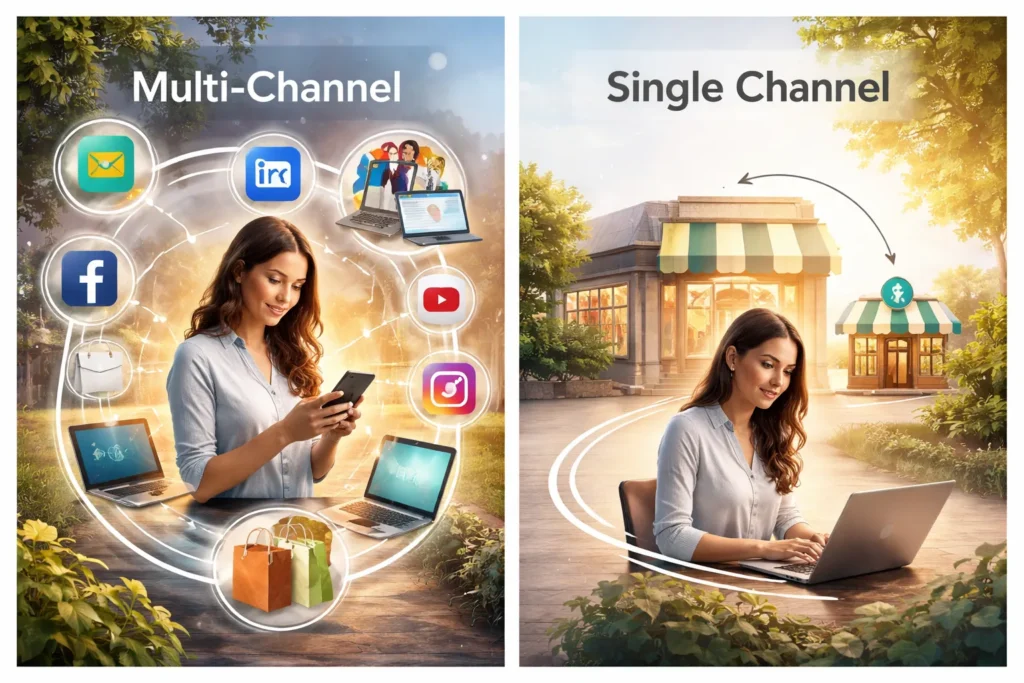
Relying on one channel increases risk.
For example:
- Only paid ads = traffic stops if budget stops
- Only SEO = vulnerable to algorithm updates
A balanced strategy combines:
- Organic growth
- Paid campaigns
- Email nurturing
Diversification strengthens stability.
Common Mistakes When Choosing Channels

Choosing Based on Trends
Just because a channel is popular doesn’t mean it suits your business.
Ignoring Audience Behavior
Channel choice must align with customer habits.
Spreading Too Thin
Trying to manage too many channels reduces effectiveness.
Skipping Performance Tracking
Without measurement, channel effectiveness remains unclear.
Avoiding these mistakes increases efficiency.
Example Channel Strategy Framework
Let’s consider three scenarios:
Small Local Service Business

Recommended channels:
- Local SEO
- Google Ads
- Email marketing
Focus: Lead generation and visibility.
E-Commerce Brand

Recommended channels:
- Paid social ads
- SEO for product pages
- Email automation
- Retargeting campaigns
Focus: Conversion and repeat purchases.
B2B Consulting Firm

Recommended channels:
- SEO
- Content marketing
- Professional social networks
- Email nurturing
Focus: Authority and long sales cycles.
Each business model requires different channel combinations.
Measuring Channel Effectiveness

After implementation, measure:
- Traffic growth
- Conversion rates
- Lead quality
- Cost per acquisition
- Customer lifetime value
Channels that deliver consistent ROI should receive greater investment.
The Role of Strategy in Channel Selection

Choosing the right digital marketing channels is not about guessing.
It requires:
- Data analysis
- Goal clarity
- Audience research
- Continuous optimization
Strategy transforms channels into revenue engines.
Frequently Asked Questions
What is the most effective digital marketing channel?
There is no universal answer. Effectiveness depends on business goals and audience behavior.
Should small businesses use multiple channels?
Yes, but start with one or two and expand gradually.
How long should I test a channel?
Typically 2–3 months for organic strategies and a few weeks for paid campaigns.
Is SEO better than paid advertising?
SEO is better for long-term growth. Paid advertising is better for immediate results.
Final Thoughts
Understanding how to choose the right digital marketing channels is critical for sustainable business growth.
Success depends on:
- Clear objectives
- Audience insights
- Resource alignment
- Data-driven decisions
- Continuous optimization
In 2026, businesses that strategically select and optimize the right channels outperform competitors who chase trends without direction.
Digital marketing is not about being everywhere.
It is about being where it matters most.
Choose strategically. Measure consistently. Grow sustainably.