

Digital marketing plays a vital role in expanding modern businesses by increasing online visibility and attracting the right audience. Strategies like SEO, social media marketing, paid advertising, and content creation help brands connect with potential customers at the right time.
With precise targeting, companies can reach users based on interests, behavior, and demographics, improving conversion rates. Real-time analytics allow businesses to track performance and optimize campaigns for better results.
Consistent engagement builds trust and strengthens brand recognition in competitive markets. Over time, these data-driven efforts lead to higher revenue, customer loyalty, and sustainable business growth.
How Digital Marketing Drives Business Growth

In the modern business landscape, having a strong online presence is essential for growth. Customers often research products, compare services on social media, and check reviews before making any purchasing decisions.
Companies that lack visibility on digital platforms risk being completely overlooked.
Understanding how digital marketing drives growth is vital for businesses planning to scale effectively in 2026.
Digital marketing is more than simply sharing posts or running ads—it is a structured process that increases visibility, engages the right audience, generates leads, and converts prospects into loyal customers. When implemented strategically, it becomes a measurable engine for sustainable growth.
What Is Digital Marketing?
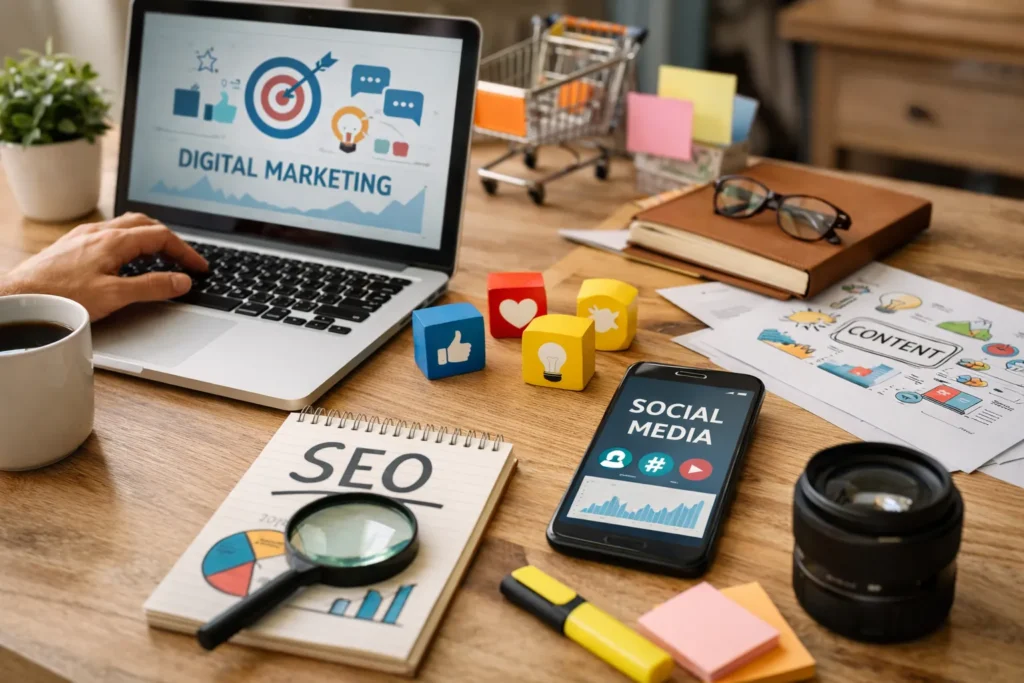
Digital marketing involves promoting products or services through online channels, such as:
- Search engines
- Social media platforms
- Email marketing campaigns
- Paid advertising networks
- Content marketing platforms
- Websites and landing pages
By leveraging analytics and data, businesses can target specific audiences and optimize campaign performance. Unlike traditional marketing, digital marketing provides real-time insights and measurable outcomes that allow for continuous improvement.
1. Boosts Online Visibility

Growth begins with visibility.
Every day, billions of searches occur on search engines, and social media platforms host millions of active users seeking content. Digital marketing ensures your business is visible to potential customers where they are most likely to search.
Key approaches include:
- Search engine optimization (SEO)
- Pay-per-click (PPC) advertising
- Social media marketing
Greater visibility leads to more opportunities and a wider audience reach.
2. Targets the Right Audience
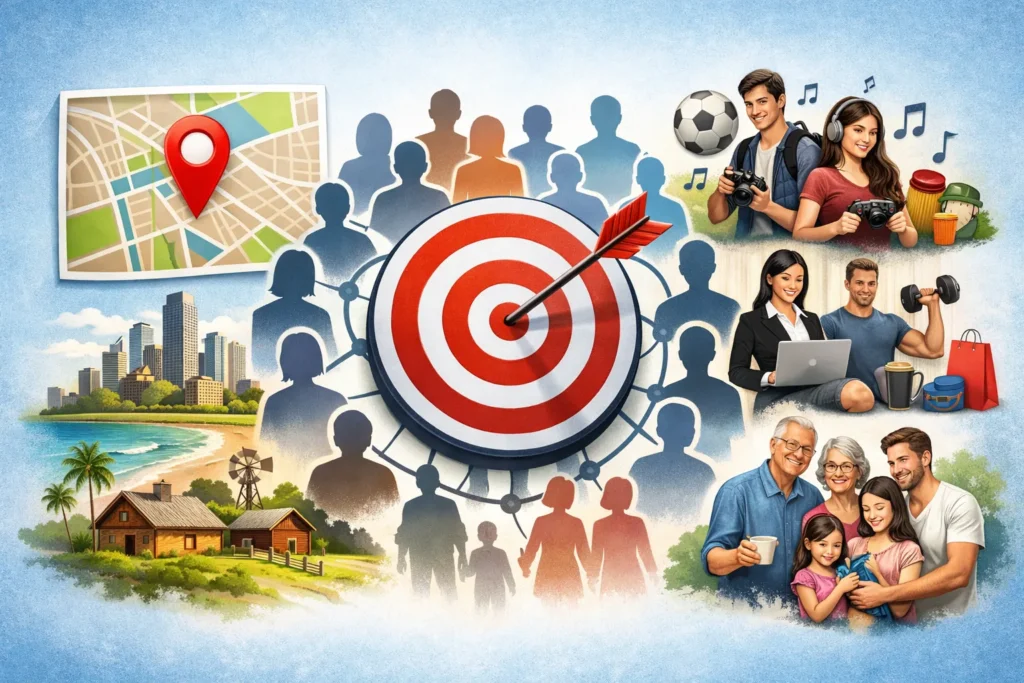
One major advantage of digital marketing is precise targeting.
Instead of broad advertising, businesses can reach audiences based on:
- Location
- Interests
- Online behavior
- Demographics
- Purchase intent
This precision reduces wasted spending and improves the quality of leads, leading to higher conversion rates.
3. Generates High-Quality Leads

A strong digital presence draws people actively seeking solutions. Lead generation can be accomplished through:
- Landing pages
- Email subscriptions
- Contact forms
- Webinars
- Downloadable resources
Attracting qualified leads results in more potential sales and increased revenue growth.
4. Strengthens Brand Awareness

Consistently appearing online builds brand recognition.
Through:
- Social media engagement
- Content marketing
- Video production
- Paid campaigns
Your brand becomes recognizable and trustworthy, which increases the chances of customer purchase. Over time, this strengthens long-term growth.
5. Improves Customer Engagement

Digital platforms allow businesses to communicate directly with their audience.
Companies can:
- Respond to questions and comments
- Run interactive polls
- Share updates and news
- Offer customer support
Active engagement fosters stronger relationships, loyalty, and repeat business.
6. Enables Data-Driven Decisions

Unlike traditional marketing, digital strategies provide precise metrics, including:
- Website traffic
- Conversion rates
- Cost per acquisition (CPA)
- Return on ad spend (ROAS)
- Customer lifetime value (CLV)
Analyzing these metrics allows businesses to refine campaigns quickly and improve performance continuously.
7. Expands Market Reach

Digital marketing removes geographic boundaries. Businesses can:
- Target audiences internationally
- Explore new regions
- Test campaigns in different markets
This scalability allows companies to grow globally without major infrastructure costs.
8. Reduces Marketing Costs

Digital campaigns are often more affordable than traditional marketing.
Companies can:
- Start with small budgets
- Test campaigns before scaling
- Optimize underperforming ads
Cost-efficient strategies lead to higher ROI and make growth achievable for businesses of all sizes.
9. Enhances Competitive Advantage

A strong online presence helps businesses stay ahead of competitors.
Brands using SEO, paid advertising, content marketing, and social media often outperform those relying solely on offline methods. Strategic digital marketing creates differentiation and a competitive edge.
10. Drives Revenue Growth

Ultimately, business growth is measured by revenue.
Digital marketing supports revenue by:
- Attracting high-intent buyers
- Optimizing sales funnels
- Retargeting interested users
- Lowering acquisition costs
As traffic and conversion rates improve, revenue naturally grows.
Short-Term vs Long-Term Growth

Short-Term Growth:
- Paid campaigns
- Promotions
- Product launches
Long-Term Growth:
- SEO and content marketing
- Brand building
- Email campaigns
Combining both ensures immediate results while establishing lasting authority.
Benefits for Small Businesses

Small businesses particularly benefit from digital marketing:
- Affordable advertising options
- Targeted local campaigns
- Measurable ROI
- Scalable growth
This allows smaller brands to compete effectively with larger companies without massive budgets.
Common Mistakes to Avoid

- No clear strategy: Leads to inconsistent efforts and results.
- Ignoring analytics: Data is key for improvement.
- Neglecting SEO: Organic visibility drives sustainable growth.
- Inconsistent branding: Trust grows with consistency.
- Resistance to change: Adapting to trends is essential.
Avoiding these errors strengthens growth potential.
Digital Marketing and AI

Artificial intelligence enhances digital marketing by:
- Automating ad bidding
- Improving audience targeting
- Personalizing messaging
- Predicting customer behavior
While AI improves efficiency, strategic planning remains the true driver of growth.
Frequently Asked Questions
How does digital marketing increase revenue?
By attracting targeted audiences, improving conversions, and optimizing campaigns using data insights.
Is digital marketing suitable for small businesses?
Yes. Flexible budgets and precise targeting make it highly accessible.
How long does it take to see results?
Paid campaigns deliver quicker outcomes, while SEO and content marketing are long-term strategies.
Which digital channel is most effective?
It depends on your goals and industry. A combination of channels usually delivers the best results.
Conclusion
Digital marketing is a critical growth tool for businesses in 2026.
It supports companies by:
- Increasing visibility
- Targeting ideal audiences
- Generating qualified leads
- Enhancing engagement
- Providing actionable data
- Driving sustainable revenue
By combining technology, analytics, and consistent branding, businesses can grow consistently and maintain a competitive edge. Digital marketing is more than promotion—it is a structured, measurable engine for business growth.