

AI search is changing SEO fast, and in 2026 businesses can’t rely only on traditional keyword rankings anymore. Search engines now use AI to understand meaning, intent, and context, which means content must be more helpful, structured, and trustworthy than ever. Instead of focusing only on traffic, brands must focus on becoming a reliable source that AI systems can confidently recommend.
This shift is pushing SEO toward topical authority, real expertise, and stronger content depth across related subtopics. Businesses also need to optimize for AI summaries, featured answers, and conversational queries that users type in natural language. Clear formatting, direct answers, and strong internal linking are now key for visibility.
At the same time, trust signals like brand credibility, updated content, and accurate information matter more. Companies that adapt early will gain stronger long-term visibility, while outdated SEO tactics will lose impact.
How AI Search Is Changing SEO
Search is evolving at a speed we’ve never seen before. The SEO world that once revolved around keywords, backlinks, and ranking positions is now being reshaped by artificial intelligence. AI-powered search is changing how people discover information — and more importantly, how brands must create and optimize content to stay visible.
With AI-generated summaries, conversational assistants, and predictive search suggestions becoming normal in search results, SEO is no longer just about “ranking.” If your strategy still depends mainly on keyword repetition and traditional link-building, you may lose visibility in AI-driven search experiences.
In 2026, modern SEO is built around relevance, authority, clarity, and becoming a source that AI systems trust enough to reference.
What Is AI Search?
AI search refers to search experiences powered by artificial intelligence, machine learning, and natural language processing (NLP). Instead of matching words exactly, AI-based systems interpret meaning, understand context, and connect topics together.
AI-driven search engines analyze signals such as:
- Search intent and user goals
- Behavioral patterns and engagement
- Context from previous searches
- Natural language phrasing
- Semantic relationships between topics and entities
Rather than showing only classic blue links, AI search results often include:
- AI-generated summaries and overviews
- Direct answer boxes
- Explanatory panels
- Conversational responses
- Personalized recommendations
This shift changes what “visibility” means. Ranking alone is no longer enough — content must be structured, reliable, and easy for AI systems to extract and cite.
How AI Search Is Transforming SEO
1. Search Intent Matters More Than Exact Keywords

In the past, SEO heavily relied on exact-match keywords. Businesses optimized pages for phrases like “best marketing agency” or “SEO services near me.”
AI search is changing that.
Modern search engines prioritize the purpose behind a query, such as:
- Informational intent
- Transactional intent
- Navigational intent
- Commercial investigation intent
Instead of rewarding keyword repetition, AI systems evaluate whether your content truly answers the user’s underlying question.
What this means for businesses: Your content must be genuinely helpful, complete, and focused on solving the problem — not just matching a phrase.
Intent-first SEO is quickly replacing keyword-first SEO.
2. AI Overviews Are Changing Click Behavior

AI overviews (AI-generated summaries) now appear at the top of many search results. These summaries provide quick answers by pulling and combining information from multiple sources.
This creates major SEO changes, including:
- Lower click-through rates for informational searches
- Ranking #1 no longer guaranteeing traffic
- Being mentioned inside AI summaries becoming a major advantage
In 2026, businesses must optimize for being included in AI answers — not only for ranking positions.
To increase your chances of being used in AI overviews:
- Use clear headings and strong formatting
- Give direct answers near the top of sections
- Add schema markup
- Improve trust and authority signals
In many cases, being cited inside an AI-generated overview may be more valuable than holding the #1 organic spot.
3. Generative Engine Optimization (GEO) Is Becoming Necessary
Generative Engine Optimization (GEO) is the next evolution of SEO for AI-powered search systems.
GEO focuses on making content more likely to be trusted, pulled, and referenced by generative AI tools.
Key GEO practices include:
- Strong semantic structure
- Entity-based optimization
- Accurate, well-supported information
- Clear E-E-A-T signals
- Topic clustering and content ecosystems
Unlike older SEO models, GEO rewards websites that show consistent depth and authority across an entire topic — not just one optimized page.
The future of search will favor brands that demonstrate expertise, clarity, and consistency over time.
4. Conversational Search Is Growing Fast

Voice search, AI assistants, and chat-style queries continue to increase.
People now search using natural full sentences, such as:
- “What’s the best way to optimize for AI search?”
- “How is AI changing SEO in 2026?”
- “Does traditional SEO still matter?”
Because of this shift, your content should:
- Match natural language patterns
- Use question-and-answer formatting
- Provide clear, structured responses
FAQ sections, short summaries, and clean subheadings are no longer optional — they’re essential for AI-driven SEO.
5. Topical Authority Is Replacing One-Off Content
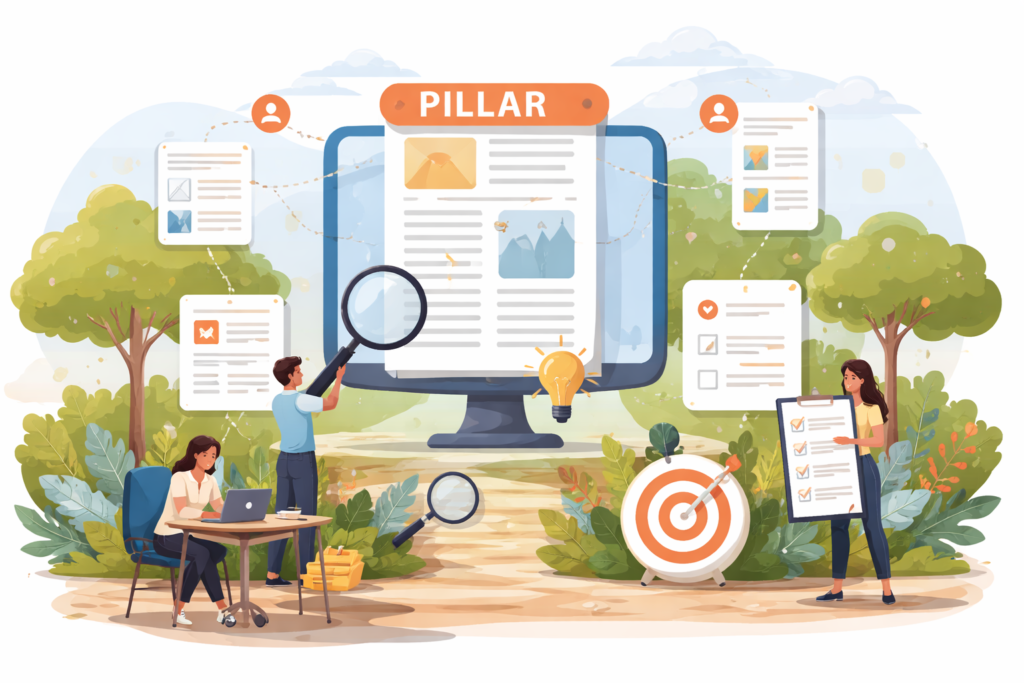
AI systems don’t judge only one page at a time. They evaluate the full website and look for signals like:
- Depth of coverage across a topic
- Consistent quality across related content
- Strong internal linking
- A clear expert voice and consistent messaging
Publishing one strong blog post is no longer enough to dominate a topic.
To build topical authority:
- Create pillar pages
- Publish supporting cluster content
- Link related pages strategically
- Cover the topic from multiple angles
Topical authority builds trust — and trust increases AI visibility.
Key SEO Strategies for AI-Driven Search in 2026
1. Build Content Ecosystems Instead of Random Posts
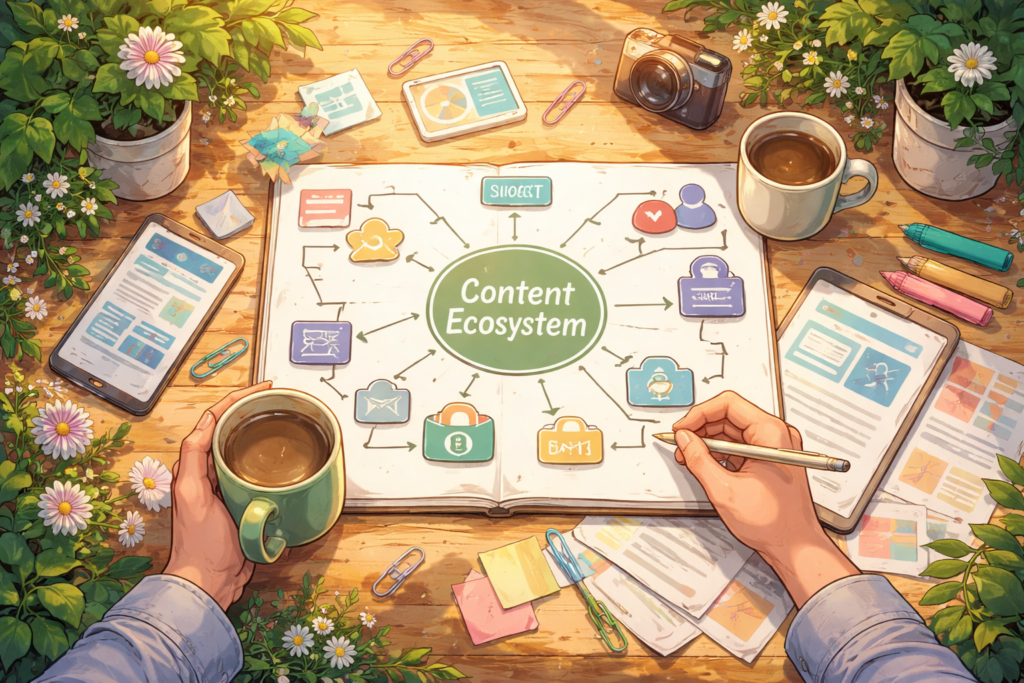
Instead of publishing disconnected articles, focus on structured topic clusters around one main theme.
Example:
Pillar Topic: AI Search & SEO
Cluster Articles:
- What Is Generative Engine Optimization (GEO)?
- AI Overviews Explained
- How Conversational Search Works
- AI and Semantic SEO
This structure helps AI systems understand your site as a reliable source for the topic.
2. Optimize for Entities and Meaning, Not Only Keywords

AI search engines interpret entities such as brands, locations, services, tools, and concepts.
Instead of focusing only on a keyword, include:
- Related concepts
- Supporting terms
- Industry-specific language
- Semantic variations
This increases topical depth and improves AI understanding of your content.
3. Strengthen E-E-A-T More Than Ever
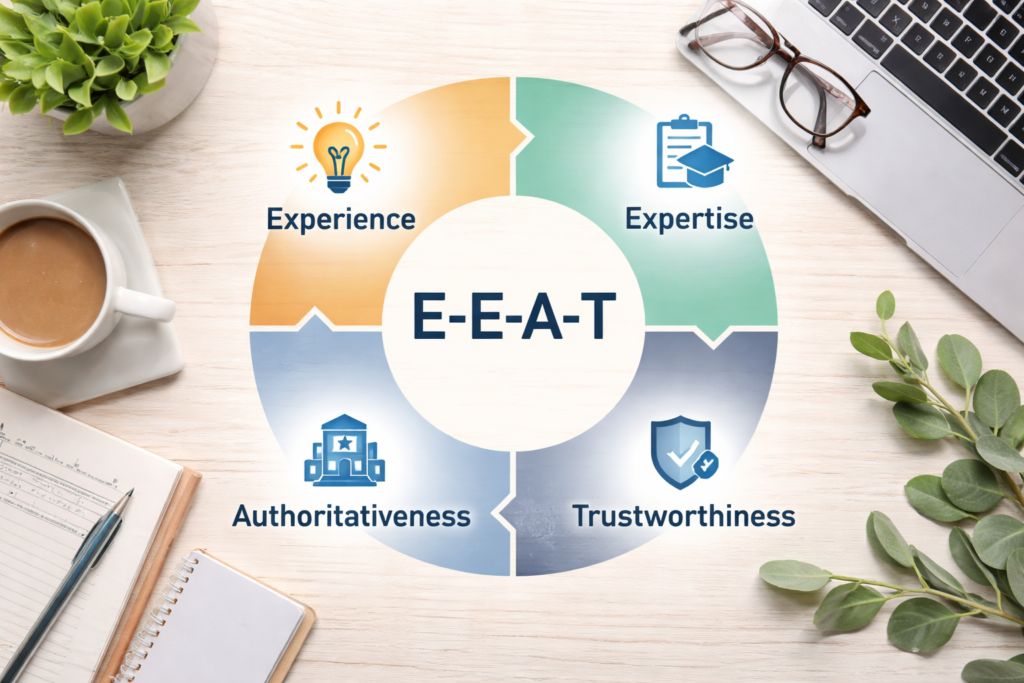
Experience, Expertise, Authoritativeness, and Trustworthiness (E-E-A-T) are more important than ever in AI-driven search.
To improve E-E-A-T:
- Publish content written or reviewed by experts
- Highlight credentials and real-world experience
- Add case studies or results
- Reference trustworthy sources
- Keep a consistent, professional brand voice
AI systems rely heavily on trusted sources when selecting content for summaries and answers.
4. Keep Technical SEO Strong

Even in AI search environments, technical SEO is still essential. Your website should have:
- Fast loading speed
- Mobile-friendly design
- Clean and logical URLs
- Secure HTTPS
- Schema markup and structured data
Technical SEO helps AI systems crawl, understand, and extract your content correctly.
5. Format Content for AI Extraction

AI systems favor content that’s simple to scan, understand, and summarize.
Use:
- Short, easy-to-read paragraphs
- Bullet points where needed
- Clear H2 and H3 headings
- Properly separated sections
- Direct answers placed right under each question
A clean, organized structure improves your chances of being included in AI-generated summaries.
AI Search vs Traditional SEO
| Traditional SEO | AI-Driven SEO |
| Keyword targeting | Intent targeting |
| More backlinks | Stronger trust + authority |
| Focus on ranking positions | Focus on AI visibility and citations |
| Blue-link results | AI-generated summaries and answers |
| Page-level optimization | Domain-level topical authority |
This isn’t just a layout update — it’s a major strategy shift.
What Businesses Must Do in 2026

To stay competitive in AI-powered search, businesses should:
- Review content depth and overall quality
- Replace keyword stuffing with semantic relevance
- Build topic clusters and pillar-based content strategies
- Optimize for conversational and question-based searches
- Measure visibility beyond rankings alone
- Invest in long-term authority and trust
SEO is no longer a quick hack — it’s a long-term system based on expertise, credibility, and structure.
Frequently Asked Questions
Does AI search replace traditional SEO?
No. Technical SEO, on-page optimization, and backlinks still matter. However, modern SEO must shift toward intent, authority, and AI-level visibility.
What is Generative Engine Optimization (GEO)?
GEO is the process of optimizing content so it can be used, referenced, or cited inside AI-generated answers and conversational search results.
Will AI search reduce organic traffic?
For informational searches, traffic may drop. But in many cases, the traffic you do receive will be more qualified and higher intent.
Can small businesses succeed in AI-driven SEO?
Yes. Small businesses can compete by building niche topical authority, creating structured content clusters, and prioritizing quality over quantity.
Final Thoughts
AI search is turning SEO from a ranking competition into an authority-based system. In 2026, the winners won’t be the businesses chasing algorithm tricks — they’ll be the ones building structured, credible, and genuinely helpful content ecosystems.
Search engines are becoming answer engines, and answer engines rely on trusted sources.
If your SEO strategy isn’t focused on authority, intent, structure, and clarity, this is the right time to evolve.