
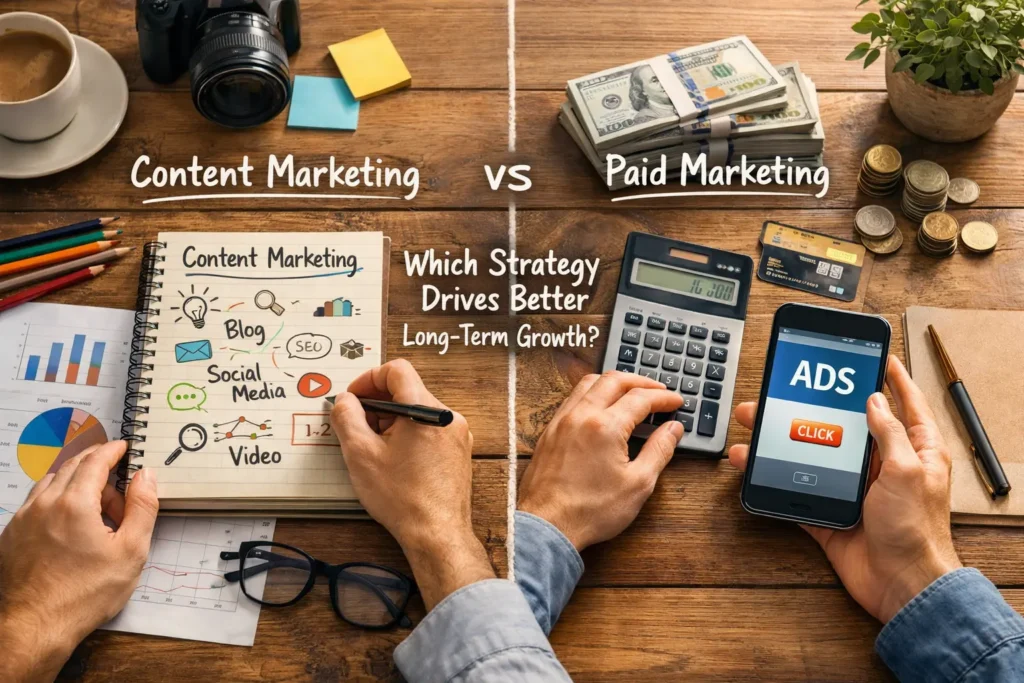
Content marketing and paid marketing both play powerful roles in digital growth, but they deliver different long-term results. Content marketing focuses on creating valuable, SEO-optimized content that builds organic traffic, brand authority, and customer trust over time.
It improves search engine rankings, drives sustainable website traffic, and generates high-quality inbound leads without ongoing ad spend. In contrast, paid marketing such as PPC advertising and social media ads delivers instant visibility, targeted reach, and faster conversions.
However, paid campaigns require continuous budget investment to maintain results. For long-term growth, a strategic mix of content strategy and paid advertising often delivers the strongest ROI and scalable business growth.
Content Marketing vs Paid Marketing

Businesses today face an important marketing decision:
Should you invest in content marketing or paid marketing?
Both strategies generate visibility, leads, and revenue — but they operate differently in terms of speed, cost, scalability, and sustainability.
If you’re researching content marketing vs paid marketing, this guide will explain the key differences, advantages, challenges, and which approach is better for long-term growth in 2026.
Understanding these two strategies helps businesses allocate budgets more effectively and maximize return on investment (ROI).
What Is Content Marketing?
Content marketing focuses on creating valuable, relevant, and consistent content to attract and retain a clearly defined audience.
Instead of directly promoting products, content marketing educates, informs, and builds trust.
Examples include:
- Blog articles
- SEO content
- Videos
- Guides and ebooks
- Case studies
- Social media posts
- Podcasts
Content marketing supports organic growth through search engines and audience engagement.
Its goal is long-term authority building.
What Is Paid Marketing?
Paid marketing involves promoting products or services through advertising platforms where you pay for exposure.
Common paid marketing channels include:
- Pay-per-click (PPC) ads
- Social media advertising
- Display ads
- Sponsored posts
- Video ads
With paid marketing, visibility depends on budget.
Once campaigns are live, traffic can start immediately.
Paid marketing is results-driven and performance-based.
The Core Difference: Earning Attention vs Buying Attention

The biggest difference between content marketing vs paid marketing is how attention is generated.
Content marketing earns attention by delivering value.
Paid marketing buys attention by placing ads in front of targeted audiences.
Content builds relationships.
Paid ads create immediate exposure.
This distinction affects cost, speed, and long-term sustainability.
Speed of Results
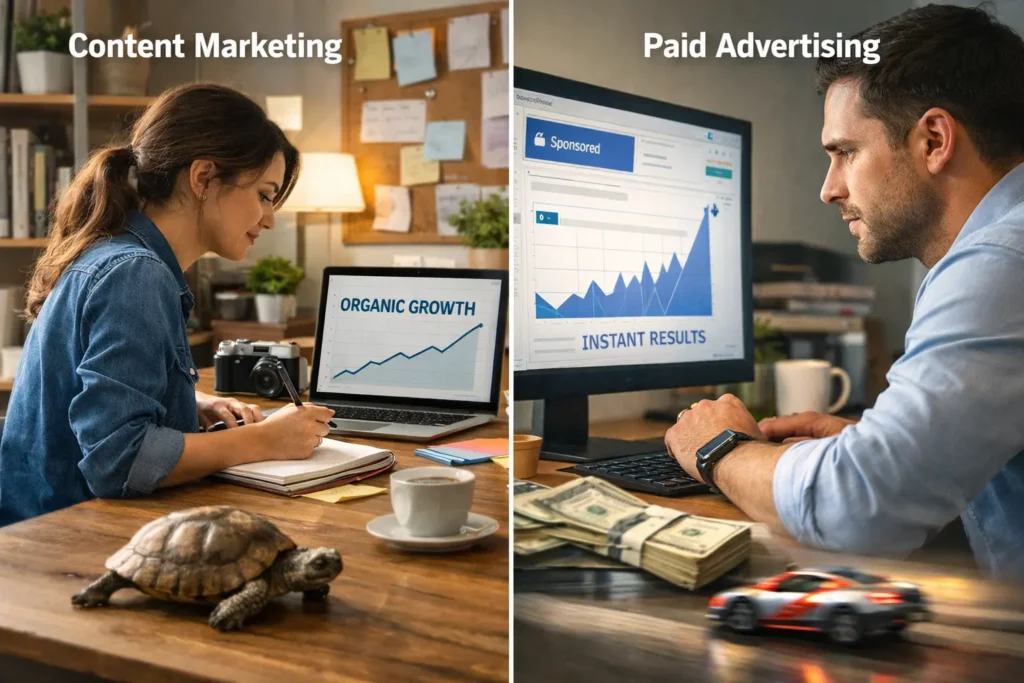
Paid Marketing
Paid campaigns can generate traffic within hours.
If you launch a search ad campaign, your brand can appear at the top of search results instantly.
Paid marketing is ideal for:
- Product launches
- Seasonal promotions
- Limited-time offers
- Immediate lead generation
Content Marketing
Content marketing requires time.
SEO-focused blog posts may take months to rank.
Authority builds gradually through consistent publishing.
However, once content gains traction, it generates ongoing traffic without per-click cost.Paid marketing is fast.
Content marketing is gradual but compounding.
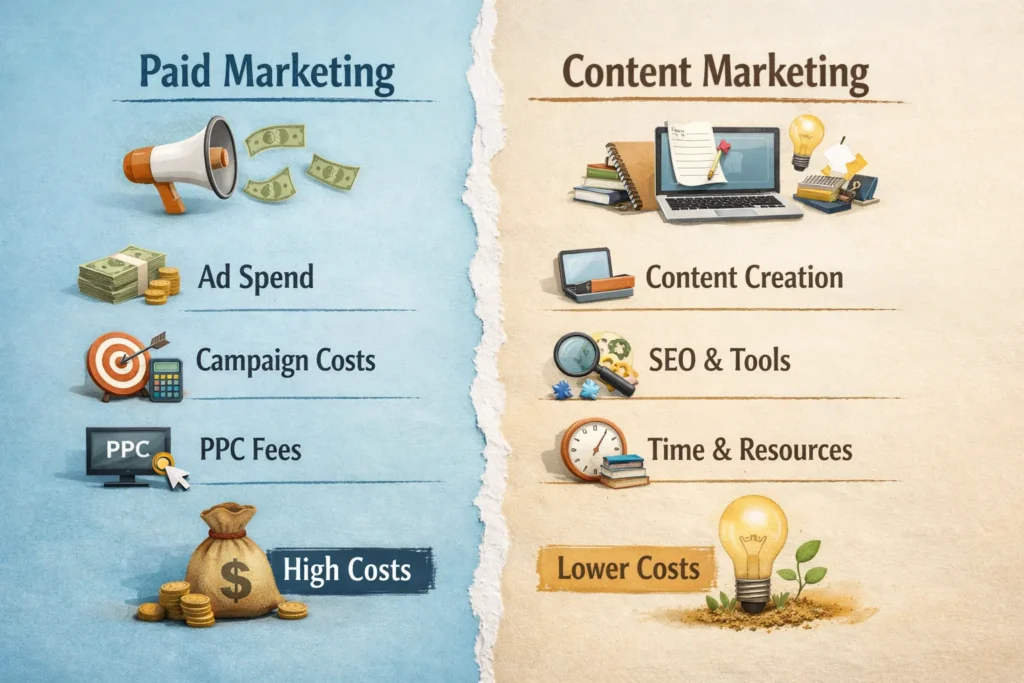
Cost Structure Comparison
Paid Marketing Costs
Paid marketing involves:
- Continuous ad spend
- Bidding competition
- Cost per click (CPC)
- Campaign management
When budget stops, traffic stops.
Costs scale proportionally with reach.
Content Marketing Costs
Content marketing requires:
- Content creation investment
- SEO optimization
- Time and consistency
While upfront effort is required, ongoing costs are typically lower over time.
Organic traffic continues without per-click payment.
Content marketing becomes more cost-efficient long term.
ROI: Short-Term vs Long-Term

Short-Term ROI
Paid marketing often delivers stronger short-term ROI because of immediate visibility.
If campaigns are optimized, businesses can generate sales quickly.
Long-Term ROI
Content marketing often produces higher cumulative ROI over time.
Reasons include:
- Compounding organic traffic
- Reduced customer acquisition costs
- Increased brand trust
- Sustainable visibility
Content builds digital assets.
Paid marketing generates temporary results.
Trust and Brand Authority

Modern consumers research before buying.
Content marketing builds authority through:
- Educational resources
- Thought leadership
- Informative blog posts
- Case studies
Users trust brands that provide value.
Paid ads, while effective, may feel promotional.
Authority strengthens long-term growth.
Scalability

Paid Marketing Scalability
Paid campaigns can scale quickly by increasing budget.
However, scaling costs increase as competition rises.
Cost per click may grow over time.
Content Marketing Scalability
Scaling content marketing requires expanding:
- Content topics
- Keyword coverage
- Topic clusters
- Internal linking
Scaling takes time but becomes more efficient.
Content grows exponentially when authority strengthens.
Targeting Precision

Paid marketing offers advanced targeting options:
- Demographics
- Location
- Interests
- Behavioral data
- Retargeting
Content marketing relies on intent-based targeting through SEO keywords and audience engagement.
Both strategies can be precise when executed properly.
Sustainability and Stability

Paid marketing is budget-dependent.
Market changes or rising costs can reduce profitability.
Content marketing is more stable once established.
Organic traffic can continue even without additional investment.
Long-term sustainability favors content marketing.
When to Choose Content Marketing

Content marketing is ideal when:
- You aim for long-term authority
- You want sustainable traffic
- You operate in a knowledge-driven industry
- You focus on organic growth
- You want to reduce reliance on ads
It is particularly effective for B2B, service-based businesses, and high-trust industries.
When to Choose Paid Marketing
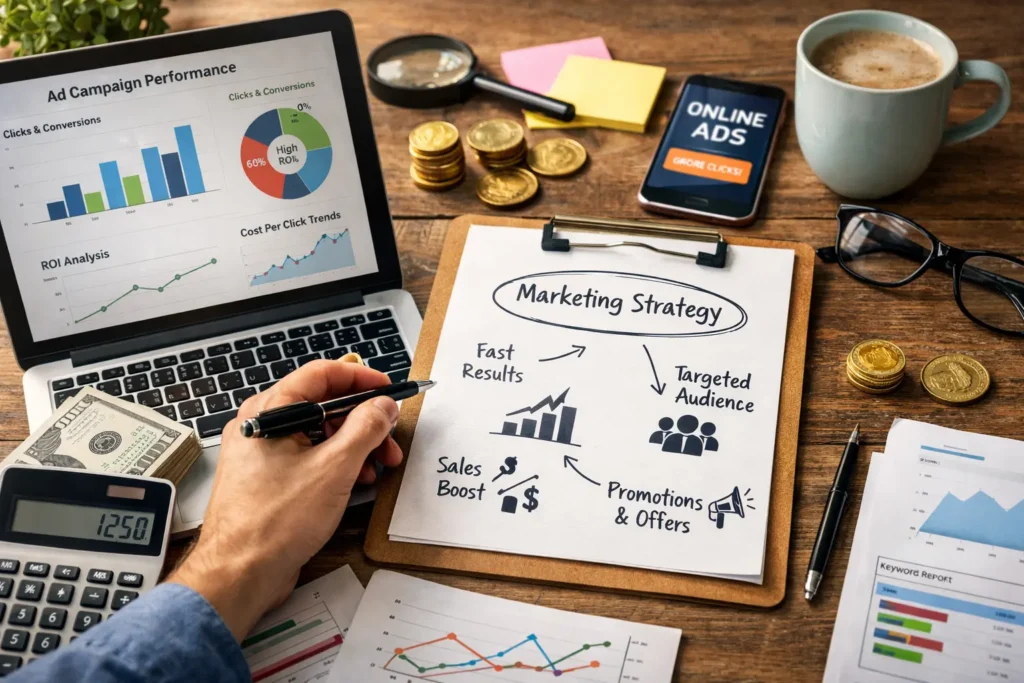
Paid marketing is ideal when:
- You need immediate results
- You are launching new products
- You want rapid testing
- You run time-sensitive campaigns
- You need predictable traffic
E-commerce brands often rely heavily on paid campaigns.
The Hybrid Strategy: Best of Both Worlds
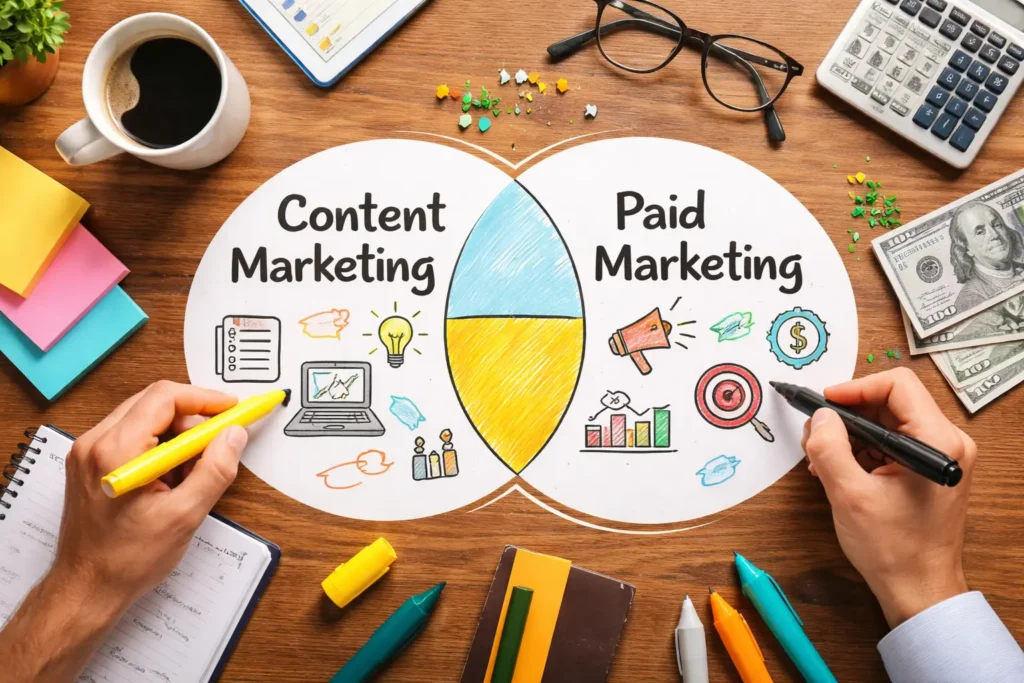
The most successful businesses combine both strategies.
For example:
- Use paid ads to generate initial traffic.
- Create content to nurture and retain customers.
- Retarget content readers with paid campaigns.
- Use SEO to reduce long-term ad dependency.
Paid marketing fuels momentum.
Content marketing sustains growth.
Together, they create balanced marketing ecosystems.
3-Year Growth Perspective

Imagine two businesses:
Business A relies only on paid ads.
Business B invests heavily in content marketing while using ads strategically.
After three years:
Business A continues paying for traffic.
Business B receives significant organic traffic without per-click cost.
Over time, content marketing reduces acquisition costs and increases margins.
Common Mistakes

Over-Relying on Paid Ads
Increases budget dependency.
Ignoring Content Quality
Poor content does not rank or build trust.
Lack of Strategy
Both approaches require structured planning.
Not Tracking ROI
Data guides budget decisions.
Avoiding these mistakes improves performance.
Frequently Asked Questions
Is content marketing better than paid marketing?
Content marketing is often better long term. Paid marketing is stronger short term.
Can small businesses use both?
Yes. Combining strategies often maximizes growth.
Does content marketing cost less?
Over time, yes. But it requires initial effort and patience.
Which generates faster results?
Paid marketing delivers faster results.
Final Thoughts
When comparing content marketing vs paid marketing, the real answer depends on your goals.
Content marketing builds long-term authority, organic traffic, and sustainable growth.
Paid marketing delivers immediate visibility, fast leads, and rapid scalability.
In 2026, the smartest businesses do not choose one exclusively.
They integrate both strategically.Content builds credibility.
Paid ads create momentum.
Together, they drive measurable, scalable growth.