
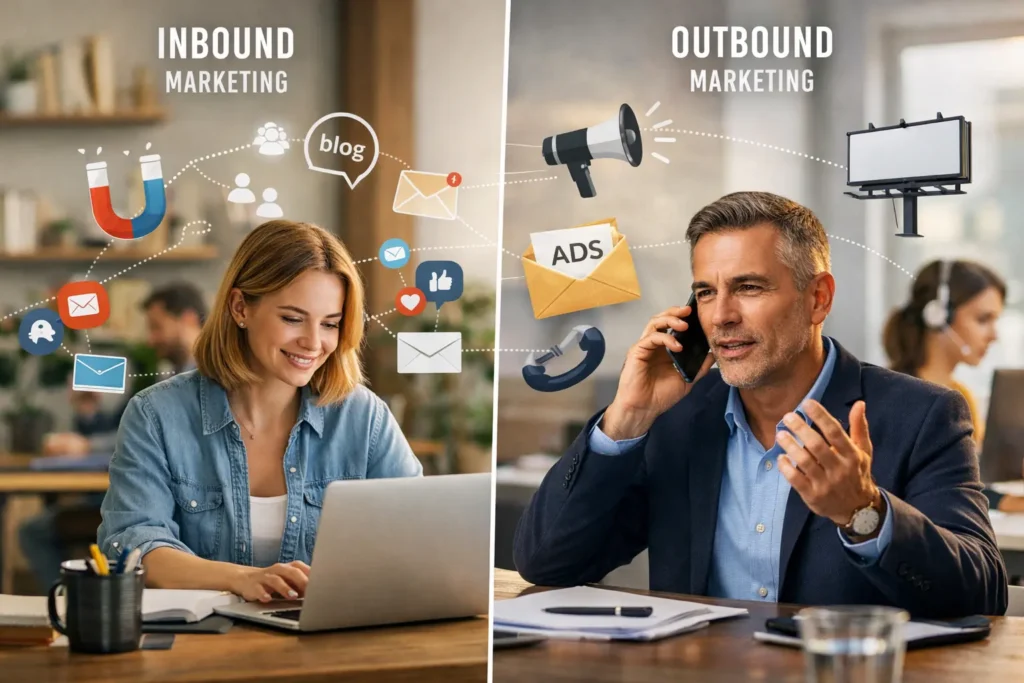
Inbound and outbound marketing are two powerful strategies businesses use to attract customers, but they work in very different ways. Inbound marketing focuses on drawing people in through valuable content, SEO, social media, and personalized experiences that build trust over time.
In contrast, outbound marketing pushes messages outward using traditional methods like TV ads, cold calls, email blasts, and paid advertisements.
While inbound is customer-centric and relationship-driven, outbound is often broader and interruption-based. In 2026, successful brands combine both approaches to create a balanced, data-driven strategy. Understanding the differences helps businesses choose the right tactics to increase visibility, generate quality leads, and drive sustainable growth.
Inbound vs Outbound Marketing Differences
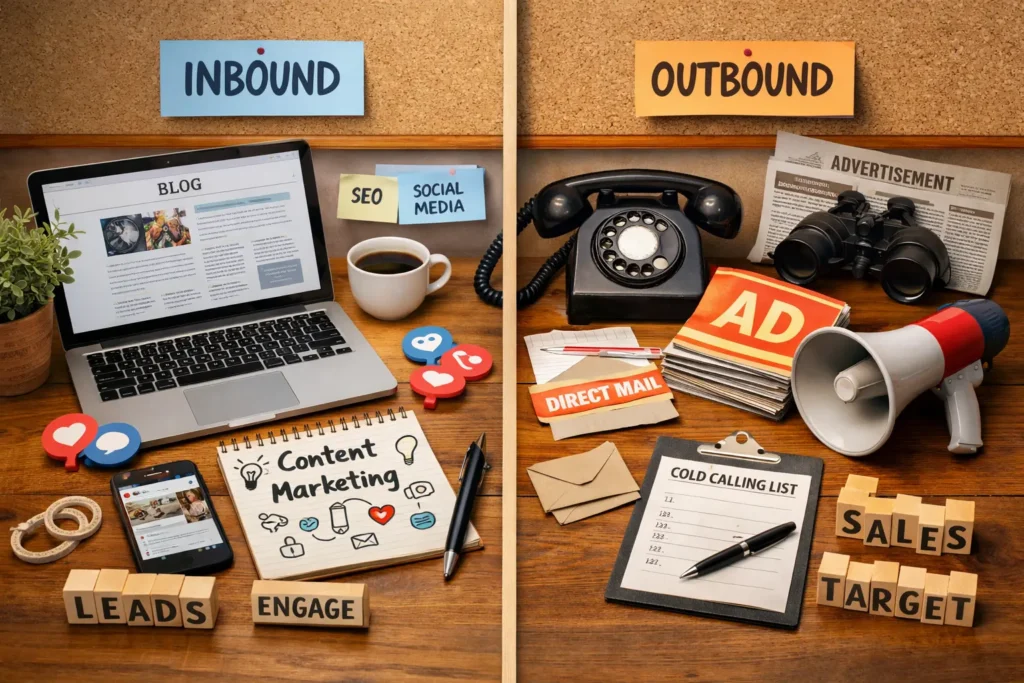
Marketing has shifted dramatically in the digital age. Traditional advertising once dominated business growth, but today, consumers behave differently. They research before buying, compare brands online, and expect value before making decisions.
This shift raises an important strategic question:
Inbound vs outbound marketing — what are the real differences, and which is better for long-term success?
Both approaches generate leads and revenue. However, they operate in completely different ways, with different cost structures, timelines, and sustainability levels.
Understanding the inbound vs outbound marketing differences allows businesses to choose smarter growth strategies in 2026.
What Is Inbound Marketing?
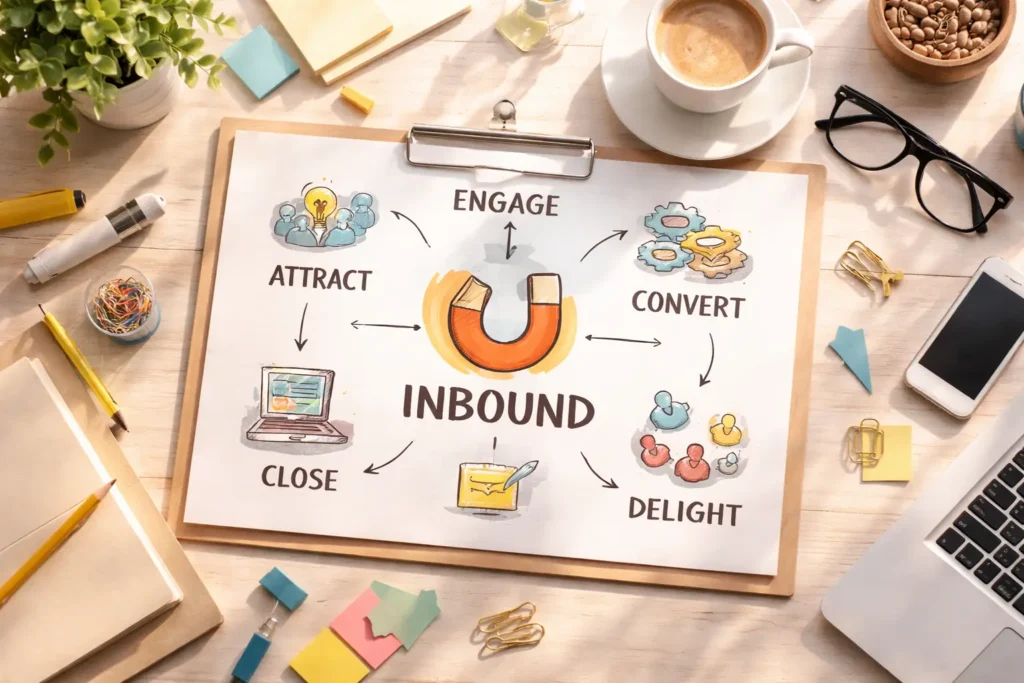
Inbound marketing is a strategy focused on attracting potential customers through valuable content, helpful resources, and organic engagement.
Instead of pushing messages outward, inbound marketing pulls customers in naturally.
It aligns with how modern buyers behave — they search, learn, and evaluate before purchasing.
Common inbound marketing channels include:
- Search engine optimization (SEO)
- Content marketing
- Blogging
- Social media marketing
- Email nurturing
- Webinars and educational resources
Inbound marketing builds trust before selling.
What Is Outbound Marketing?
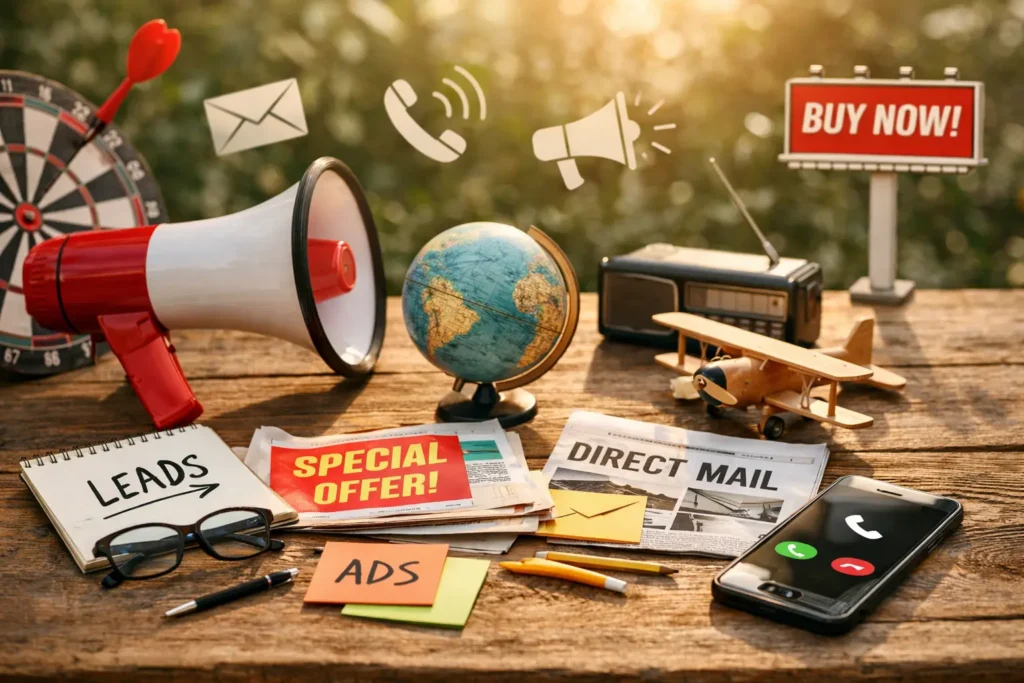
Outbound marketing takes a proactive approach.
Instead of waiting for customers to find you, outbound marketing pushes messages directly to target audiences.
It often interrupts the user experience to gain attention.
Common outbound marketing channels include:
- Paid advertising (PPC)
- Cold emails
- Telemarketing
- Direct mail
- Display ads
- Traditional media advertising
Outbound marketing focuses on immediate visibility and fast lead generation.
The Core Difference: Attraction vs Interruption

The fundamental inbound vs outbound marketing difference lies in how they approach customers.
Inbound marketing attracts customers who are already searching for solutions.
Outbound marketing interrupts audiences to introduce a solution.
Inbound aligns with buyer intent.
Outbound creates awareness.
This difference shapes cost, effectiveness, and sustainability.
Customer Journey Comparison
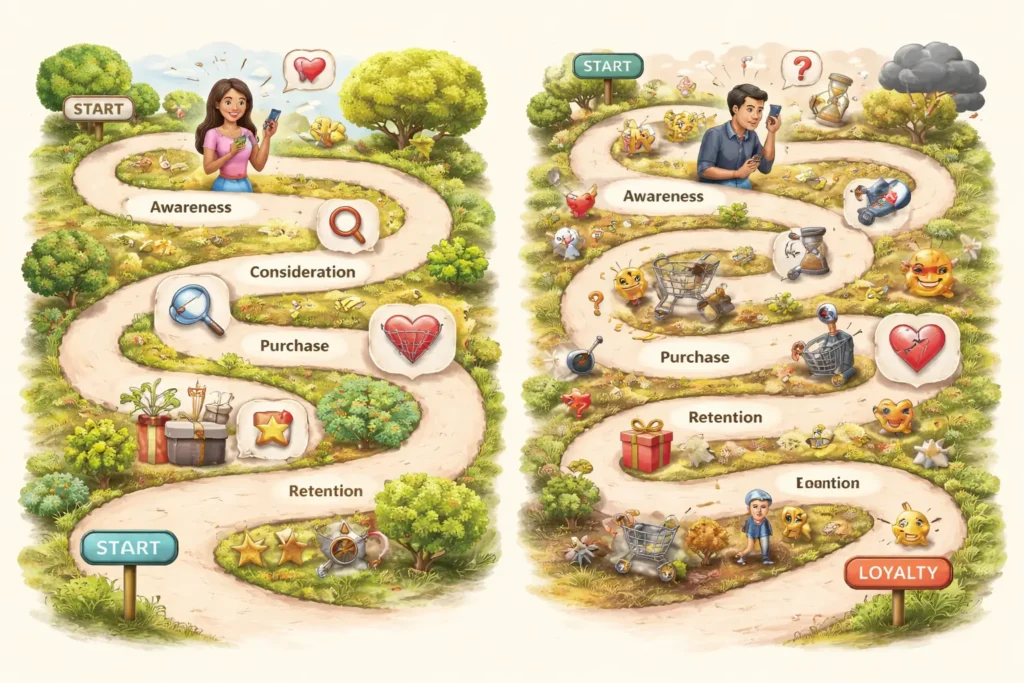
Inbound Marketing Journey
- Customer searches for a problem.
- Finds helpful content.
- Engages with your brand.
- Builds trust over time.
- Converts into a customer.
This journey is organic and relationship-driven.
Outbound Marketing Journey
- Business targets audience directly.
- Ad or message interrupts attention.
- Customer becomes aware.
- Immediate conversion may occur.
Outbound relies on exposure and persuasion.
Cost Structure Differences
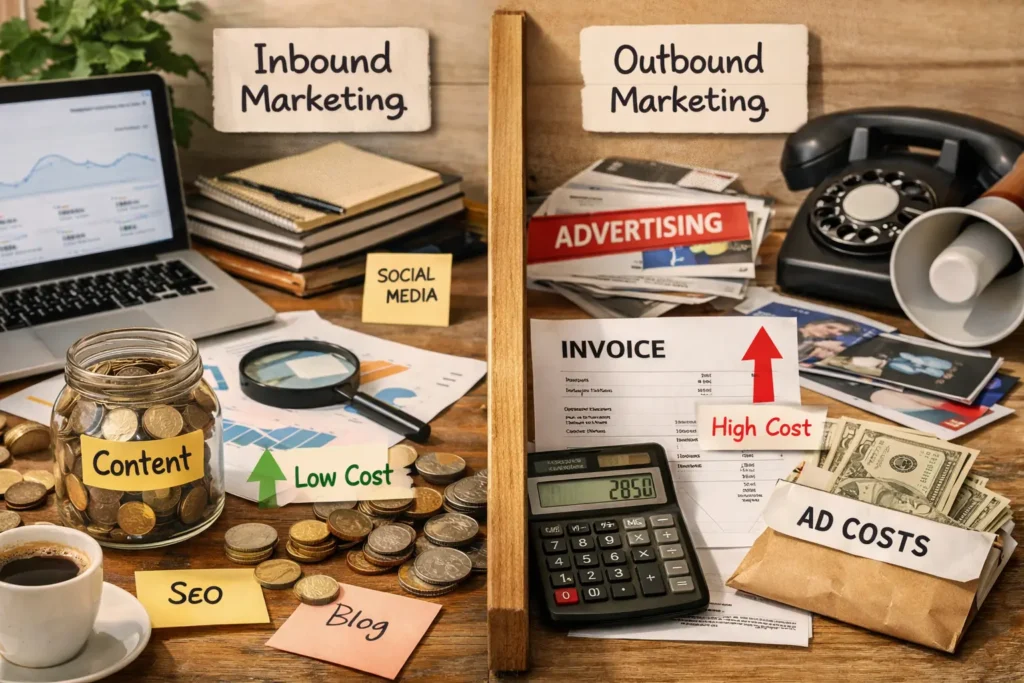
Inbound Marketing Costs
Inbound requires:
- Content creation
- SEO optimization
- Website development
- Time investment
While initial investment may be significant, long-term costs decrease as organic traffic grows.
Inbound marketing often reduces cost per acquisition over time.
Outbound Marketing Costs
Outbound marketing involves:
- Ongoing ad spend
- Media buying
- Campaign budgets
- Paid placements
When the budget stops, visibility stops.
Outbound marketing has continuous operational costs.
Speed of Results
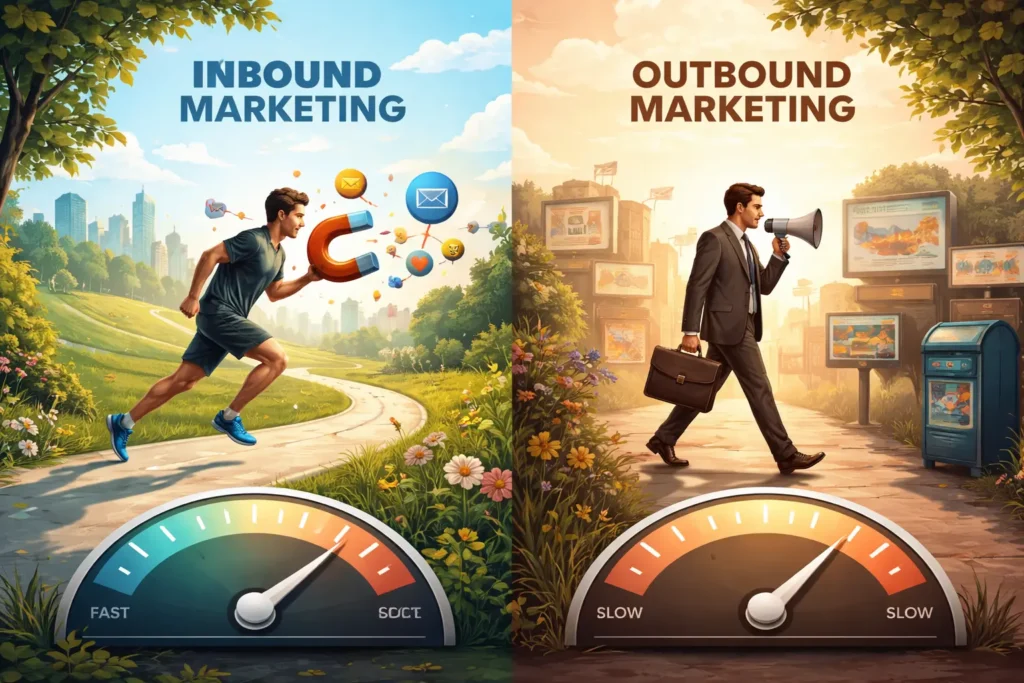
One of the biggest inbound vs outbound marketing differences is timing.
Outbound Marketing Speed
Outbound campaigns can generate traffic immediately.
Paid ads can produce leads within hours.
This makes outbound ideal for:
- Product launches
- Time-sensitive promotions
- Rapid growth goals
Inbound Marketing Speed
Inbound takes time.
SEO and content marketing may require months to show significant results.
However, once established, inbound produces consistent traffic without per-click costs.Outbound is fast.
Inbound is sustainable.
ROI Comparison

Short-Term ROI
Outbound often wins short-term ROI because of immediate lead generation.
Long-Term ROI
Inbound typically delivers stronger long-term ROI due to:
- Compounding traffic
- Lower acquisition costs
- Sustainable visibility
- Stronger brand trust
Inbound builds assets.
Outbound buys exposure.
Trust and Brand Authority

Modern consumers value trust.
Inbound marketing builds authority by:
- Providing helpful information
- Demonstrating expertise
- Creating educational content
Outbound marketing may struggle to build deep trust because it interrupts rather than assists.
Trust drives long-term loyalty.
Targeting Precision

Both strategies offer targeting capabilities.
Outbound Targeting
Paid advertising allows precise demographic and behavioral targeting.
Businesses can control:
- Location
- Age
- Interests
- Device
- Search queries
Inbound Targeting
Inbound relies on keyword intent and content relevance.
Users self-select by searching for relevant topics.Inbound targeting is intent-based.
Outbound targeting is demographic and behavior-based.
Scalability and Growth

Outbound Scalability
Outbound marketing scales quickly with increased budget.
More spending = more exposure.
However, scaling costs rise proportionally.
Inbound Scalability
Inbound marketing scales through:
- Content expansion
- Topic authority
- Organic traffic growth
Scaling inbound requires time but becomes more efficient over time.
Risk and Stability

Outbound marketing faces risks such as:
- Rising ad costs
- Increased competition
- Platform algorithm changes
Inbound marketing risks include:
- Search engine algorithm updates
- Content competition
- Time-intensive development
Diversified strategies reduce overall risk.
When to Choose Inbound Marketing
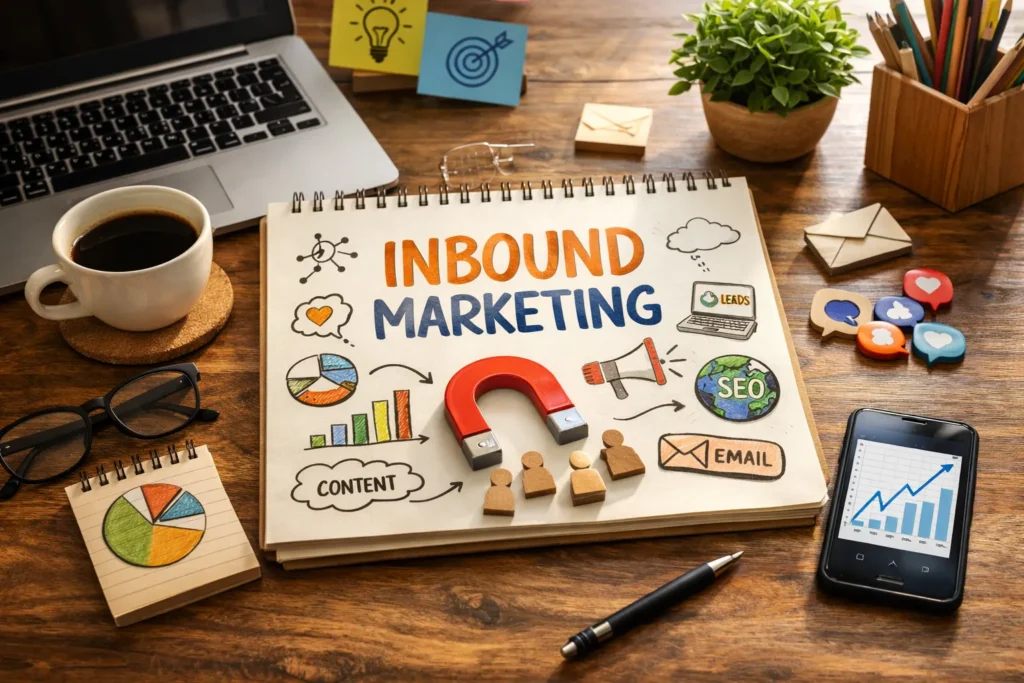
Inbound marketing is ideal if:
- You want long-term organic growth
- You focus on authority building
- You have longer sales cycles
- You aim to reduce acquisition costs
- You prioritize brand trust
Inbound suits businesses investing in sustainability.
When to Choose Outbound Marketing

Outbound marketing is ideal if:
- You need immediate leads
- You launch new products
- You operate in competitive markets
- You want predictable traffic volume
- You run time-sensitive promotions
Outbound suits businesses seeking speed.
The Hybrid Approach: Best of Both

Most successful companies combine inbound and outbound marketing.
For example:
- Use outbound ads to generate immediate leads.
- Use inbound content to nurture and retain customers.
- Use SEO to reduce long-term ad dependency.
- Use remarketing to convert warm traffic.
Hybrid strategies maximize both speed and sustainability.
Inbound vs Outbound Marketing Differences Summary
| Factor | Inbound Marketing | Outbound Marketing |
| Approach | Attraction-based | Interruption-based |
| Cost Structure | Long-term investment | Continuous spending |
| Speed | Slower start | Immediate results |
| Sustainability | High | Budget-dependent |
| Trust Building | Strong | Moderate |
| Scalability | Gradual | Rapid but costly |
Both strategies have value depending on goals.
Frequently Asked Questions
What is inbound marketing in simple words?
Inbound marketing attracts customers by sharing useful content and solving their problems.
What is outbound marketing?
Outbound marketing promotes products or services directly through ads, emails, or cold outreach.
Which strategy works faster?
Outbound usually delivers quicker visibility, while inbound takes time to build results.
Is inbound marketing expensive?
It often requires time and effort more than money, but it can reduce long-term marketing costs.
Should startups focus on inbound or outbound?
Startups can benefit from using outbound for quick exposure and inbound for building long-term credibility.
Final Thoughts
Understanding how inbound and outbound marketing function helps businesses make smarter growth decisions.
Inbound focuses on earning attention by educating, guiding, and supporting potential customers. It develops credibility and builds a strong foundation that delivers results over time.
Outbound, in contrast, is designed to spark immediate awareness. It places your message directly in front of your audience, helping you generate quicker traction when speed matters.
Looking ahead, companies that blend long-term relationship building with strategic promotional campaigns will stay more competitive.
Inbound creates lasting connections.
Outbound creates forward movement.
When used together with purpose, they support steady progress and sustainable business expansion.