

Calculating ROI for paid advertising in 2026 starts with clearly defining your campaign goal—sales, leads, or conversions—so returns are measurable. First, track total revenue generated directly from ads using accurate attribution tools and analytics platforms.
Then calculate total ad spend, including media costs, creative production, tools, and management fees. Use the formula ROI = (Revenue − Cost) ÷ Cost × 100 to get a clear percentage result. Modern ROI analysis also factors in customer lifetime value, not just immediate sales.
With AI-driven tracking and privacy-first data models, marketers now rely on blended attribution for more realistic ROI insights. Regularly reviewing ROI helps optimize budgets and scale only the highest-performing campaigns.
How to Calculate ROI for Paid Advertising

Every business investing in paid advertising wants one thing: results. Whether you are running Google Ads, social media campaigns, or display advertising, you need to know if your money is generating profit.
That’s where ROI comes in.
If you’re searching for how to calculate ROI for paid advertising, this guide will break it down step by step in clear, practical terms — with formulas, examples, and optimization tips.
In simple terms:
ROI (Return on Investment) measures how much profit you generate from your advertising compared to what you spend.
Understanding ROI helps you scale winning campaigns and eliminate underperforming ones.
What Is ROI in Paid Advertising?

ROI stands for Return on Investment.
In paid advertising, ROI tells you whether your ad campaigns are profitable.
It answers one core question:
For every dollar spent on ads, how much profit did I make?
Without calculating ROI, you are guessing — not managing.
The Basic ROI Formula
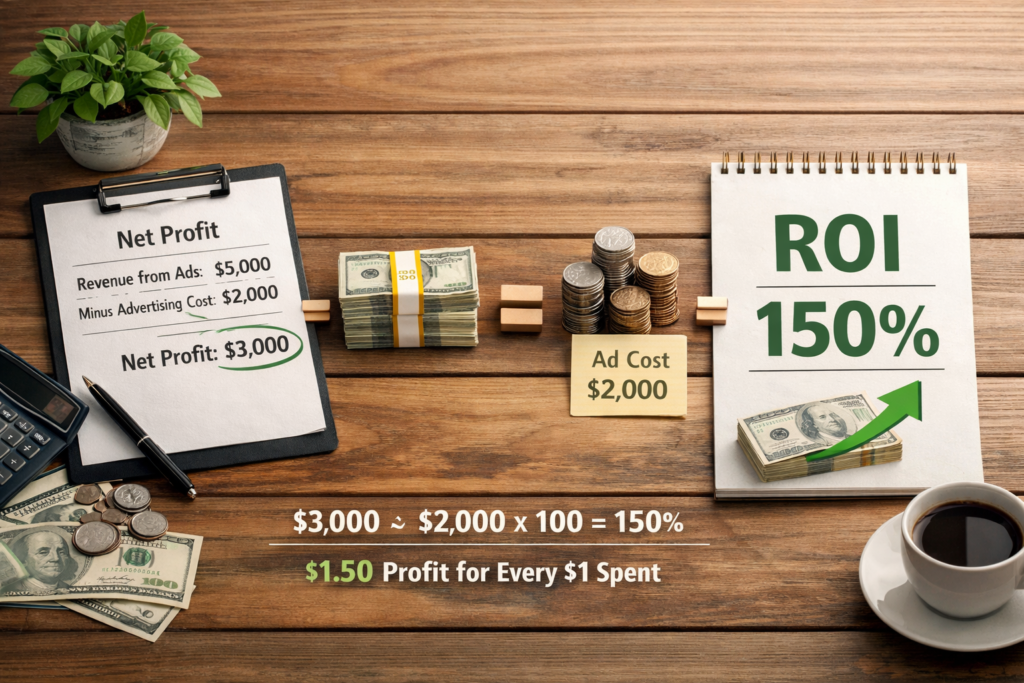
The standard formula for calculating ROI is:
ROI = (Net Profit ÷ Advertising Cost) × 100
Where:
- Net Profit = Revenue generated from ads – Advertising cost
- Advertising Cost = Total ad spend
This formula gives you a percentage.If ROI is positive, your campaign is profitable.
If ROI is negative, you are losing money.
Step-by-Step: How to Calculate ROI for Paid Advertising
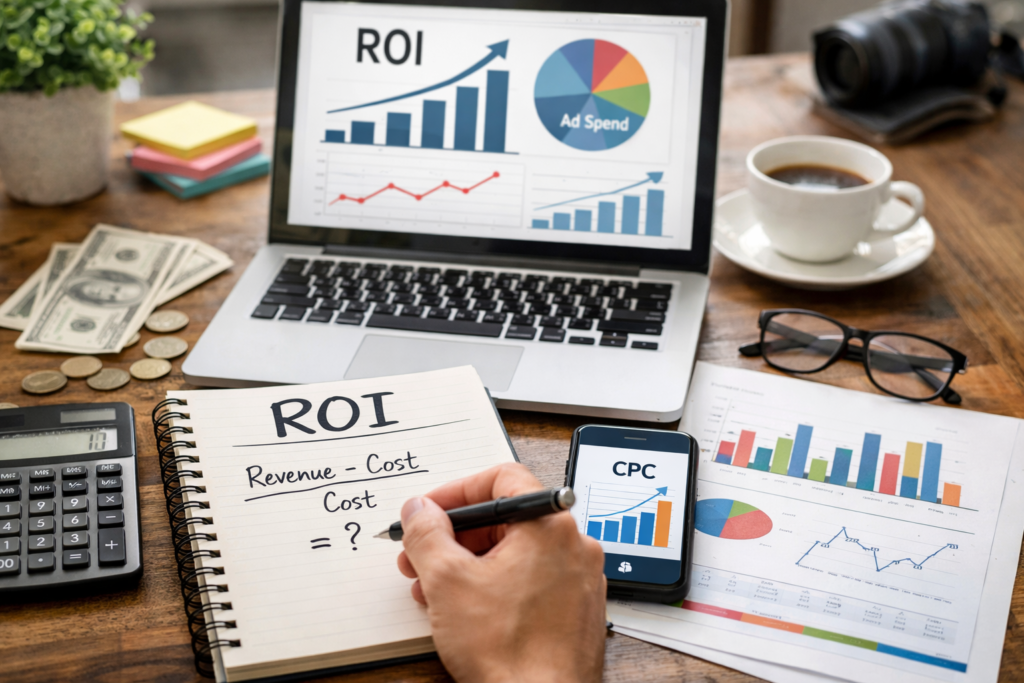
To calculate ROI for paid advertising, start by determining the total revenue generated from your campaigns.
Next, sum up all advertising costs, including ad spend, creative production, and any related expenses. Then, apply the formula ROI = (Revenue − Cost) ÷ Cost × 100 to get the return percentage.
Finally, use this insight to evaluate campaign performance and guide future marketing decisions.
Step 1: Calculate Total Revenue from Ads
Track how much revenue your campaign generated.
Example:
You spent $1,000 on ads.
The campaign generated $4,000 in sales.
Total Revenue = $4,000
Step 2: Subtract Ad Spend to Get Net Profit
Net Profit = Revenue – Ad Spend
$4,000 – $1,000 = $3,000 net profit
Step 3: Apply the ROI Formula
ROI = ($3,000 ÷ $1,000) × 100
ROI = 3 × 100
ROI = 300%
This means for every $1 spent, you earned $3 in profit.
That is a strong ROI.
ROI vs ROAS: What’s the Difference?
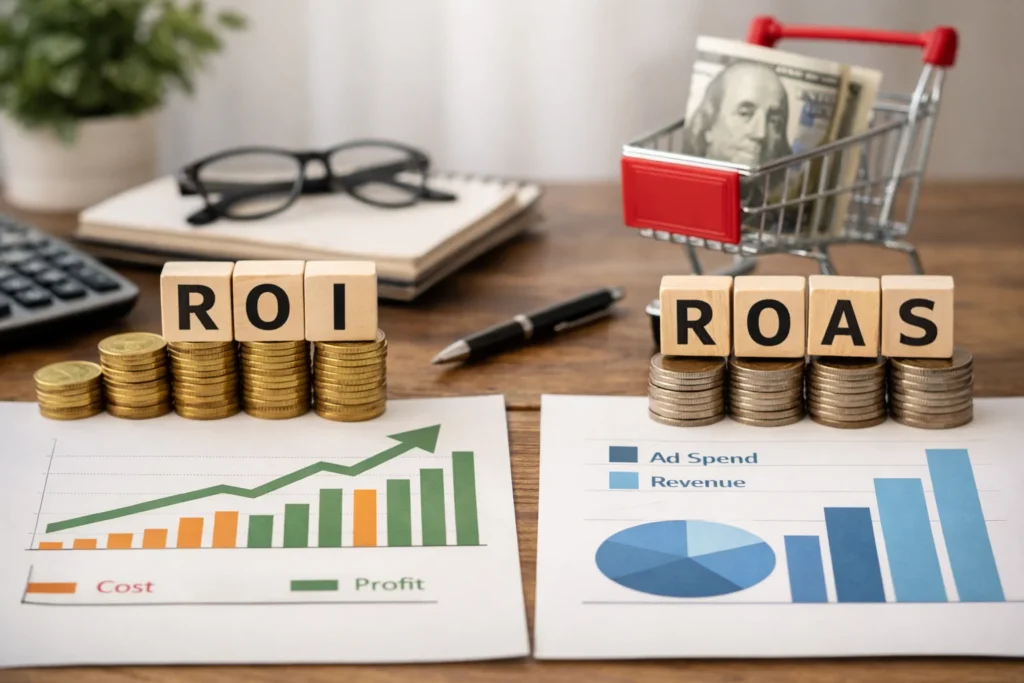
Many advertisers confuse ROI with ROAS.
ROAS (Return on Ad Spend)
Formula:
ROAS = Revenue ÷ Ad Spend
Using the same example:
$4,000 ÷ $1,000 = 4
This means you earned $4 for every $1 spent.
However, ROAS does not include profit margins.
ROI considers profitability after expenses.
ROI = Profitability
ROAS = Revenue efficiency
Both metrics matter.
Why ROI Is Critical for Paid Advertising

Calculating ROI helps you:
- Identify profitable campaigns
- Adjust budgets effectively
- Scale winning ads
- Eliminate waste
- Improve marketing efficiency
Without ROI tracking, ad spending becomes risky.
Performance marketing depends on measurable returns.
Important Costs to Include in ROI Calculation

Many businesses calculate ROI incorrectly by ignoring additional costs.
To get accurate ROI, include:
- Ad spend
- Creative production costs
- Agency or management fees
- Software tools
- Landing page development
- Transaction fees
True ROI must consider total investment.
Example: ROI for a Lead Generation Campaign

Let’s say:
You spend $2,000 on ads.
You generate 100 leads.
20 leads convert into customers.
Each customer brings $500 in revenue.
Revenue = 20 × $500 = $10,000
Net Profit = $10,000 – $2,000 = $8,000
ROI = ($8,000 ÷ $2,000) × 100
ROI = 400%
This is a high-performing campaign.
Tracking conversions accurately is essential.
How to Track ROI Accurately
To calculate ROI correctly, you must track conversions.
Use:
- Conversion tracking tools
- Google Analytics
- CRM systems
- Call tracking software
- E-commerce tracking
Without tracking, ROI calculations are unreliable.
Data accuracy determines profitability insight.
Factors That Influence ROI

Several elements affect advertising ROI.
1. Conversion Rate
Higher conversion rates improve ROI.
Improving landing pages can dramatically increase profitability.
2. Cost Per Click (CPC)
Lower CPC improves ROI.
Optimizing Quality Score reduces costs.
3. Average Order Value (AOV)
Increasing order value increases revenue per conversion.
Upselling and cross-selling boost ROI.
4. Customer Lifetime Value (CLV)
If customers buy repeatedly, ROI increases over time.
Lifetime value is critical for service-based businesses.
Short-Term ROI vs Long-Term ROI

Not all ROI is immediate.
Some campaigns focus on:
- Brand awareness
- Audience building
- Email list growth
These may show delayed returns.
Long-term ROI considers customer retention and lifetime revenue.
Understanding your sales cycle is important.
What Is a Good ROI for Paid Advertising?
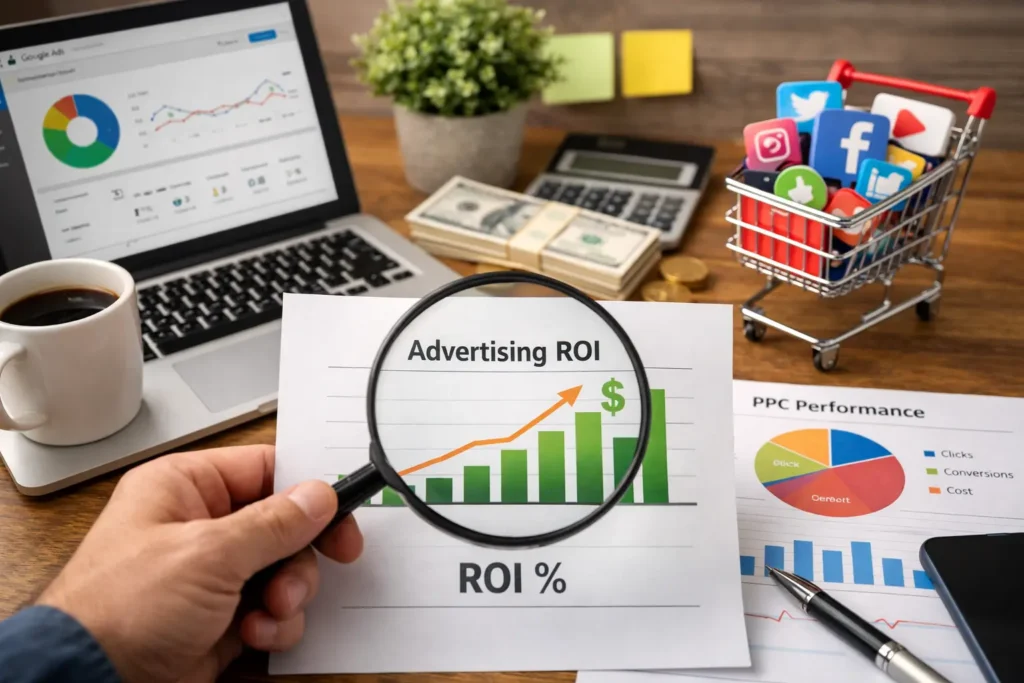
There is no universal benchmarThere is no universal benchmark.
However:
- 100% ROI means you doubled your investment.
- 200%+ ROI is considered strong in many industries.
- Break-even ROI depends on margins.
Industries with high margins can tolerate lower ROAS.
Service businesses often see higher ROI than low-margin retail.
Context matters.k.
However:
- 100% ROI means you doubled your investment.
- 200%+ ROI is considered strong in many industries.
- Break-even ROI depends on margins.
Industries with high margins can tolerate lower ROAS.
Service businesses often see higher ROI than low-margin retail.
Context matters.
How to Improve ROI for Paid Advertising

1. Refine Targeting
Focus on high-intent audiences.
2. Optimize Ad Creatives
Test multiple headlines and visuals.
Small improvements increase conversions.
3. Improve Landing Pages
Ensure:
- Fast loading
- Clear messaging
- Strong calls to action
- Mobile responsiveness
Conversion optimization boosts ROI.
4. Use Retargeting Campaigns
Retargeting captures users who showed interest but did not convert.
Retargeted traffic often converts at higher rates.
5. Monitor Data Regularly
Review metrics weekly.
Adjust bids and targeting based on performance.
Optimization is continuous.
Common ROI Calculation Mistakes
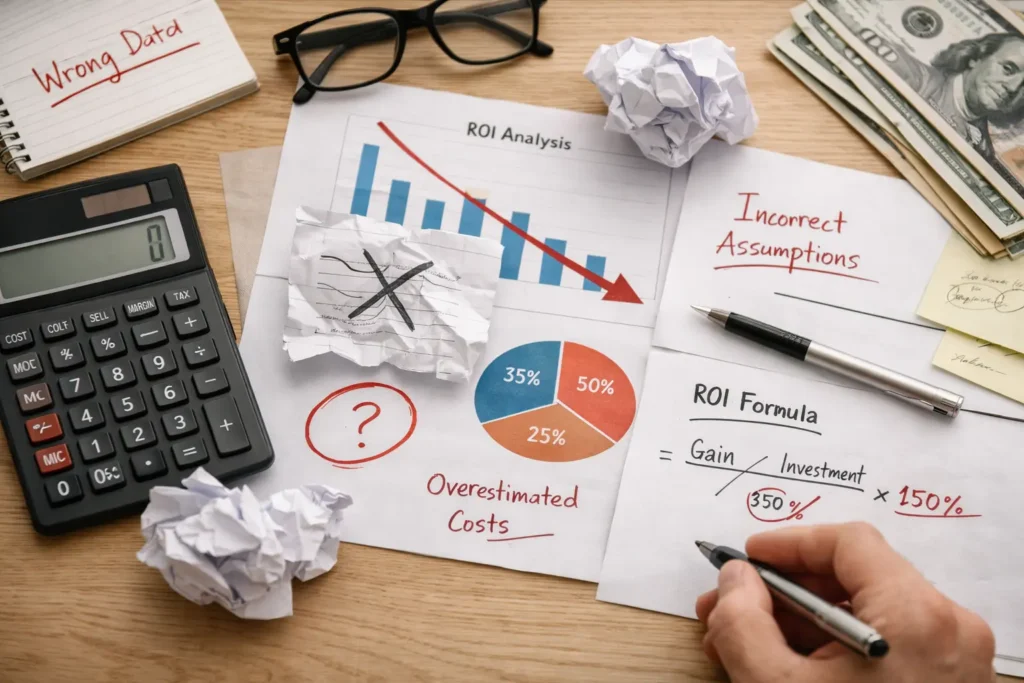
Ignoring Additional Costs
Always include management and creative expenses.
Focusing Only on Revenue
Profit matters more than revenue.
Not Tracking Offline Conversions
Phone calls and in-store visits must be tracked.
Measuring Too Early
Allow campaigns enough data before judging performance.
Frequently Asked Questions
How do you calculate ROI for advertising?
Use the formula: ROI = (Net Profit ÷ Ad Spend) × 100.
What is the difference between ROI and ROAS?
ROI measures profit. ROAS measures revenue efficiency.
Why is ROI important in paid advertising?
It determines whether your campaigns are profitable.
Can a campaign have high ROAS but low ROI?
Yes. High revenue does not guarantee high profit if costs are high.
Final Thoughts
Understanding how to calculate ROI for paid advertising gives you control over your marketing investment.
Paid advertising should never rely on guesswork.
When you calculate ROI correctly, you can:
- Scale profitable campaigns
- Optimize underperforming ads
- Allocate budgets strategically
- Maximize long-term growth
In 2026, successful businesses are data-driven.
If you cannot measure ROI, you cannot manage growth effectively.
Advertising is not an expense — it is an investment.
And every investment must be measured.