
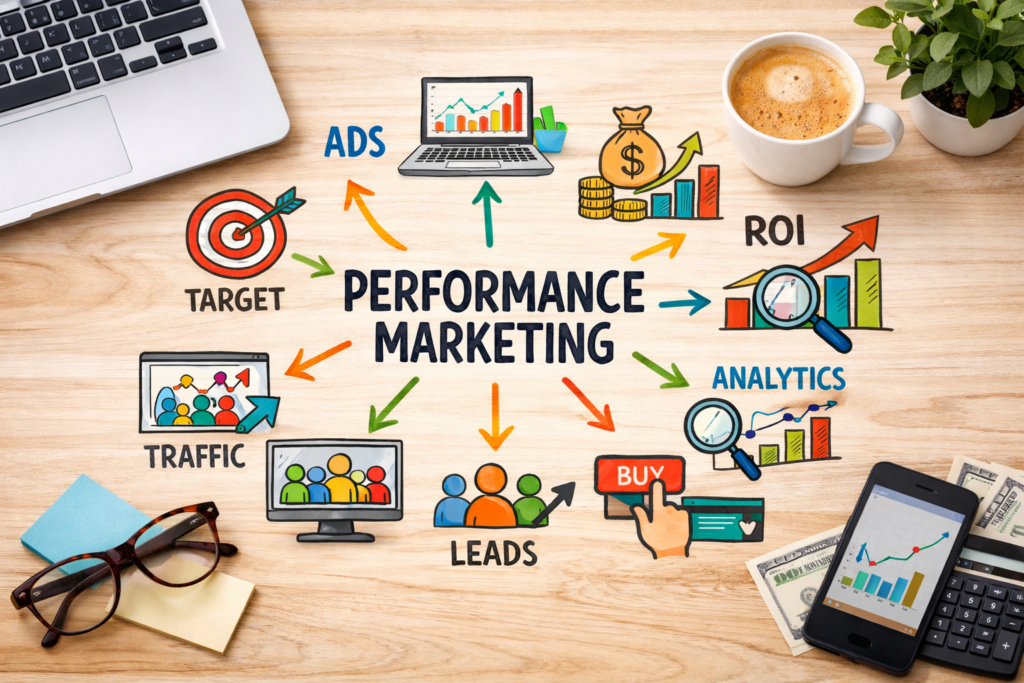
Performance marketing is a results-driven approach where businesses pay only for measurable outcomes, such as clicks, leads, or sales. Unlike traditional advertising, which focuses on impressions and brand visibility, performance marketing ties marketing spend directly to tangible actions.
It leverages digital channels like search engines, social media, affiliate networks, and email campaigns to reach the right audience at the right time. Key performance indicators (KPIs) such as cost-per-click (CPC), cost-per-acquisition (CPA), and return on ad spend (ROAS) help track and optimize campaigns.
This strategy allows businesses to maximize ROI, minimize wasted spend, and scale campaigns effectively. In 2026, integrating AI analytics and automation makes performance marketing even more precise and impactful for growth-focused companies.
What Is Performance Marketing?
Performance marketing is a results-oriented digital marketing approach where businesses pay only when a specific, measurable action occurs. Unlike traditional advertising, which often charges for impressions or reach, performance marketing ensures that every dollar spent is tied to an actual outcome.
In simple terms, businesses pay when users:
- Click on an ad
- Submit a lead form
- Make a purchase
- Download an app
- Take any other predefined action
This approach is highly data-driven and focused on achieving a strong return on investment (ROI).
How Performance Marketing Works
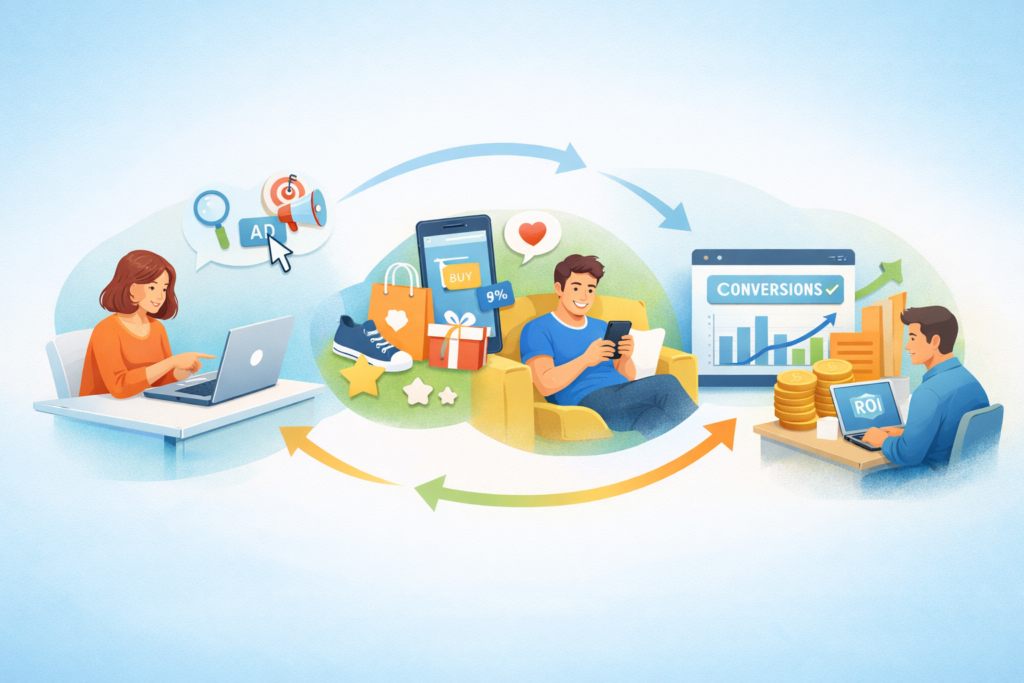
Performance marketing relies on precise tracking and optimization. The typical workflow includes:
- Setting Goals: Define clear objectives, such as lead generation, sales, or sign-ups.
- Targeted Advertising: Create ads and deliver them to a relevant audience.
- Tracking Engagement: Monitor user interactions through analytics tools.
- Pay-for-Performance: Businesses pay only when the desired action occurs.
- Continuous Optimization: Use data insights to refine campaigns and maximize ROI.
Every step is measurable, allowing companies to clearly see which campaigns deliver results.
Key Channels in Performance Marketing
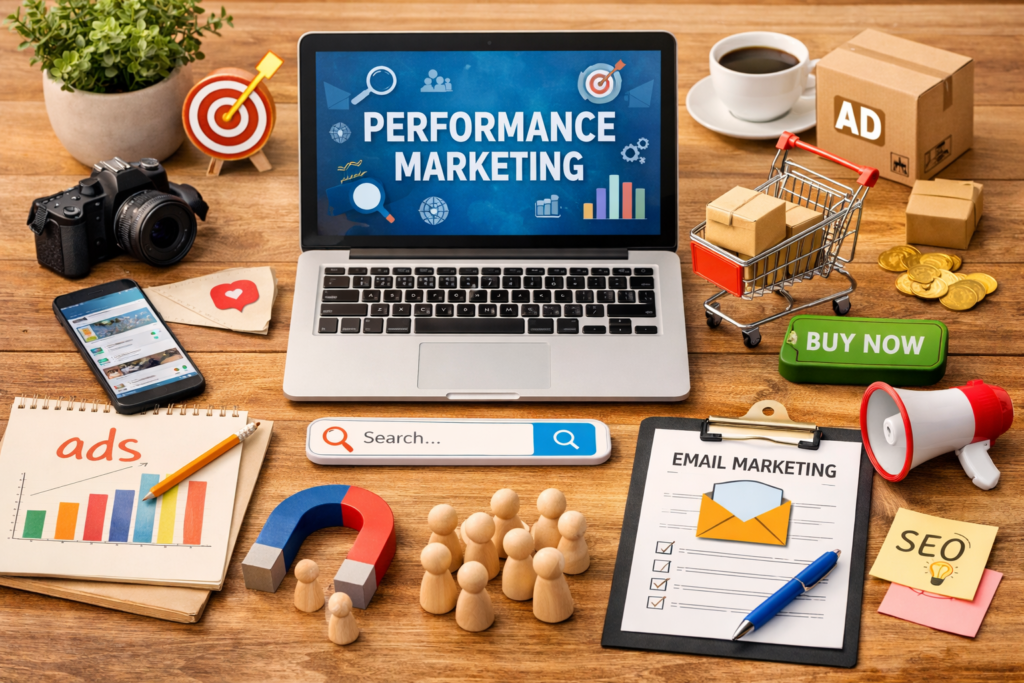
Search Advertising (PPC):
Ads shown on search engines based on keywords. Ideal for capturing high-intent traffic and generating leads.
Social Media Advertising:
Target audiences by interests, demographics, or behaviors. Perfect for product promotion, brand engagement, and retargeting campaigns.
Display Advertising:
Visual ads on websites or apps to increase visibility and reinforce messaging. Commonly used for retargeting and brand awareness.
Affiliate Marketing:
Partners promote products and earn commissions on completed actions. Excellent for e-commerce and product-based businesses.
Influencer Marketing (Performance-Based):
Influencers promote products via trackable links or codes. Payments are tied to actual conversions.
Why Performance Marketing Matters in 2026

Modern businesses demand transparency and accountability in marketing spend. Performance marketing provides:
- Measurable ROI – Every action is tracked.
- Budget Control – Pay only for actual results.
- Data-Driven Optimization – Insights guide decisions.
- Scalable Growth – High-performing campaigns can expand quickly.
Clear Reporting – Understand which campaigns work and which don’t.
Performance Marketing vs Traditional Marketing

| Traditional Marketing | Performance Marketing |
| Pays for exposure | Pays for results |
| Limited tracking | Real-time tracking |
| Slow feedback loops | Immediate optimization |
| Focus on brand image | Focus on measurable outcomes |
While traditional marketing builds awareness, performance marketing drives actionable results.
Key Metrics in Performance Marketing
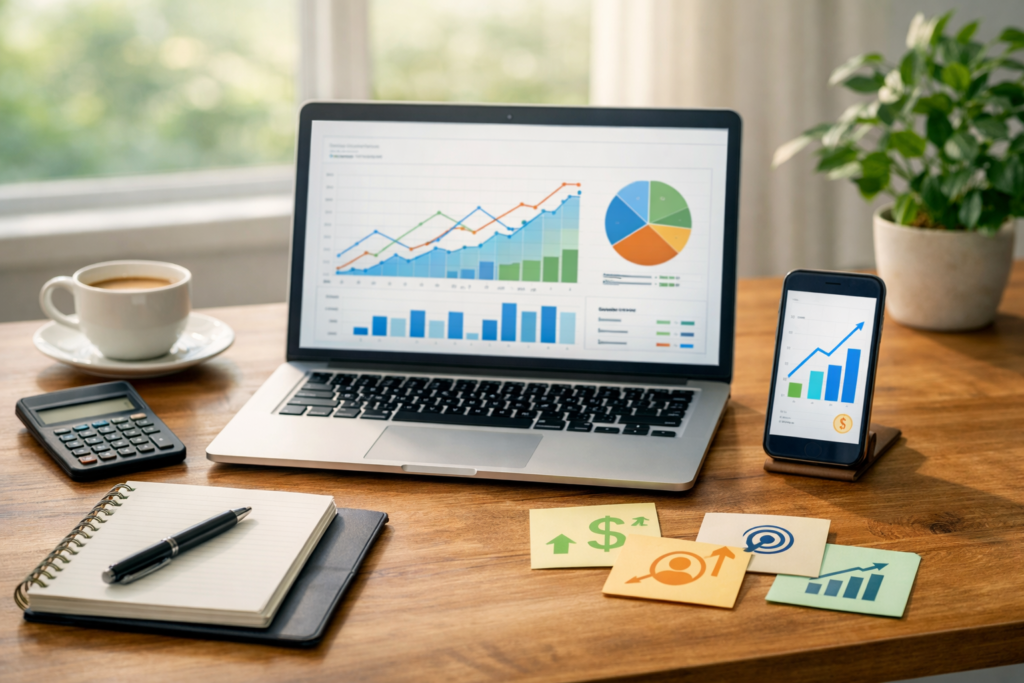
Success is measured through specific KPIs:
- CPC (Cost Per Click): Cost per ad click
- CPL (Cost Per Lead): Cost per qualified lead
- CPA (Cost Per Acquisition): Cost per customer acquisition
- ROAS (Return on Ad Spend): Revenue generated per dollar spent
- Conversion Rate: Percentage of users completing the desired action
These metrics guide campaign adjustments and strategy decisions.
Benefits of Performance Marketing
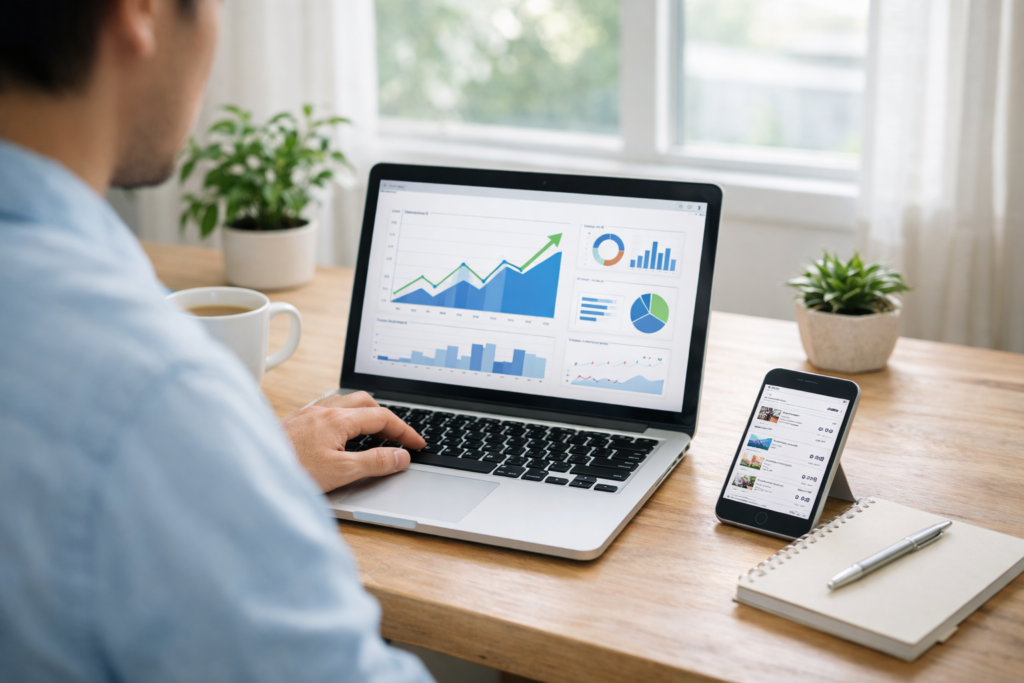
- Efficient Spending: Pay only for measurable outcomes.
- Scalability: Successful campaigns can grow rapidly.
- Data-Driven Decisions: Real-time data supports optimization.
- Targeted Audience Reach: Ads reach the right people.
Quick Results: Immediate measurable impact is possible.
Challenges of Performance Marketing

- Requires continuous monitoring and optimization
- Needs proper tracking setup and skilled management
- Landing pages must align with ad intent
- Poor strategy can waste budget quickly
Optimization is an ongoing process rather than a one-time task.
How to Get Started with Performance Marketing
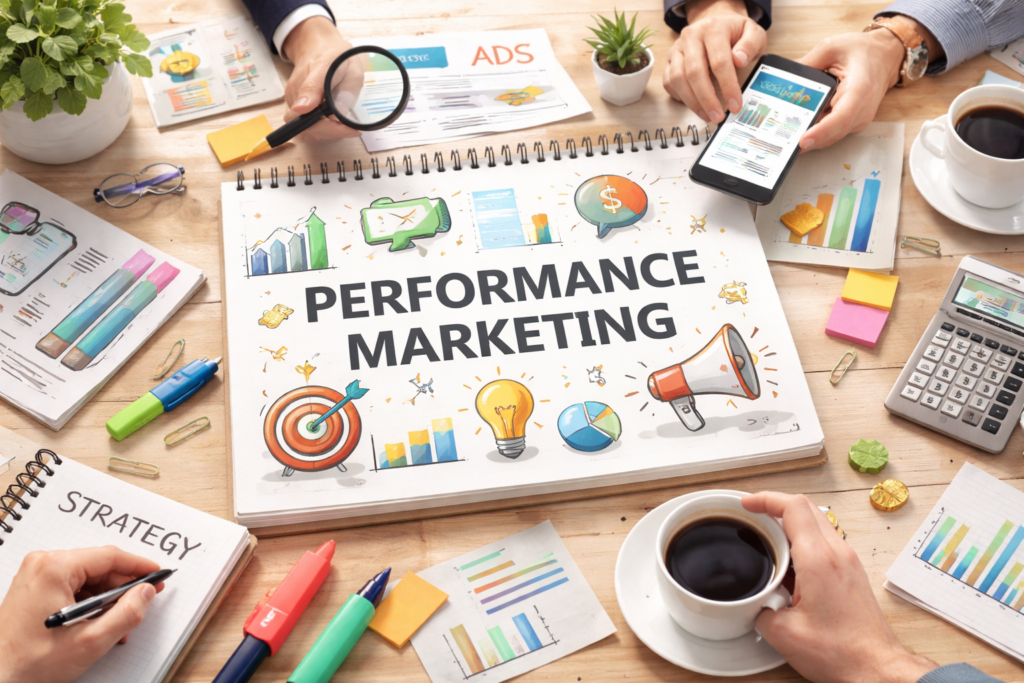
- Define Clear Goals: Set measurable targets like 100 leads per month or 50 product sales.
- Select Channels: Choose platforms based on audience behavior and campaign goals.
- Set Up Tracking: Install pixels, analytics, and conversion tools.
- Optimize Landing Pages: Ensure fast loading, mobile responsiveness, and strong calls to action.
Monitor and Refine: Regularly review metrics and adjust targeting, creatives, and bids.
Who Should Use Performance Marketing?

- Small businesses aiming for measurable growth
- E-commerce brands looking to scale revenue
- Service-based companies generating leads online
- Startups needing fast traction
- Any company prioritizing ROI
Performance Marketing in the Age of AI

AI tools are transforming performance marketing by:
- Automating bidding and budget allocation
- Predicting user behavior
- Optimizing ad placements
- Improving targeting precision
Despite AI’s efficiency, human oversight and strategy remain essential to ensure campaigns achieve real business results.
Frequently Asked Questions
What is performance marketing in simple terms?
It is a marketing strategy where businesses pay only when specific actions like clicks, leads, or sales occur.
Is performance marketing better than traditional marketing?
It depends on goals. Performance marketing is better for measurable ROI, while traditional marketing builds brand awareness.
Can small businesses afford performance marketing?
Yes. Budgets are flexible and scalable.
Is performance marketing only digital?
Yes. It operates primarily through digital channels with measurable tracking.
Final Thoughts
Understanding what is performance marketing explained gives businesses a powerful competitive advantage.
Performance marketing focuses on:
- Measurable results
- Data-driven optimization
- Budget efficiency
- Scalable growth
In 2026, marketing without measurable outcomes is increasingly unsustainable.
Businesses that prioritize performance-driven strategies gain clarity, control, and consistent ROI.
Performance marketing is not just about ads — it is about accountable growth.