
In 2026, choosing between Google Ads and Facebook Ads depends on your business goals and audience. Google Ads excels at targeting users with high purchase intent through search queries, making it ideal for direct conversions.
Facebook Ads, on the other hand, shine in building brand awareness and engaging audiences through highly visual and interest-based campaigns. Businesses focusing on immediate sales may benefit more from Google’s intent-driven approach, while those aiming for long-term brand growth and social engagement might prefer Facebook.
A combined strategy often delivers the best results, leveraging search intent and social interaction together. Analyzing performance metrics regularly ensures campaigns stay optimized and cost-effective.
Google Ads vs Facebook Ads: Making the Right Choice
Paid advertising remains one of the fastest ways to grow a business online. But when it comes to choosing a platform, most companies face the same dilemma: should you invest in Google Ads or Facebook Ads?
Both platforms are industry leaders. Both can drive traffic, leads, and sales. Yet they operate on completely different principles.
Understanding how each platform works — and when to use it — is the key to maximizing results in 2026.
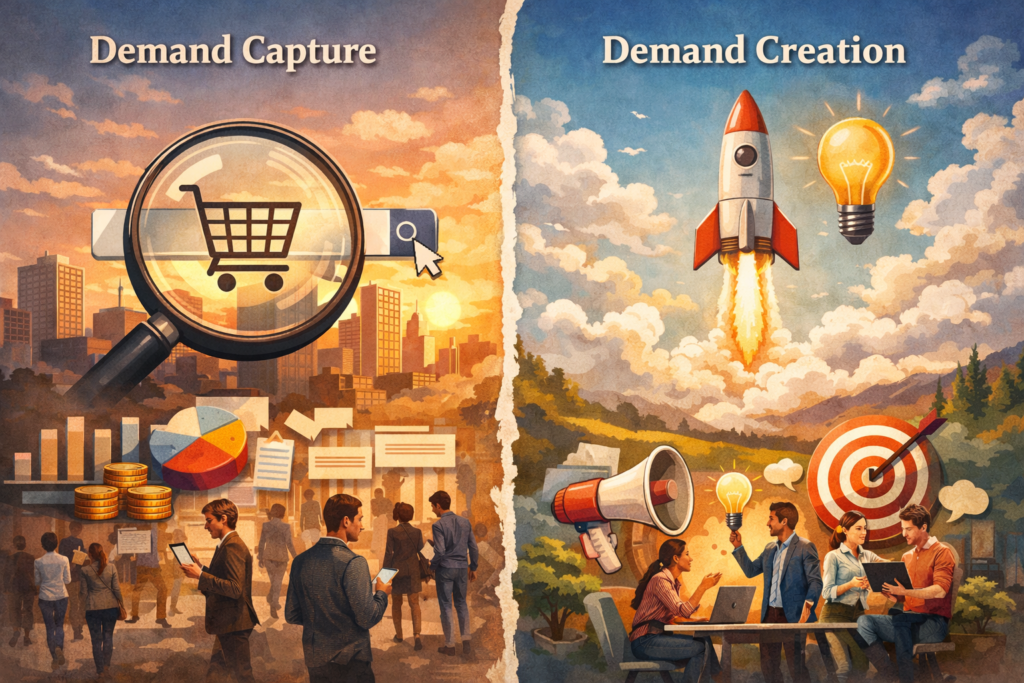
The Core Difference: Demand Capture vs Demand Creation
At the heart of this comparison lies a strategic difference.
Google Ads helps you capture existing demand.
Facebook Ads helps you generate new demand.
This single distinction influences user behavior, conversion rates, and campaign performance.
When someone types a query into a search engine, they are actively looking for a solution. When someone scrolls through social media, they are consuming content — not necessarily searching for products.
That difference matters.
How Google Ads Generates Results
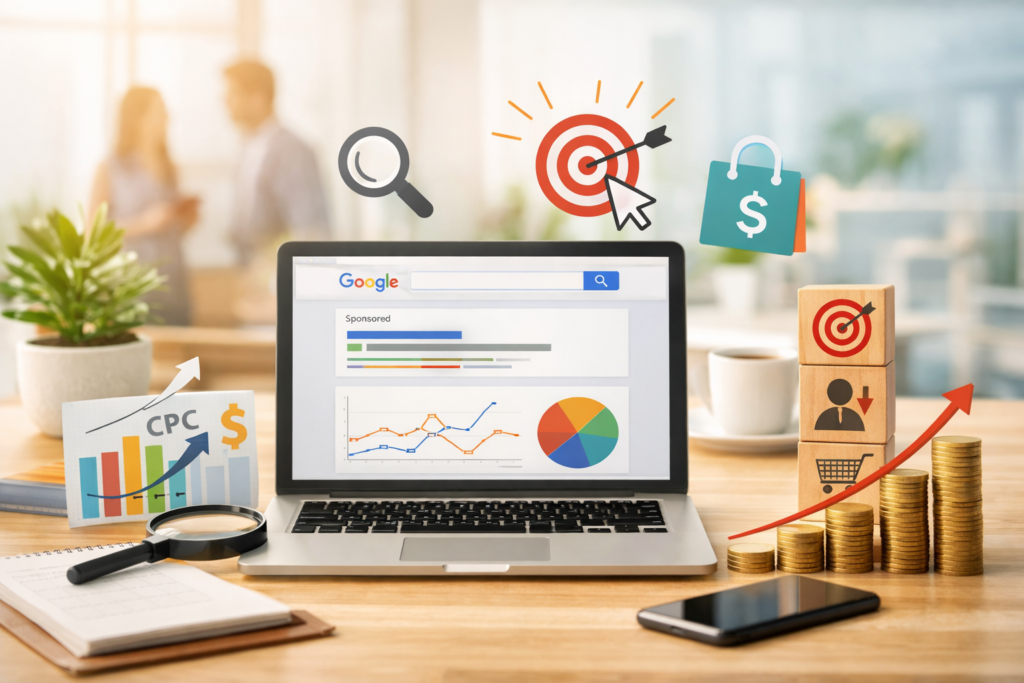
Google Ads places your business in front of users who are already searching for something specific.
If someone searches for a service, product, or solution related to your offering, your ad can appear above organic search results. You typically pay only when a user clicks on your ad.
This system works extremely well for:
- Immediate needs
- Problem-solving searches
- Local services
- High-intent buyers
Because the user initiates the search, conversion rates are often higher compared to interruption-based advertising.
Google Ads works best when timing is critical and the buyer already knows what they want.
How Facebook Ads Builds Interest
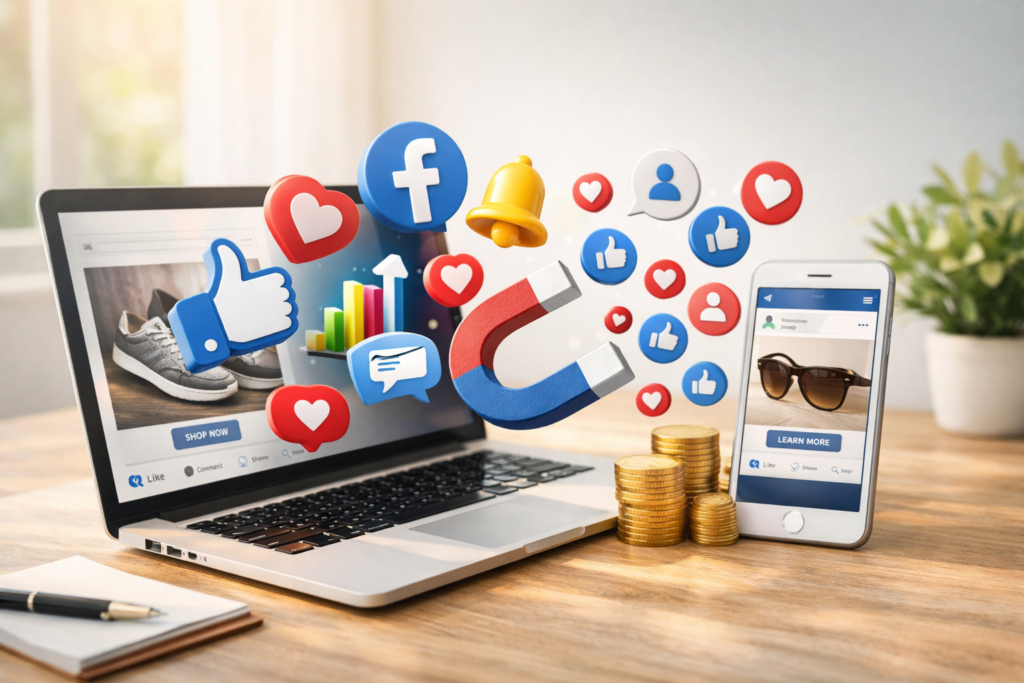
Facebook Ads (including Instagram placements) operates differently. Instead of responding to search queries, it uses audience data to show ads to people based on who they are and what they engage with online.
Targeting can include:
- Interests and hobbies
- Age and demographic data
- Shopping behavior
- Content engagement history
- Custom and similar audiences
Users see ads while browsing their feed, watching videos, or viewing stories.
They may not be actively looking for your product at that moment — but strong visuals and messaging can spark curiosity and influence future purchases.
Facebook Ads is powerful for storytelling, branding, and nurturing long-term customer relationships.
Key Differences That Matter in 2026
In 2026, understanding key differences is more critical than ever. Businesses and users alike must focus on how emerging technologies, AI-driven tools, and changing consumer behaviors impact decision-making.
Small variations in strategy, features, or content can create significant advantages. Recognizing these differences early ensures better adaptation and long-term success.
1. Buyer Intent

Google Ads reaches users with immediate intent.
Facebook Ads reaches users based on relevance, not urgency.
If your business solves time-sensitive problems, Google Ads often produces faster results.
If your product requires awareness and education, Facebook Ads can gradually build trust and demand.
2. Cost Considerations
Click costs on Google Ads are typically higher in competitive industries. However, those clicks often carry stronger purchase intent.
Facebook Ads generally offers lower click costs, making it more affordable for testing and brand exposure.
The real question is not which platform is cheaper — but which platform produces profitable conversions.
3. Conversion Timeline
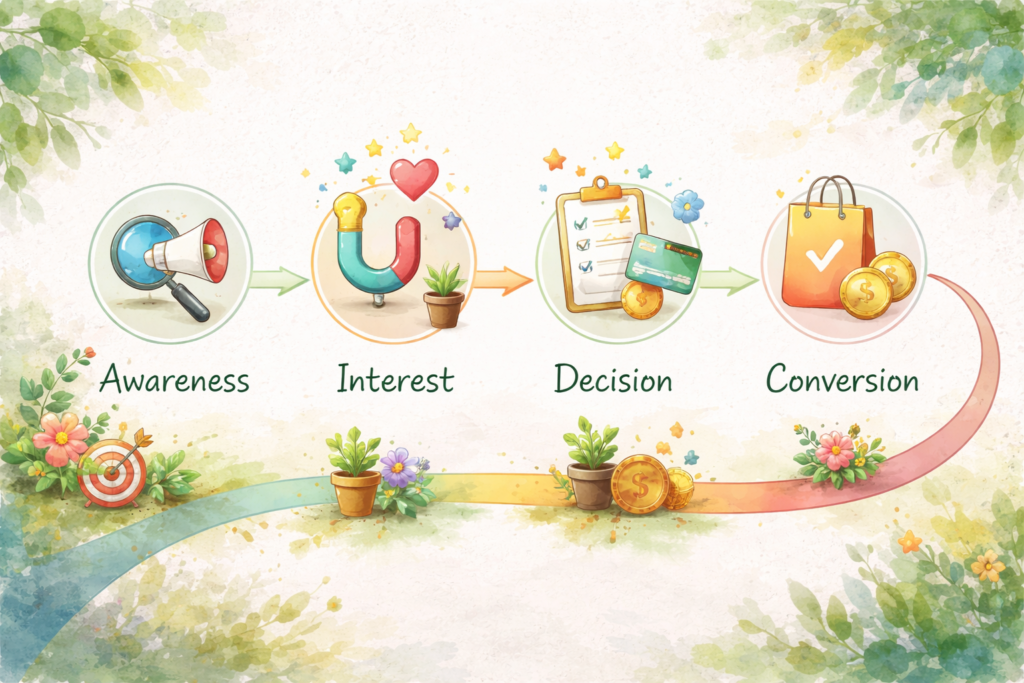
Google Ads campaigns can generate leads quickly because users are already searching for solutions.
Facebook Ads campaigns may require multiple touchpoints before a user converts. Retargeting campaigns usually play a crucial role in performance.
Businesses seeking immediate leads often lean toward Google Ads.
Businesses focused on brand growth benefit from Facebook’s long-term impact.
4. Targeting Strength

Google’s targeting revolves around search behavior and keyword signals.
Facebook’s targeting focuses on personal data patterns, interests, and engagement behavior.
Facebook offers broader audience segmentation, while Google offers stronger intent precision.
5. Creative Possibilities
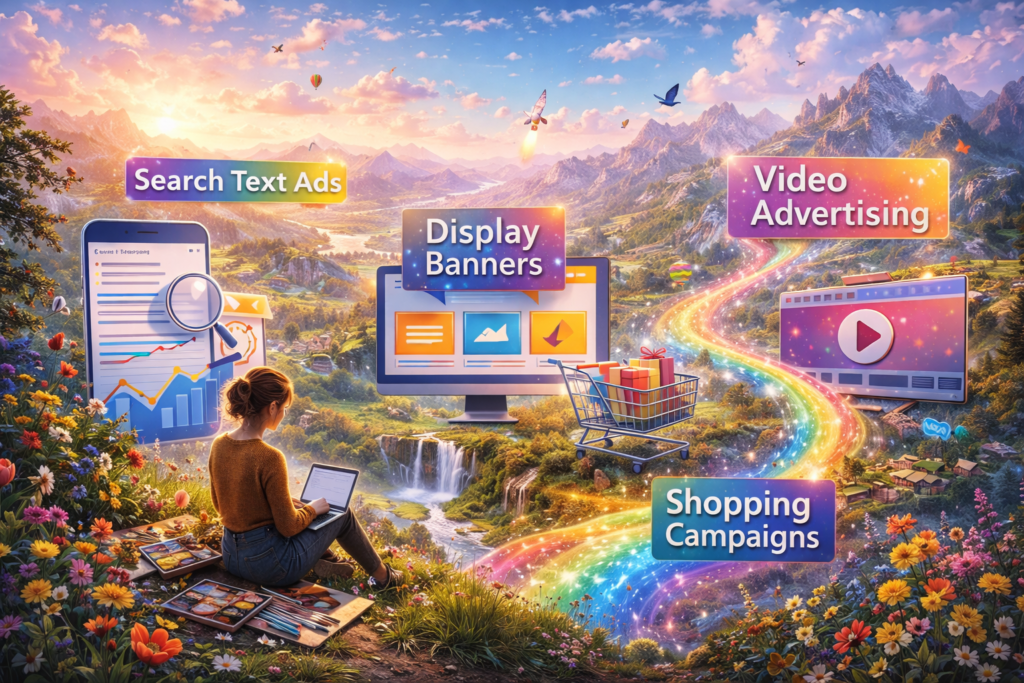
Google Ads includes:
- Search text ads
- Display banners
- Shopping campaigns
- Video advertising
Facebook Ads emphasizes visual formats such as:
- Image ads
- Short-form videos
- Carousel displays
- Vertical story placements
If your product depends heavily on visual appeal, Facebook may provide stronger engagement opportunities.
Which Platform Works Best for Your Business Type?
Choosing the right platform for your business depends on your target audience and goals. Social media platforms like Facebook, Instagram, and LinkedIn each cater to different demographics and content styles.
E-commerce businesses may benefit more from platforms like Shopify or Amazon, while service-based businesses often find success with LinkedIn or Google My Business.
Understanding where your audience spends their time ensures your marketing efforts are more effective and results-driven.
Google Ads May Be Better If You:
- Provide local or emergency services
- Offer professional or consulting services
- Operate in competitive B2B markets
- Depend on immediate inquiries
These industries benefit from capturing users at the exact moment of need.
Facebook Ads May Be Better If You:

- Sell consumer products
- Run an e-commerce brand
- Launch online programs or memberships
- Focus on lifestyle or fashion products
These businesses benefit from visual storytelling and audience nurturing.
Comparing ROI Potential

Both platforms can produce excellent returns — but only when aligned with the correct strategy.
Google Ads often produces strong ROI when campaigns are built around high-converting keywords and optimized landing pages.
Facebook Ads performs best when businesses consistently test creatives, build remarketing audiences, and nurture leads over time.
Short-term revenue often favors Google.
Long-term brand value often favors Facebook.
The highest-performing companies rarely rely on one platform alone.
Why a Combined Strategy Often Wins

In 2026, smart businesses understand that advertising ecosystems work better together.
For example:
- Use Facebook Ads to introduce your brand to new audiences.
- Retarget engaged users with additional offers.
- Capture high-intent searches using Google Ads.
- Reinforce messaging across both platforms.
This approach strengthens brand visibility while increasing conversion opportunities.
Budget Strategy Recommendations

If working with a limited budget:
- Service-based businesses should consider prioritizing Google Ads.
- Product-based businesses may see better early traction with Facebook Ads.
If budget allows scaling:
- Invest heavily in high-intent campaigns.
- Allocate remaining budget toward audience building and retargeting.
Balanced investment reduces reliance on a single traffic source.
Mistakes That Reduce Performance

Many campaigns fail due to poor execution rather than platform choice.
Common issues include:
- Launching ads without proper tracking
- Ignoring landing page experience
- Focusing only on traffic instead of conversions
- Not refreshing ad creatives
- Failing to analyze performance data
Success depends on continuous optimization, not platform selection alone.
Frequently Asked Questions
Is Google Ads better than Facebook Ads?
It depends on your goals and audience. Google targets search intent, while Facebook targets interests.
Which platform converts faster?
Google Ads usually converts faster due to high user intent.
Which platform is cheaper?
Facebook often has lower CPC, but results vary.
Can small businesses use both?
Yes, using both can deliver stronger overall results.
Final Conclusion
There is no universal winner between Google Ads and Facebook Ads.
If your priority is capturing customers who are actively searching, Google Ads is a strong choice.
If your goal is building awareness, expanding reach, and influencing buying behavior over time, Facebook Ads offers clear advantages.
For most businesses in 2026, combining both platforms delivers the strongest growth potential.
The real question is not which platform is better — but which strategy fits your business model.