
As AI-driven search engines become increasingly prominent in 2026, businesses must adapt their SEO strategies to stay visible. Ranking in AI search results requires more than traditional keyword optimization—it emphasizes context, intent, and high-quality content that directly answers user queries. Structured data, semantic relevance, and clear, authoritative information play a crucial role in ensuring AI understands your content.

Businesses should focus on creating conversational, natural content, optimized for AI summarization and recommendation algorithms. Additionally, maintaining up-to-date information and demonstrating expertise through trusted sources boosts credibility.
User engagement signals, like time on page and interaction, also influence AI ranking decisions. By integrating these strategies, businesses can secure prominent positions in AI search results, drive qualified traffic, and maintain a competitive edge in the evolving digital landscape.
How Businesses Can Rank in AI Search Results

Search is no longer only about traditional blue links. Today, AI-powered search engines generate summaries, conversational answers, and context-based responses that often reduce the need for users to open multiple websites. This shift has changed how businesses must approach SEO.
Ranking in AI search results is no longer about keyword stuffing or chasing backlinks. It’s about building authority, presenting content clearly, and optimizing for how AI systems interpret information.
If your business wants to stay visible in 2026 and beyond, you must understand how AI search engines decide which sources to reference, summarize, and trust.
This guide explains how businesses can rank in AI search results — and how to keep your SEO strategy strong for the future.
Understanding AI Search Results

AI search results are created by systems that evaluate factors like:
- Search intent
- Query context
- Semantic connections
- Topic authority
- Trust and credibility signals
Instead of showing only a list of links, AI systems often provide:
- Direct summarized answers
- Detailed context-based explanations
- Conversational responses
- Extracted highlights from reliable sources
To rank in AI search results, your content must be clear, authoritative, and rich enough for AI models to confidently use and reference.
This is where Generative Engine Optimization (GEO) becomes important.
Why Traditional SEO Alone Is No Longer Enough
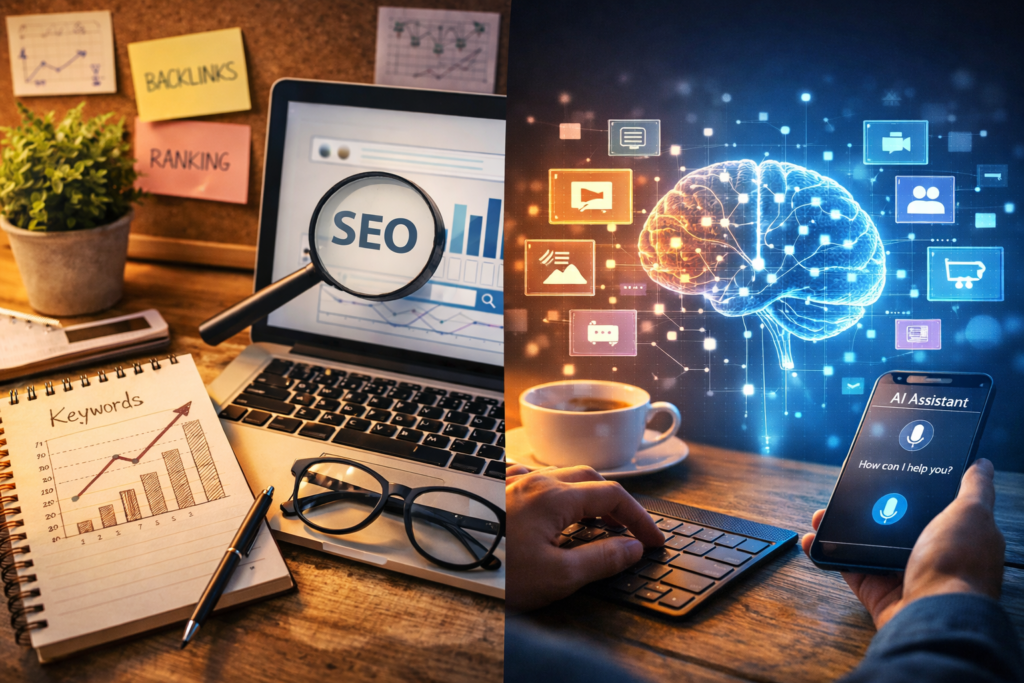
Traditional SEO mainly focused on:
- Keyword targeting
- Backlink building
- Tracking ranking positions
- Page-level optimization
AI search shifts the focus toward:
- Intent matching
- Domain authority
- Entity recognition
- Clear content structure
- Deeper context and coverage
If your website lacks topical authority and semantic depth, AI systems are less likely to include it in AI-generated answers.
Ranking now means becoming a trusted source — not just reaching position #1.
How Businesses Can Rank in AI Search Results
1. Build Topical Authority Across Your Industry

AI systems evaluate the strength of your overall website, not just one page.
To build authority:
- Create pillar pages for core services
- Build topic clusters around each pillar
- Publish supporting articles and interlink them
- Cover key subjects thoroughly
For example, if you provide SEO services, your website should include content on:
- Technical SEO
- Local SEO
- AI SEO strategies
- Content optimization
- Conversion rate optimization
Strong topical coverage improves trust.
Authority matters more than isolated optimization.
2. Optimize for Search Intent, Not Just Keywords

AI search engines prioritize intent over exact keyword repetition.
Businesses must align content with:
- Informational intent
- Commercial investigation
- Transactional intent
- Problem-solving intent
Instead of writing generic pages, answer:
- What problem does this solve?
- Why does it matter?
- How does it work?
- Who is it for?
Intent-focused content is easier for AI systems to extract and cite.
3. Structure Content for AI Parsing
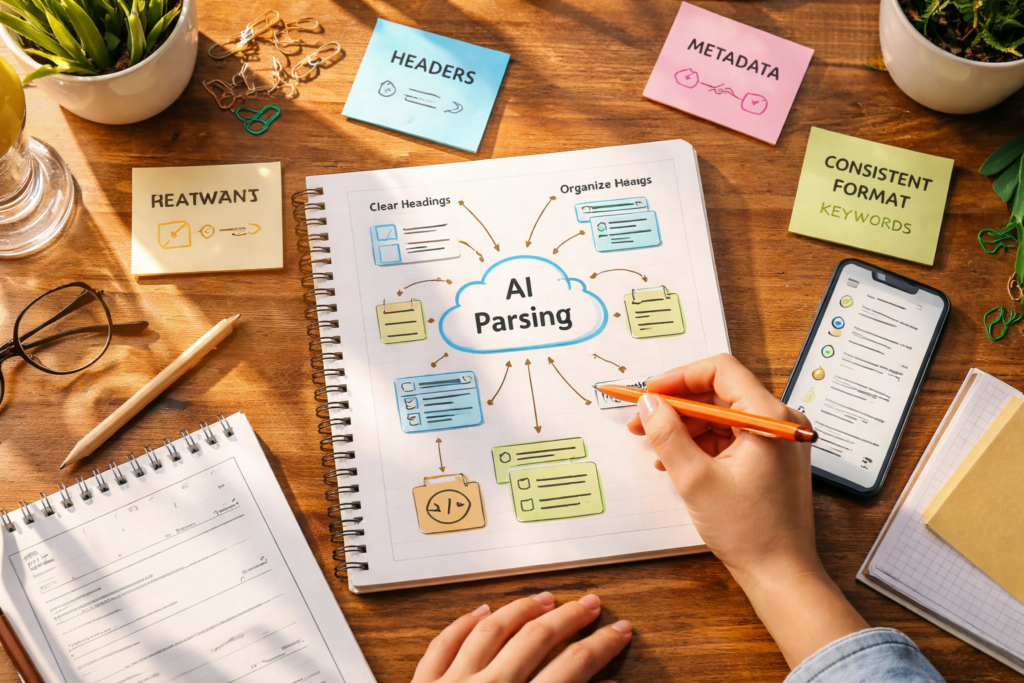
AI systems prefer content that is easy to scan and interpret.
To improve your chances of appearing in AI summaries:
- Use clear H2 and H3 headings
- Write short, informative paragraphs
- Add bullet points where needed
- Include FAQ sections
- Provide direct answers under questions
Well-structured content increases AI readability.
Poor formatting reduces AI understanding.
4. Implement Entity-Based SEO
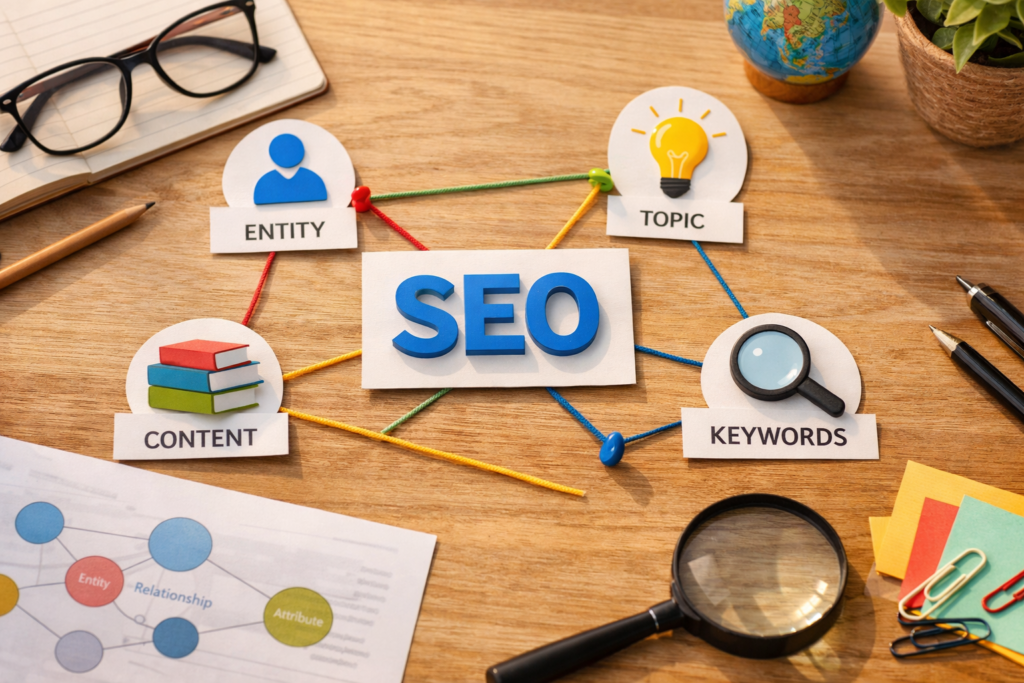
Entities are recognized concepts such as brands, industries, services, and technologies.
Instead of repeating one keyword, build semantic depth by naturally including:
- Related services
- Industry terms
- Supporting concepts
- Contextual references
For example, if writing about AI search ranking, include terms like:
- Semantic SEO
- E-E-A-T
- Conversational search
- Generative search
- Structured data
Entity connections strengthen topical relevance and authority.
5. Strengthen E-E-A-T Signals

Experience, Expertise, Authoritativeness, and Trustworthiness strongly influence AI ranking.
To improve E-E-A-T:
- Add real case studies
- Show team credentials and expertise
- Publish original insights or research
- Include clear author information
- Keep content quality consistent
AI systems are more likely to reference trusted domains than generic blogs.
Trust has become a major ranking factor.
6. Use Schema Markup and Structured Data

Structured data helps search engines and AI models understand your website more accurately.
Implement schema for:
- Articles
- FAQs
- Services
- Organization details
- Reviews
Schema improves clarity and increases the chances of your content being extracted into AI answers.
7. Create Conversational Content

AI-driven search is becoming more conversational.
Users now search in natural language, such as:
- “How can my business appear in AI search summaries?”
- “What is the best way to optimize for AI-driven search?”
To rank, your content should:
- Use natural phrasing
- Include question-style headings
- Provide direct answers
- Add FAQ sections
Conversational structure matches how AI systems process queries.
8. Improve Technical SEO Foundations

AI search still depends on strong technical performance.
Make sure your website has:
- Fast loading speed
- Mobile-friendly design
- Clean internal linking
- Secure HTTPS
- Crawlable site architecture
Technical SEO ensures AI systems can access, read, and interpret your content properly.
9. Build High-Quality Backlinks (Quality Over Quantity)

Backlinks still matter, but AI systems value quality more than volume.
AI prioritizes backlinks that are:
- Contextually relevant
- From credible sources
- Topically aligned
Focus on earning links from respected industry websites.
Authority builds over time and compounds.
10. Monitor AI Visibility Beyond Rankings
Traditional SEO focused on keyword positions.
AI SEO requires tracking visibility signals such as:
- AI overview inclusion
- Featured snippet presence
- Search impressions growth
- Brand search increase
- Topic authority improvements
SEO measurement must evolve as search evolves.
Common Mistakes Businesses Make

1. Writing Thin Content
AI prefers detailed, well-structured content.
2. Overusing Keywords
Keyword stuffing reduces clarity and trust.
3. Ignoring Content Depth
Surface-level posts do not build authority.
4. Neglecting Internal Linking
Disconnected content weakens topical strength.
5. Treating AI SEO as Optional
AI-driven search is growing fast, and late adaptation can cost long-term visibility.
AI Search Ranking Factors to Focus On

While AI systems keep evolving, most ranking and citation decisions rely on:
- Topic authority
- Structured content clarity
- Intent alignment
- Semantic depth
- Domain trust signals
- Technical performance
- User engagement indicators
Ranking in AI search results is strategic, not just tactical.
The Future of Ranking in AI Search

Search engines are moving from “link directories” to “answer engines.”
This means:
- Visibility depends on trust
- Authority matters more than keyword repetition
- Context is more important than exact-match phrases
- Strong domains outperform isolated pages
Businesses that invest in Generative Engine Optimization (GEO) now can build long-term AI visibility advantages.
Frequently Asked Questions
How can small businesses rank in AI search?
By building niche authority, publishing consistently, and answering related questions clearly.
Is AI search ranking different from Google ranking?
Yes. AI search values trust, context, and citations more than rankings alone.
Does AI search reduce website traffic?
It may reduce clicks for simple queries, but can increase high-intent traffic.
What matters most for AI ranking?
Final Thoughts
AI search is changing how websites earn visibility, and it requires more than traditional SEO tactics.
Instead of chasing shortcuts, the focus is now on proving expertise, building credibility, and writing content in a way that machines can easily interpret and pull accurate information from.
Brands that prioritize:
- Detailed, complete coverage
- Semantic relevance and intent alignment
- Strong E-E-A-T and trust signals
- Solid technical SEO and speed
- Clear niche authority
won’t just get mentioned in AI results — they’ll become the sources AI engines repeatedly rely on.
AI search isn’t killing SEO.
It’s pushing it into a new era.