
Many businesses treat SEO as a one-time task—optimise a website, publish content, and wait for results. In reality, SEO is an ongoing process that requires regular updates to remain effective. Search engines evolve, competitors improve, and user behaviour changes constantly. Understanding how often SEO should be updated is essential for maintaining rankings, traffic, and long-term growth.
This guide explains how frequently SEO should be updated, which elements need regular attention, and how ongoing optimisation supports sustainable business success.
Why SEO Needs Regular Updates

SEO is not static. Search engines continuously refine their algorithms to improve result quality, combat spam, and better match user intent. At the same time, market competition grows and customer expectations change.
Regular SEO updates help businesses:
- Maintain and improve rankings
- Stay aligned with search engine algorithms
- Respond to changing user behaviour
- Outperform competitors
- Protect long-term organic visibility
Without updates, even well-ranking websites can lose visibility over time.
How Often Should SEO Be Updated? The Short Answer
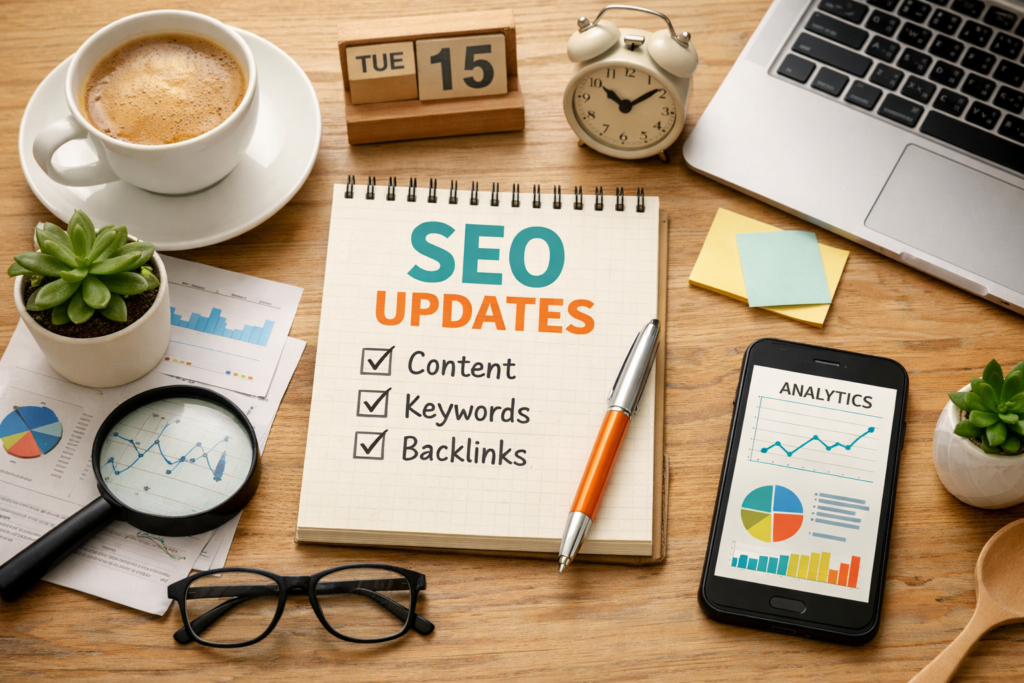
SEO should be reviewed and updated continuously, with different tasks handled at different intervals:
- Weekly: Monitor performance and technical health
- Monthly: Optimise content and keywords
- Quarterly: Refresh strategy and competitive positioning
- Annually: Review overall SEO direction and goals
SEO success comes from consistency, not occasional fixes.
Weekly SEO Updates: Monitoring and Maintenance

Weekly SEO tasks focus on keeping your website healthy and identifying issues early.
What to Review Weekly
- Search Console errors
- Indexing and crawl issues
- Sudden ranking or traffic drops
- Website uptime and performance
- Security or plugin updates
These checks prevent small issues from turning into major ranking problems.
Monthly SEO Updates: Optimisation and Growth

Monthly updates are where most SEO improvements happen.
Key Monthly SEO Tasks
- Update existing content
- Optimise meta titles and descriptions
- Review keyword performance
- Improve internal linking
- Analyse user behaviour metrics
Monthly optimisation ensures content stays relevant, competitive, and aligned with search intent.
Content Updates: How Often Should SEO Content Be Refreshed?

Content freshness plays an important role in SEO performance.
When Content Should Be Updated
- When rankings decline
- When competitors publish better content
- When information becomes outdated
- When search intent changes
- When engagement drops
High-performing content should be refreshed every 3 to 6 months to maintain authority and rankings.
Technical SEO Updates: Ongoing and Preventive

Technical SEO requires continuous monitoring rather than one-time fixes.
What Needs Regular Technical Updates
- Page speed optimisation
- Mobile usability
- Core Web Vitals
- Structured data validation
- Broken links and redirects
Technical issues can silently harm rankings, making ongoing updates critical.
Algorithm Updates: Why SEO Must Adapt Regularly

Search engines release algorithm updates frequently, both minor and major.
Why This Matters
- Ranking factors evolve
- Search intent interpretation improves
- Spam detection becomes stricter
- AI and semantic search expand
Websites that regularly update SEO adapt faster to algorithm changes and recover quicker from volatility.
Keyword Strategy Updates: Every Few Months

Search demand changes over time.
Why Keywords Need Updating
- New search terms emerge
- User intent evolves
- Competition increases
- Old keywords lose relevance
Keyword research should be reviewed every 3–6 months to ensure SEO targets the most valuable queries.
Local SEO Updates: Continuous for Local Businesses
Local SEO requires more frequent updates due to competitive and geographic factors.
Local SEO Update Areas
- Google Business Profile updates
- Reviews and responses
- Local citations
- Service area changes
- Local content
Local SEO should be actively managed monthly to maintain visibility in map results.
Backlink and Authority Updates: Ongoing

Backlinks remain a strong ranking signal.
Why Link Profiles Need Monitoring
- Lost backlinks reduce authority
- Toxic links can cause penalties
- Competitors acquire new links
Link audits and outreach should be reviewed quarterly to maintain a healthy authority profile.
User Experience Updates: Driven by Behaviour Data

SEO increasingly overlaps with user experience.
UX Signals to Monitor
- Bounce rate
- Time on page
- Navigation behaviour
- Conversion paths
SEO updates based on user behaviour should happen monthly to improve engagement and conversions.
How Often Should SEO Strategy Be Reviewed?

SEO strategy should be evaluated every quarter.
Quarterly SEO Reviews Include
- Performance trends
- Competitor movement
- Content gaps
- Conversion analysis
- Technical improvements
Quarterly reviews ensure SEO aligns with business goals and market conditions.
Annual SEO Updates: Big-Picture Improvements

Annual SEO updates focus on long-term direction.
Annual SEO Tasks
- Full site audit
- Strategy refinement
- Goal redefinition
- Platform or CMS upgrades
- Market expansion planning
These updates help businesses scale SEO sustainably.
What Happens If SEO Is Not Updated Regularly?

Businesses that neglect SEO updates often experience:
- Gradual ranking decline
- Traffic loss
- Reduced conversions
- Increased competition pressure
- Higher marketing costs
SEO decay is slow but costly.
SEO Is Not a One-Time Investment

One of the biggest misconceptions is treating SEO as a setup-and-forget task. Unlike paid ads, SEO builds momentum—but only when maintained.
Regular SEO updates:
- Compound results over time
- Strengthen authority
- Reduce reliance on paid traffic
- Deliver long-term ROI
Consistency is what separates successful SEO strategies from failing ones.
How SEO Updates Support Long-Term Business Growth

- Rankings remain stable
- Traffic grows predictably
- Conversion rates improve
- Brand trust increases
SEO becomes a long-term growth asset rather than a short-term tactic.
Best Practices for Ongoing SEO Updates

To maintain strong performance:
- Create a monthly SEO schedule
- Track meaningful metrics
- Prioritise quality over quantity
- Focus on user intent
- Adapt to data, not assumptions
A structured approach ensures SEO updates remain effective.
When SEO is updated regularly:
How Often Should SEO Be Updated?
SEO should be updated continuously, with structured reviews weekly, monthly, quarterly, and annually. Search engines, competitors, and users never stop changing—so neither should your SEO.
By understanding how often SEO should be updated, businesses can protect rankings, improve performance, and achieve sustainable growth.
SEO success isn’t about one-time optimisation—it’s about consistent improvement over time.