
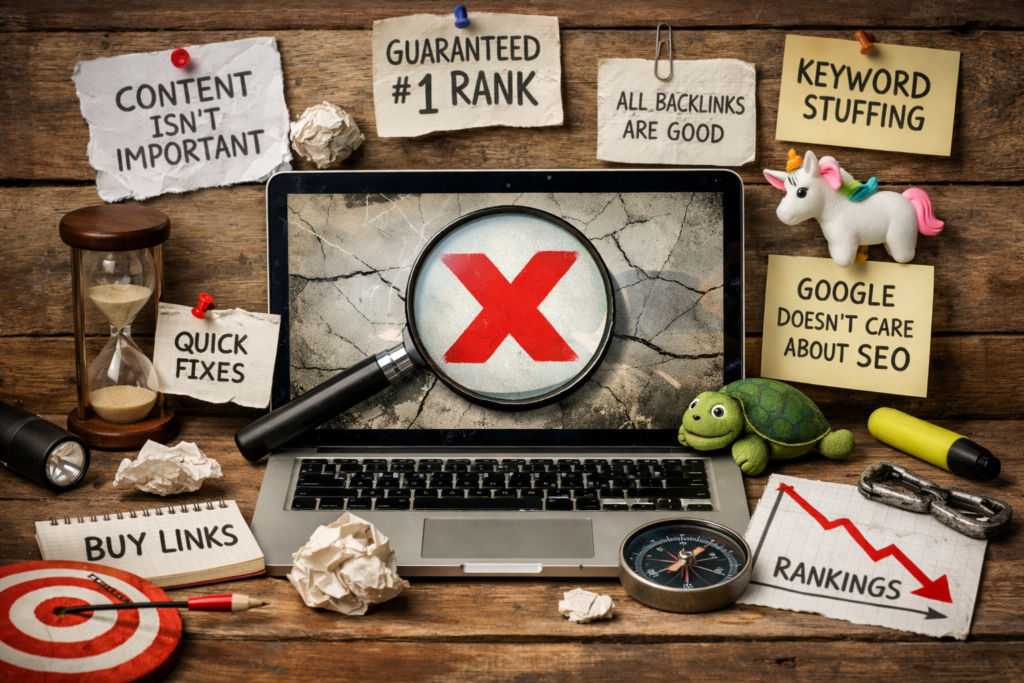
Search engine optimisation has evolved significantly over the years, yet many businesses still follow outdated advice that actively damages their website performance. SEO myths continue to circulate through forums, social media, and even agencies that rely on old tactics.
Believing these myths can lead to wasted budgets, poor rankings, and missed growth opportunities.Understanding SEO myths that hurt website rankings helps businesses avoid costly mistakes and focus on strategies that actually improve visibility, traffic, and conversions. This guide breaks down the most common SEO myths, explains why they are harmful, and reveals what truly works today.
Why SEO Myths Are Dangerous for Websites

SEO myths are dangerous because they distract businesses from real optimisation efforts. Instead of improving content quality, user experience, and technical health, companies chase shortcuts that rarely deliver sustainable results.
SEO myths often:
- Waste time and resources
- Cause ranking drops
- Attract low-quality traffic
- Trigger algorithm penalties
- Prevent long-term growth
Modern SEO rewards relevance, trust, and value—not tricks.
Myth 1: SEO Is a One-Time Task

One of the most damaging myths is the belief that SEO can be done once and forgotten. Many businesses optimise a website, publish content, and expect rankings to stay forever.
Why This Hurts Rankings
Search behaviour, competition, and algorithms change constantly. A static SEO strategy becomes outdated quickly.
What Actually Works
SEO requires continuous optimisation, content updates, technical maintenance, and performance monitoring.
Myth 2: Keyword Stuffing Improves Rankings
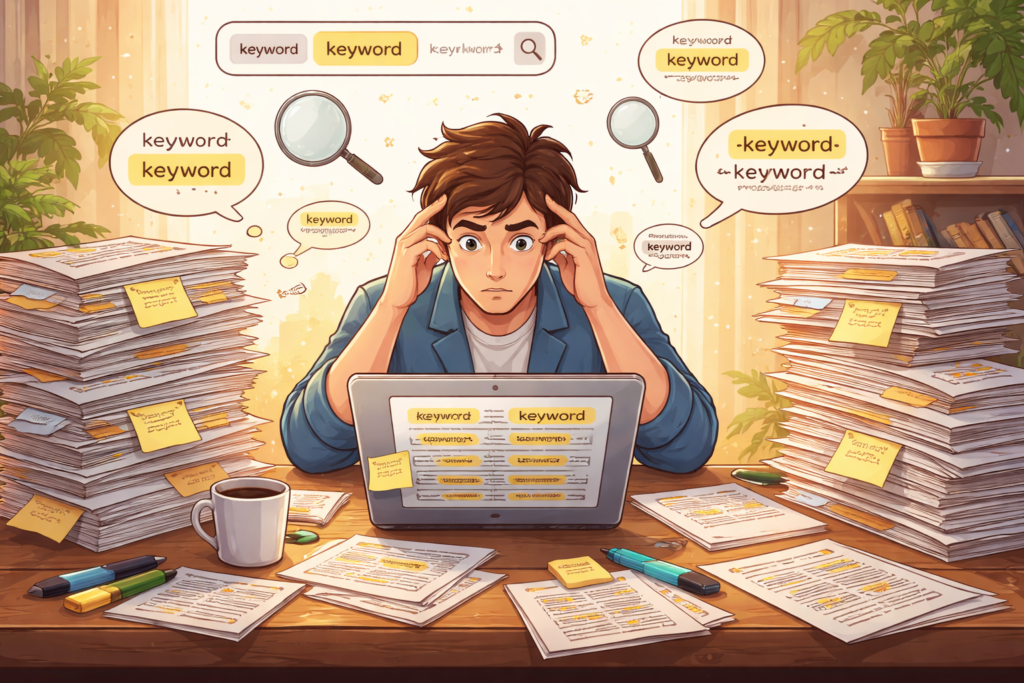
Some still believe that repeating keywords excessively helps search engines understand content better.
Why This Hurts Rankings
Keyword stuffing reduces content quality and creates a poor user experience. Search engines easily detect unnatural keyword usage and may lower rankings.
What Actually Works
Natural language, topic relevance, and user-focused content outperform keyword repetition.
Myth 3: Ranking #1 Is the Only Goal That Matters

Many businesses obsess over ranking first for a few keywords while ignoring traffic quality and conversions.
Why This Hurts Rankings
Ranking alone does not guarantee success. High rankings for the wrong intent keywords deliver poor engagement signals.
What Actually Works
Focus on ranking for keywords that match user intent and drive meaningful actions.
Myth 4: More Backlinks Always Mean Better Rankings

Backlinks remain important, but not all links are equal.
Why This Hurts Rankings
Low-quality or spammy backlinks can harm authority and trigger penalties.
What Actually Works
Fewer high-quality, relevant backlinks outperform hundreds of low-value links.
Myth 5: SEO Delivers Instant Results
SEO is often compared unfairly to paid advertising, leading businesses to expect immediate outcomes.
Why This Hurts Rankings
Impatience leads businesses to abandon SEO early or adopt risky tactics.
What Actually Works
SEO compounds over time. Consistency delivers stronger long-term results than shortcuts.
Myth 6: Google Prefers Big Brands Only

Some businesses believe they cannot compete with larger companies in search results.
Why This Hurts Rankings
This mindset prevents businesses from investing in SEO and building authority.
What Actually Works
Search engines prioritise relevance and usefulness. Small businesses can outrank big brands with better content and optimisation.
Myth 7: Duplicate Content Always Causes Penalties

Duplicate content myths cause unnecessary fear among website owners.
Why This Hurts Rankings
Avoiding necessary content or overusing canonical tags can reduce visibility.
What Actually Works
Search engines filter duplicates, not punish them—unless manipulation is involved.
Myth 8: Technical SEO Is Only for Developers

Many businesses ignore technical SEO, assuming it’s too complex.
Why This Hurts Rankings
Technical issues can block crawling, indexing, and performance without obvious signs.
What Actually Works
Basic technical optimisation improves rankings, usability, and conversions.
Myth 9: Social Media Directly Boosts Rankings

While social media supports visibility, it does not directly influence rankings.
Why This Hurts Rankings
Focusing solely on social metrics diverts attention from SEO fundamentals.
What Actually Works
Social media supports SEO indirectly through content distribution and brand awareness.
Myth 10: SEO Is All About Search Engines, Not Users
Optimising for algorithms instead of people is one of the most damaging myths.
Why This Hurts Rankings
Search engines increasingly measure user satisfaction signals.
What Actually Works
User-focused content aligned with intent consistently outperforms manipulative tactics.
Myth 11: More Pages Automatically Mean Better SEO
Some businesses believe publishing large amounts of content guarantees rankings.
Why This Hurts Rankings
Low-quality or thin content dilutes authority and engagement.
What Actually Works
Fewer, high-quality pages outperform large volumes of weak content.
Myth 12: Meta Tags Alone Can Fix Rankings

Optimising titles and descriptions is important, but insufficient on its own.
Why This Hurts Rankings
Strong meta tags cannot compensate for poor content or technical issues.
What Actually Works
Meta optimisation must support high-quality content and user experience.
Myth 13: Local SEO and Traditional SEO Are the Same
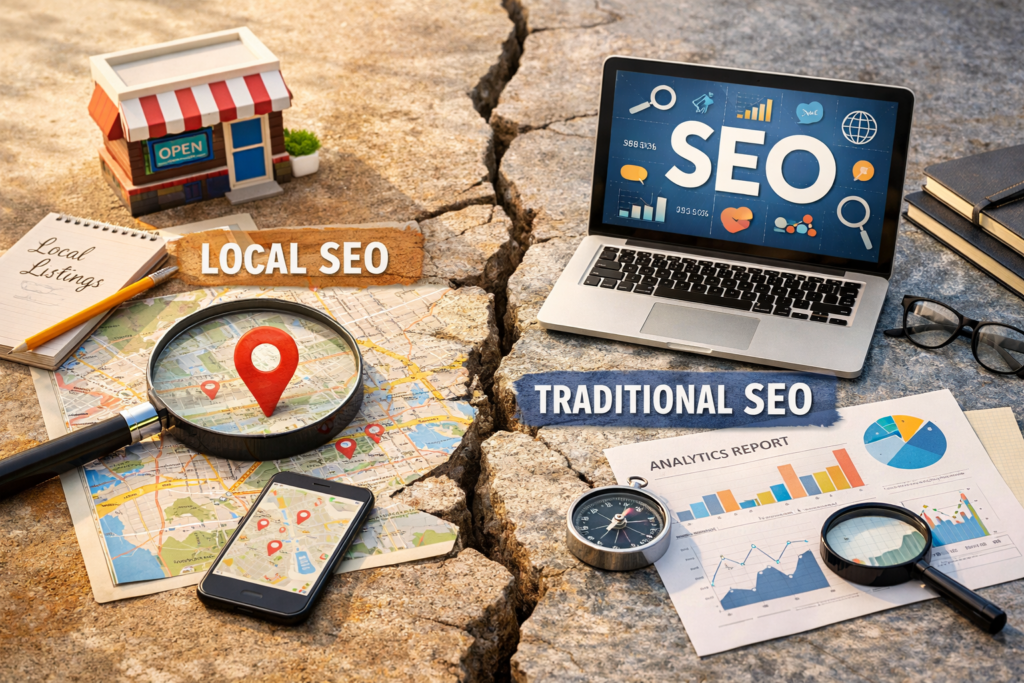
Many businesses apply national SEO strategies to local markets.
Why This Hurts Rankings
Ignoring location signals limits local visibility.
What Actually Works
Local SEO requires location relevance, reviews, and business optimisation.
Myth 14: AI-Generated Content Automatically Ranks

AI tools are powerful, but content quality still matters.
Why This Hurts Rankings
Unedited or generic AI content lacks originality and depth.
What Actually Works
AI should assist—not replace—human-driven expertise and optimisation.
How SEO Myths Impact Long-Term Website Performance
Believing SEO myths leads to:
- Ranking instability
- Poor engagement
- Lost trust signals
- Reduced conversions
- Increased algorithm risk
Modern SEO rewards consistency, relevance, and value.
How to Avoid SEO Myths That Hurt Website Rankings
To protect rankings:
- Follow current SEO best practices
- Focus on users, not shortcuts
- Measure performance correctly
- Invest in content quality
- Maintain technical health
Education is the strongest defence against SEO myths.
What SEO Actually Requires in 2025 and Beyond

Effective SEO today focuses on:
- Search intent alignment
- Helpful, original content
- Technical performance
- Authority and trust
- Continuous optimisation
SEO success comes from strategy—not myths.
SEO Myths That Hurt Website Rankings
SEO myths continue to hurt website rankings because they promise easy results where none exist. Businesses that rely on outdated or misleading advice often struggle to maintain visibility and growth.
By understanding SEO myths that hurt website rankings, businesses can avoid costly mistakes and invest in strategies that deliver sustainable results. SEO is not about tricks—it’s about creating value, earning trust, and improving user experience over time.
The fastest way to improve SEO is to stop believing myths and start focusing on what truly works.