
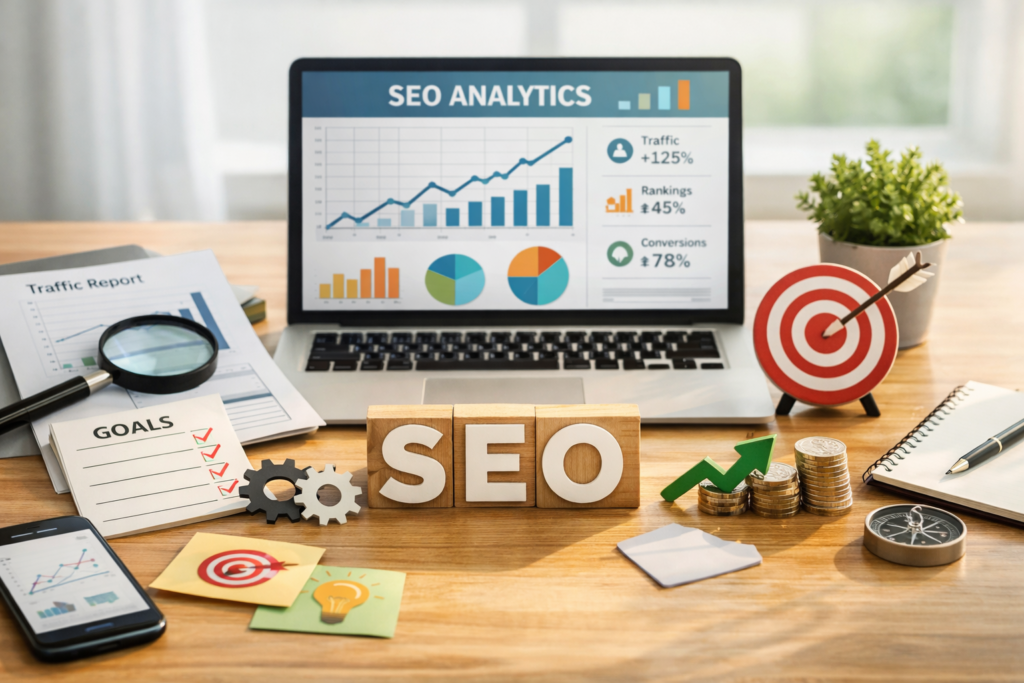
Many businesses invest in SEO but struggle to answer a simple question: Is it actually working? Rankings go up and down, traffic fluctuates, and reports often focus on numbers that don’t clearly show business impact. Measuring SEO correctly is not about tracking everything—it’s about tracking the right metrics.
Understanding how to measure SEO performance correctly helps businesses move beyond vanity metrics and focus on data that supports visibility, conversions, and long-term growth. This guide explains exactly what to measure, how to interpret the data, and how to connect SEO performance to real business outcomes.
Why Measuring SEO Performance Correctly Matters
SEO is a long-term strategy. Without proper measurement, businesses risk wasting time, budget, and effort on activities that don’t deliver results.
Correct SEO measurement helps you:
- Understand what’s driving growth
- Identify underperforming pages
- Improve return on investment (ROI)
- Align SEO with business goals
- Make data-driven optimisation decisions
SEO success is not just about rankings—it’s about traffic quality, engagement, and conversions.
Start with Clear SEO Objectives
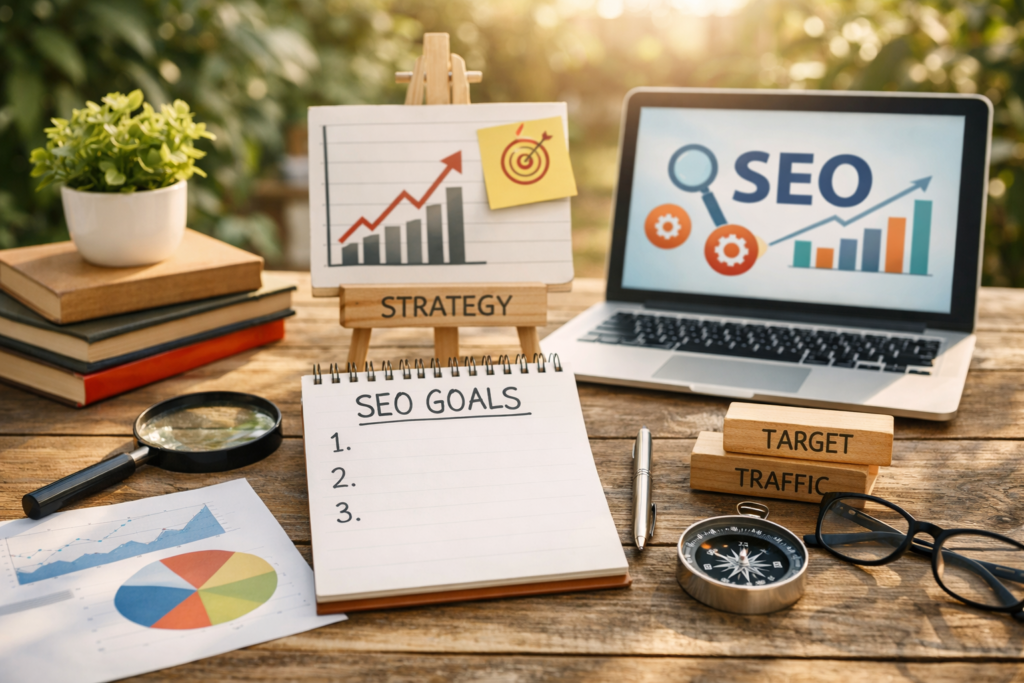
Before measuring anything, businesses must define their SEO goals. Without goals, data has no meaning.
Common SEO objectives include:
- Increasing organic traffic
- Improving keyword visibility
- Generating qualified leads
- Increasing online sales
- Strengthening local visibility
- Building brand authority
Each goal requires different metrics. Measuring everything without focus leads to confusion.
Organic Traffic: The Core SEO Performance Indicator
Organic traffic refers to visitors who arrive through unpaid search results. It is one of the clearest indicators of SEO visibility.
What to Measure
- Total organic sessions
- New vs returning organic users
- Traffic trends month over month
- Top organic landing pages
Consistent organic traffic growth usually signals improved rankings, relevance, and authority.
Keyword Rankings: Measuring Visibility Progress
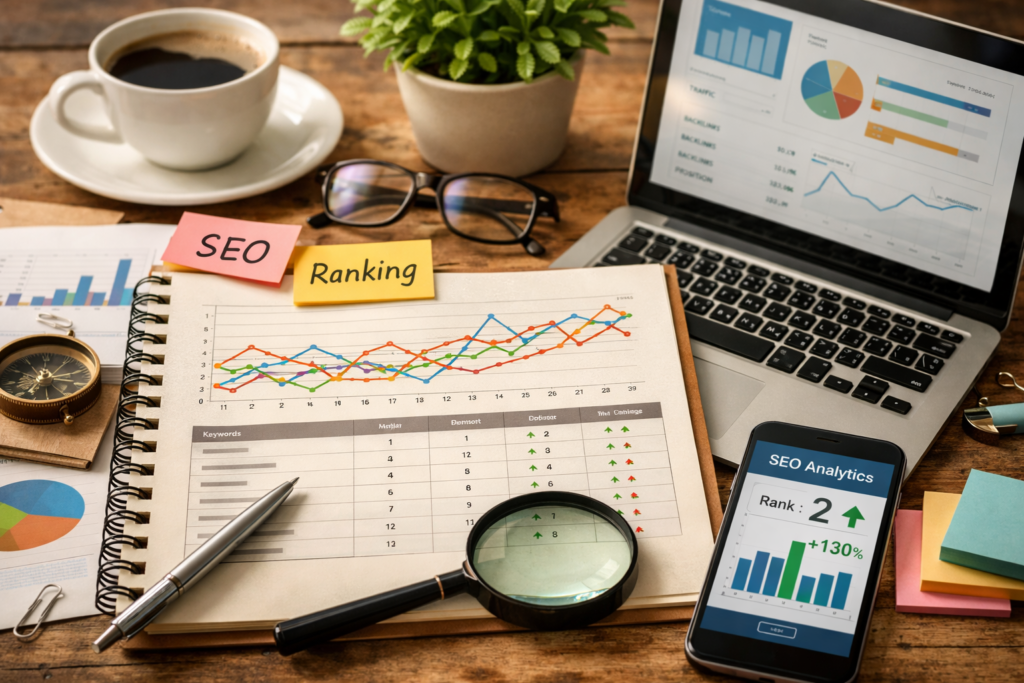
Keyword rankings show where your website appears in search results for target queries. While rankings alone don’t define success, they provide visibility insight.
How to Measure Rankings Correctly
- Track groups of keywords, not single terms
- Monitor ranking trends over time
- Segment keywords by intent (informational, commercial, transactional)
- Focus on top 3 and top 10 placements
Rankings should be viewed as directional signals, not final outcomes.
Search Impressions and Visibility

Impressions measure how often your pages appear in search results, even if users don’t click.
Why Impressions Matter
- Show early SEO progress
- Indicate growing brand exposure
- Highlight new keyword opportunities
Rising impressions often appear before traffic increases, making them an early success indicator.
Click-Through Rate (CTR): Turning Visibility into Traffic
CTR measures how often users click your page after seeing it in search results.
Why CTR Is Important
High rankings with low CTR mean users are not finding your listing compelling.
What Impacts CTR
- Page titles
- Meta descriptions
- Search intent alignment
- Rich results (schema)
Improving CTR can increase traffic without improving rankings.User Engagement Metrics: Measuring Content Effectiveness
User Engagement Metrics: Measuring Content Effectiveness

Search engines evaluate how users interact with your site. Engagement metrics help determine whether content satisfies intent.
Key Engagement Metrics
- Bounce rate
- Average time on page
- Pages per session
- Scroll depth
Strong engagement signals indicate relevance, which supports ranking stability and growth.
Conversion Tracking: Measuring Real SEO Value

SEO performance must be tied to business outcomes, not just traffic.
Common SEO Conversions
- Contact form submissions
- Phone calls
- Booked appointments
- Purchases
- Email signups
Without conversion tracking, SEO impact cannot be measured accurately.
Conversion Rate from Organic Traffic

Conversion rate measures how effectively organic visitors complete desired actions.
Why Conversion Rate Matters
High traffic with low conversions often means:
- Wrong keyword targeting
- Poor landing page experience
- Mismatched search intent
Improving conversion rate usually delivers faster ROI than increasing traffic.
Content Performance Analysis

Content is a major driver of SEO success. Measuring content performance helps identify what works.
What to Track
- Pages generating organic traffic
- Keywords each page ranks for
- Engagement metrics per page
- Conversions influenced by content
High-performing content should be expanded and replicated.
Backlink and Authority Metrics
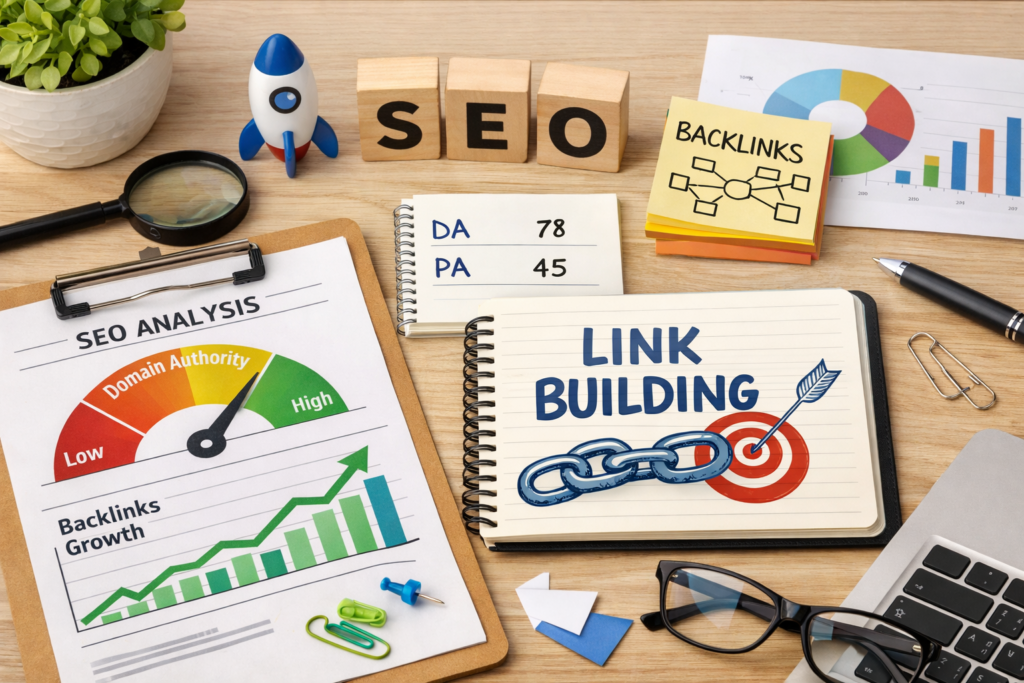
Backlinks help search engines assess trust and authority.
What to Measure
- Number of referring domains
- Quality of linking sites
- Backlink growth trends
- Anchor text diversity
Focus on backlink quality and relevance rather than volume.
Technical SEO Performance Metrics
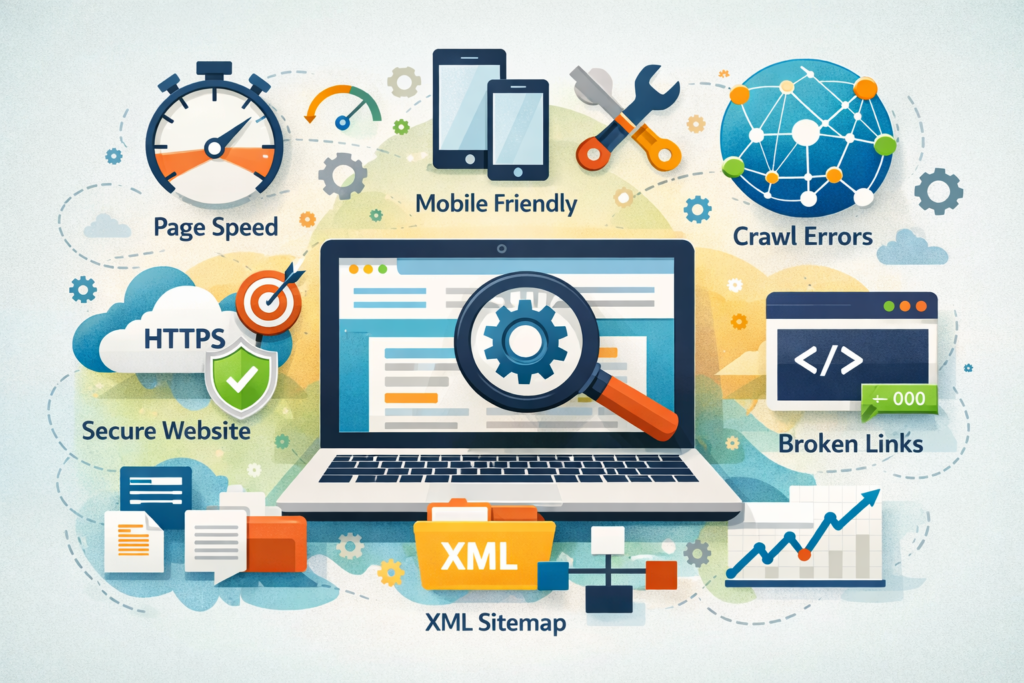
Technical issues can silently limit SEO performance, even with strong content.
Key Technical Metrics
- Crawl errors
- Index coverage issues
- Page speed and Core Web Vitals
- Mobile usability
- HTTPS security status
Technical health ensures search engines can properly access and rank your pages.
Local SEO Performance Metrics
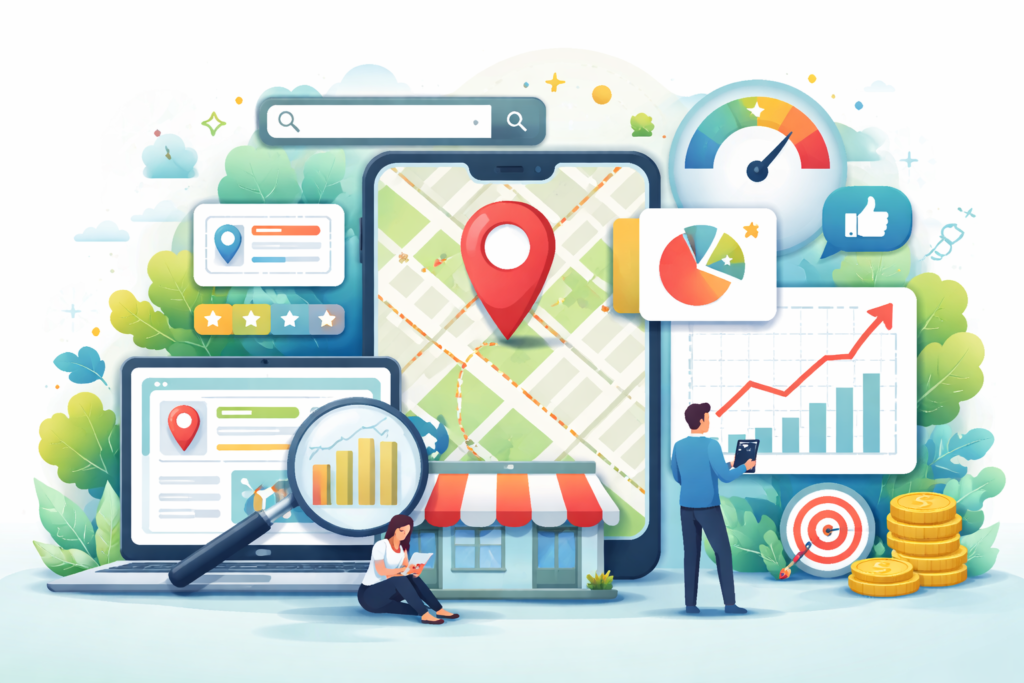
For local businesses, traditional SEO metrics are not enough.
Local SEO Metrics to Track
- Google Business Profile views
- Map pack visibility
- Direction requests
- Phone calls
- Reviews and ratings
Local engagement metrics directly reflect high-intent customer behaviour.
Measuring SEO Performance Over the Right Timeframe
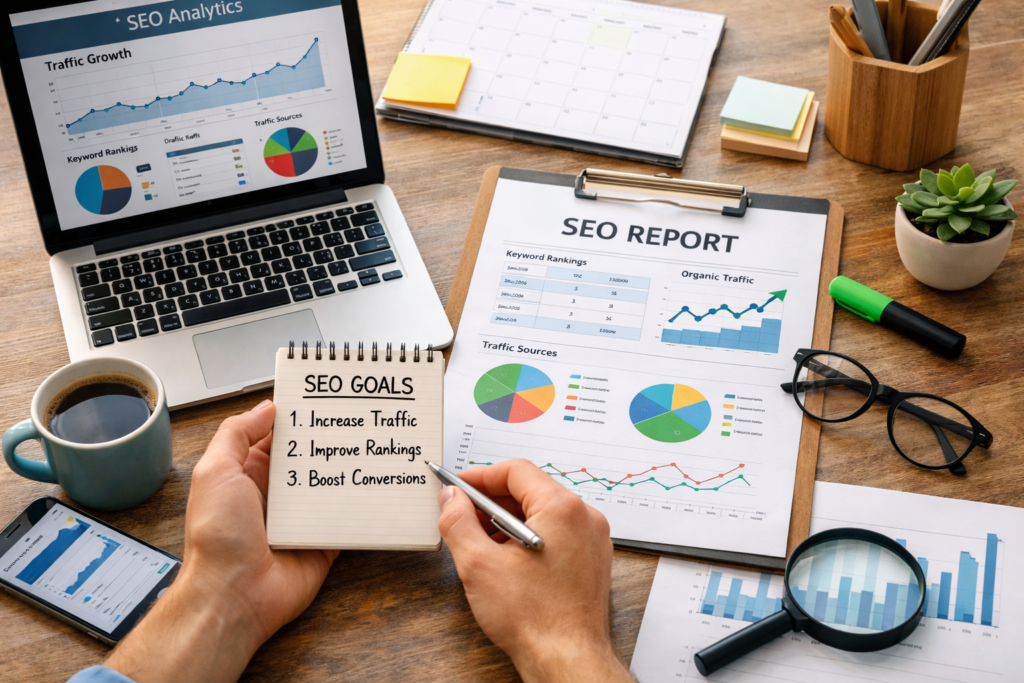
SEO should never be measured daily. Short-term fluctuations are normal.
Recommended Timeframes
- Weekly: technical checks and alerts
- Monthly: performance reviews
- Quarterly: strategy evaluation
SEO success is measured through trends, not spikes.
SEO Performance vs Vanity Metrics

Vanity metrics look impressive but provide little insight.
Examples of Vanity Metrics
- Ranking for irrelevant keywords
- High impressions without clicks
- Traffic with no engagement
Focus on metrics that connect directly to business growth.
Common Mistakes When Measuring SEO Performance
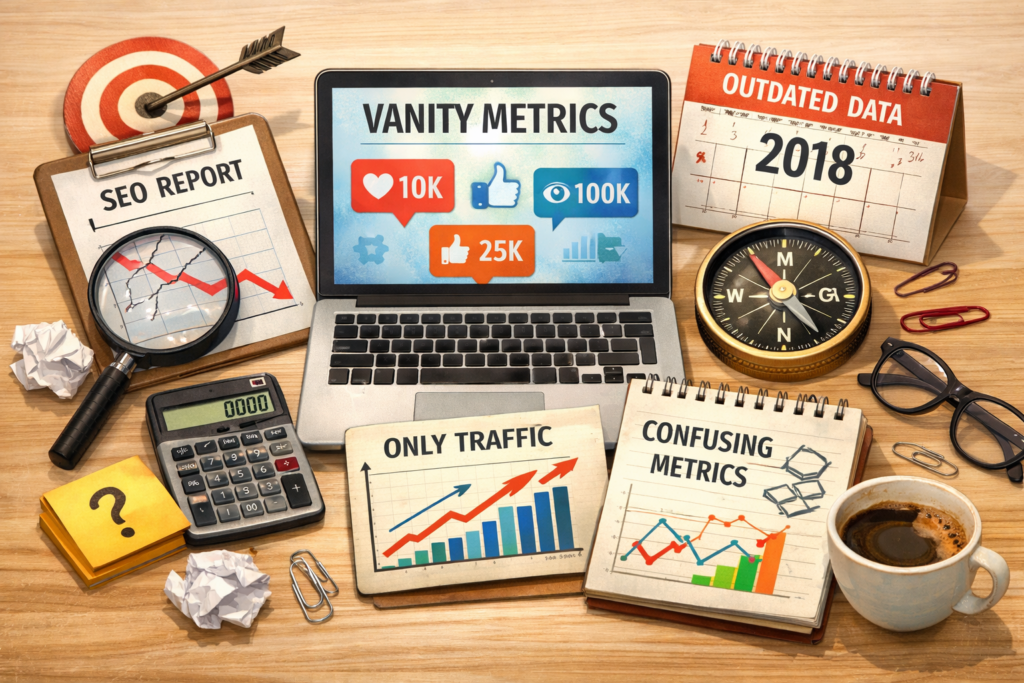
Many businesses measure SEO incorrectly by:
- Tracking rankings only
- Ignoring conversions
- Focusing on short-term changes
- Comparing SEO directly to paid ads
- Not aligning metrics with goals
Avoiding these mistakes leads to clearer insights and better decisions.
How Long Does It Take to Measure Meaningful SEO Results?
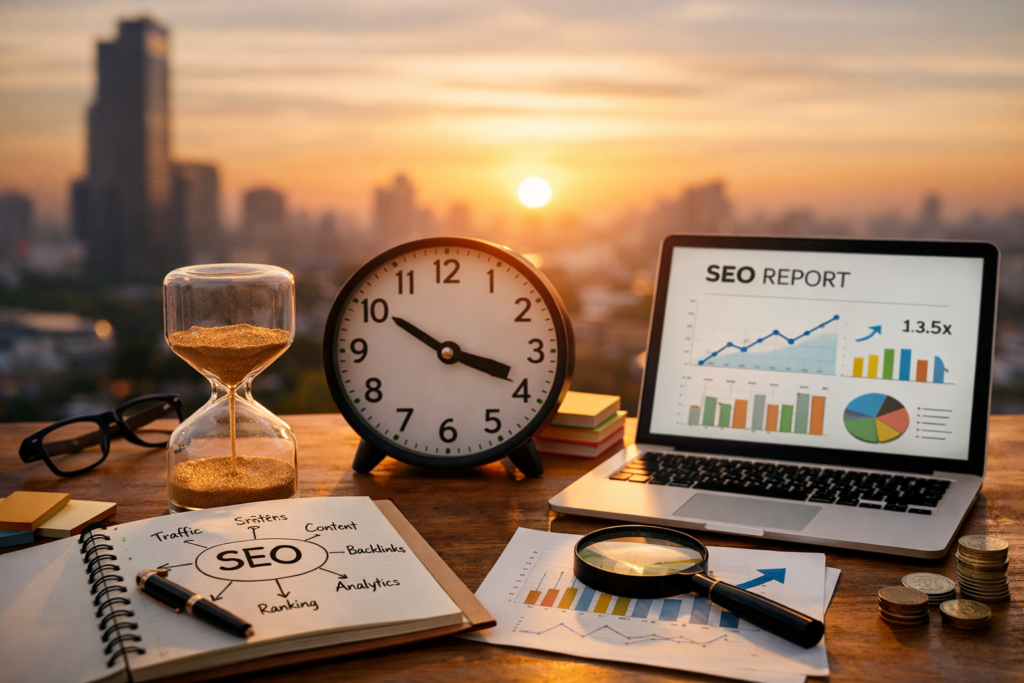
SEO performance typically shows:
- Early signals within weeks
- Traffic improvements in 3–6 months
- Strong ROI over 6–12 months
Patience and consistency are essential.
Using SEO Data to Improve Performance

Measurement is only valuable if data is used to optimise.
SEO data helps:
- Improve content strategy
- Fix technical issues
- Refine keyword targeting
- Increase conversion rates
Data-driven SEO delivers sustainable growth.
Why Correct SEO Measurement Supports Long-Term Growth

When businesses measure SEO correctly, they:
- Reduce wasted effort
- Scale what works
- Improve ROI
- Build sustainable visibility
Measurement turns SEO from an expense into an investment.
How to Measure SEO Performance Correctly
Measuring SEO performance correctly requires focusing on meaningful metrics, not just rankings. Organic traffic, engagement, conversions, visibility, and technical health together provide a complete picture of SEO success.
By understanding how to measure SEO performance correctly, businesses can make smarter decisions, improve ROI, and build long-term digital growth.
SEO is not just about being visible—it’s about delivering real business results.