
Many businesses chase high-volume keywords but still fail to rank well or turn visitors into customers. The main reason is simple: SEO today is not just about keywords—it’s about intent. Knowing what keyword intent means in SEO helps businesses reach the right users, improve engagement, and achieve real results.
This guide explains keyword intent in clear language, why it is important, the main types of keyword intent, and how businesses can optimise content to match search intent for long-term SEO success.
What Is Keyword Intent in SEO?
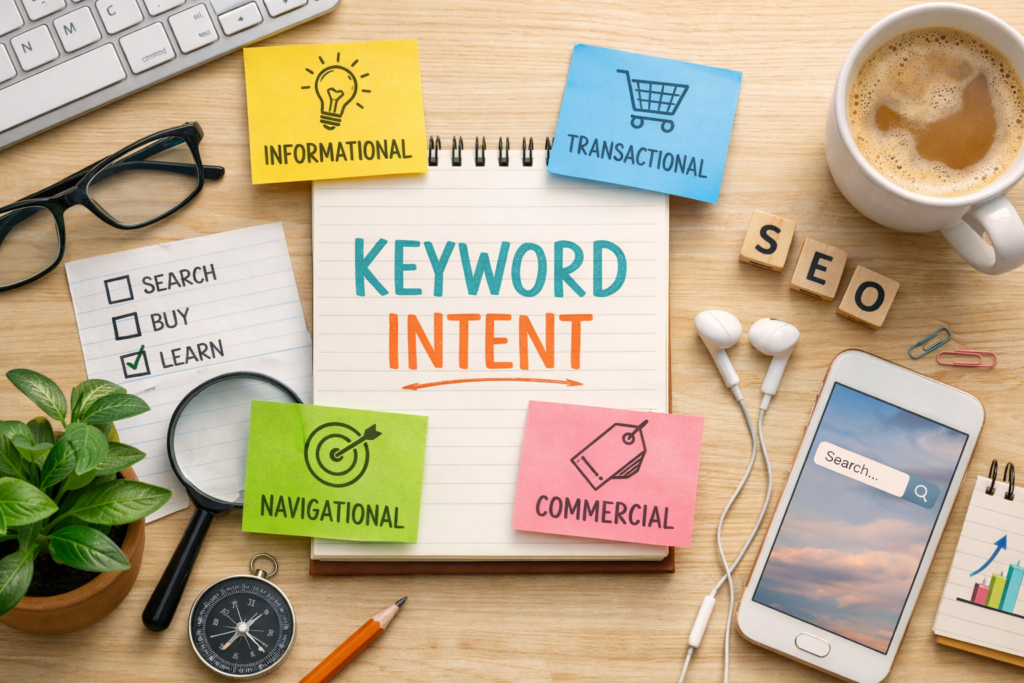
Keyword intent, often called search intent, describes the goal behind a user’s search query. It answers a key question: what is the user trying to achieve when they enter this keyword into a search engine?
Search engines aim to show results that best satisfy user intent, not just pages that repeat the same keywords. If your content does not match the intent behind a search, ranking becomes difficult—even with strong technical SEO.
In simple terms, keyword intent helps search engines understand:
- The reason someone is searching
- The type of content they expect
- The action they want to take
Strong SEO performance depends on aligning content with intent.
Why Keyword Intent Matters in SEO

Keyword intent plays a major role in modern SEO. Search engines like Google prioritise pages that quickly and accurately meet user expectations.
Keyword intent is important because it:
- Improves ranking relevance
- Increases click-through rates
- Lowers bounce rates
- Boosts conversion rates
- Enhances overall user experience
Targeting the wrong intent often results in low-quality traffic and poor SEO outcomes.
Why Keyword Intent Matters in SEO
Keyword intent plays a major role in modern SEO. Search engines like Google prioritise pages that quickly and accurately meet user expectations.
Keyword intent is important because it:
- Improves ranking relevance
- Increases click-through rates
- Lowers bounce rates
- Boosts conversion rates
- Enhances overall user experience
Targeting the wrong intent often results in low-quality traffic and poor SEO outcomes.
How Search Engines Understand Keyword Intent

Search engines evaluate several signals to determine intent, including:
- Search terms and keyword modifiers
- User behaviour and engagement
- Click patterns
- Preferred content formats
- Location and device data
Over time, Google learns which content best satisfies a query and ranks similar pages higher.
The Four Main Types of Keyword Intent
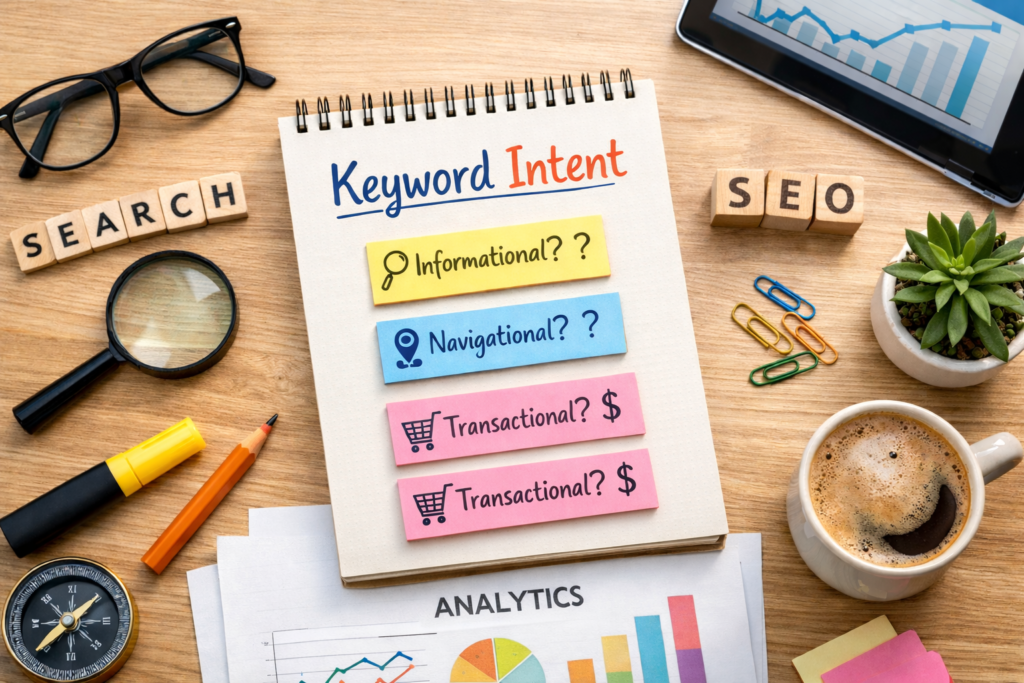
Understanding the different types of keyword intent is essential for building a successful SEO strategy.
1. Informational Keyword Intent
Informational intent means the user is searching for knowledge or answers. These users are not ready to make a purchase—they want information.
Examples
- “What is keyword intent in SEO”
- “How search engines work”
- “SEO basics for beginners”
Best Content Types
- Blog articles
- Guides and tutorials
- FAQs
- Educational videos
Informational keywords are excellent for building trust and authority.
2. Navigational Keyword Intent
Navigational intent occurs when a user wants to reach a specific website, brand, or platform.
Examples
- “Apexora360 SEO services”
- “Google Search Console login”
- “Ahrefs pricing”
Best Content Types
- Brand pages
- Login pages
- Homepages or service pages
Navigational searches mainly benefit established brands.
3. Commercial Keyword Intent
Commercial intent shows that the user is comparing options before making a decision. These users are close to converting but need reassurance.
Examples
- “Best digital marketing agency”
- “SEO services comparison”
- “Top SEO tools for businesses”
Best Content Types
- Comparison posts
- Case studies
- Service pages
- Reviews and testimonials
Commercial keywords are valuable for generating qualified leads.
4. Transactional Keyword Intent
Transactional intent means the user is ready to take action, such as buying, booking, or signing up.
Examples
- “Hire SEO agency”
- “Buy SEO services”
- “Book digital marketing consultation”
Best Content Types
- Landing pages
- Service pages
- Product pages
- Booking or checkout pages
Transactional keywords directly drive revenue.Keyword Intent vs Keyword Volume
Keyword Intent vs Keyword Volume
High search volume does not always equal high value. A lower-volume keyword with strong transactional intent can produce better returns than a high-volume informational keyword.
Effective SEO focuses on:
- Intent first
- Volume second
- Competition third
Intent determines the quality of traffic.
How to Identify Keyword Intent
Identifying keyword intent requires analysing both the keyword and the search results.
Steps to Identify Intent
- Look for intent-based modifiers (buy, best, how, near me)
- Review top-ranking pages
- Identify content type (blog, landing page, video)
- Understand user expectations
- Match your content to existing results
Search results clearly show what Google believes users want.
Keyword Modifiers That Indicate Intent
Certain words strongly signal intent type.
Informational Modifiers
- How to
- What is
- Guide
- Tips
Commercial Modifiers
- Best
- Top
- Compare
- Reviews
Transactional Modifiers
- Buy
- Hire
- Pricing
- Book
These modifiers help refine keyword targeting.
How Keyword Intent Affects Rankings
When content aligns with intent:
- Users stay longer
- Engagement improves
- Bounce rates decrease
- Rankings improve
When intent does not match:
- Users leave quickly
- Rankings drop
- Traffic quality declines
Intent alignment is essential for long-term SEO growth.How to Optimise Content for Keyword Intent
How to Optimise Content for Keyword Intent
To optimise for intent:
- Match content format to intent type
- Use clear headings and structure
- Answer user questions directly
- Add relevant calls to action
- Avoid mixing multiple intents on one page
Each page should focus on one main intent.
Common Keyword Intent Mistakes Businesses Make
Many SEO failures are caused by intent mismatch.
Common mistakes include:
- Using blog posts for transactional keywords
- Using sales pages for informational keywords
- Ignoring SERP analysis
- Focusing on keywords instead of users
Avoiding these errors improves both rankings and conversions.How Keyword Intent Supports the Buyer Journey
How Keyword Intent Supports the Buyer Journey
Keyword intent naturally aligns with the customer journey:
- Informational intent → Awareness
- Commercial intent → Consideration
- Transactional intent → Decision
Targeting all stages creates a complete SEO funnel.
Keyword Intent and Conversion Rate Optimisation
Intent-driven SEO improves conversions by:
- Meeting user expectations
- Delivering relevant content
- Reducing friction
- Guiding users smoothly
Quality traffic matters more than high traffic volume.
How Long Does Keyword Intent Optimisation Take to Show Results?
Intent-focused changes often deliver faster improvements than traditional keyword optimisation. Engagement improvements may appear within weeks, while ranking gains typically show within 2–3 months.
Consistency strengthens long-term results.
Why Keyword Intent Is Essential for Modern SEO
Search engines continue to evolve. They reward pages that:
- Fulfil user intent
- Provide value quickly
- Deliver clear, helpful answers
Ignoring intent limits SEO performance, no matter how strong the technical setup is.
What Is Keyword Intent in SEO?
Keyword intent in SEO refers to the goal behind a user’s search. Understanding and matching content to intent is crucial for higher rankings, better traffic quality, and stronger conversions.
By prioritising intent over keywords alone, businesses can create content that satisfies users, builds authority, and supports sustainable growth.
SEO success starts with understanding why users search—not just what they search for.