
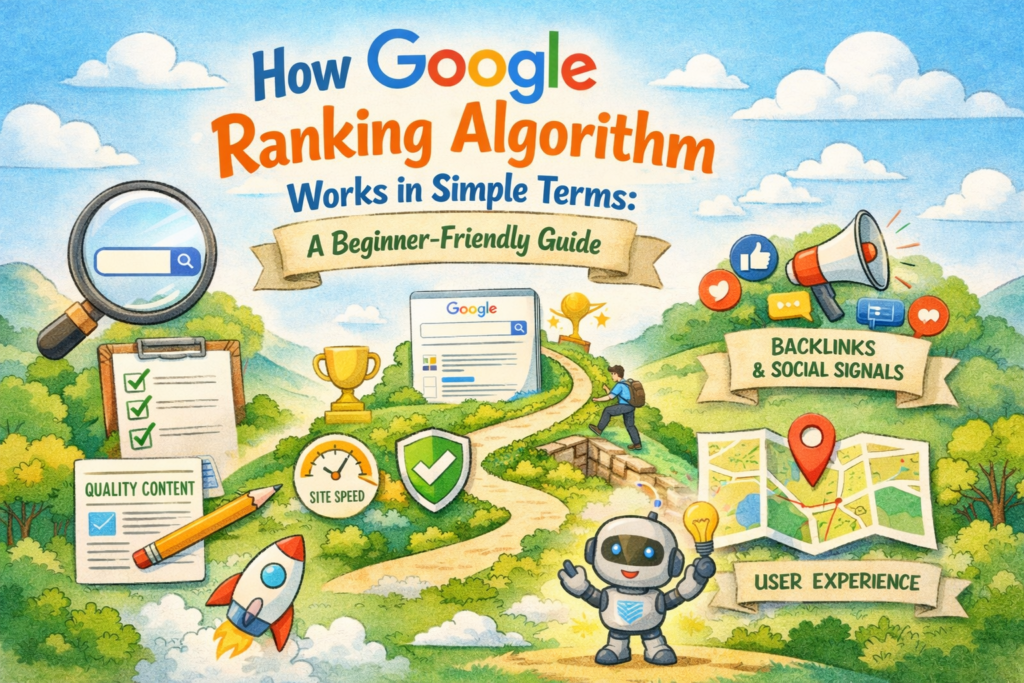
Every day, Google handles billions of searches, yet many website owners and businesses are still unsure how it determines which pages appear first. While the Google ranking algorithm is complex behind the scenes, its main goal is straightforward: to provide users with the most relevant, helpful, and trustworthy results.
Understanding how Google’s ranking algorithm works in simple terms can help businesses make smarter SEO decisions, enhance website performance, and compete more effectively in search results. This guide explains the process clearly and without technical jargon.
What Is the Google Ranking Algorithm?

The Google ranking algorithm is a system of rules and signals that Google uses to decide which web pages show up in search results and in what order. It considers thousands of factors to determine which pages best meet a user’s search intent.
In simple terms, the algorithm addresses three main questions:
- What is the user trying to find?
- Which pages best satisfy that need?
- Which pages are the most reliable and useful?
Google’s objective is not to favor websites—it’s to deliver the best experience for users.
How Google Ranking Algorithm Works Step by Step
Although the algorithm is constantly updated, the core process remains largely the same.
Crawling the Web

Google uses automated programs called crawlers or bots to discover new and updated web pages. These bots navigate links from page to page, scanning content across the internet.
If your website can be crawled, Google can find it. If technical issues block crawling, your site may remain invisible to Google.
Indexing the Content

After crawling, Google organizes and stores web pages in its massive database, known as the index. Only indexed pages can appear in search results.
During indexing, Google evaluates:
- Page content and structure
- Keywords and topics
- Images and media
- Connections between pages
If a page isn’t indexed, it cannot rank.
Ranking the Pages
When someone searches, Google scans its index and ranks pages based on relevance and quality, a process that happens in milliseconds.It’s important to note that Google ranks individual pages, not entire websites.
How Google Understands Search Intent

Search intent is the purpose behind a query. Google prioritizes pages that match the user’s intent rather than just containing exact keywords.
The main types of search intent include:
- Informational: looking for answers or explanations
- Navigational: searching for a specific website
- Commercial: comparing products or services before buying
- Transactional: ready to make a purchase or take action
Pages that align closely with intent rank higher than pages that simply repeat keywords.
How SEO Aligns With Google’s Algorithm
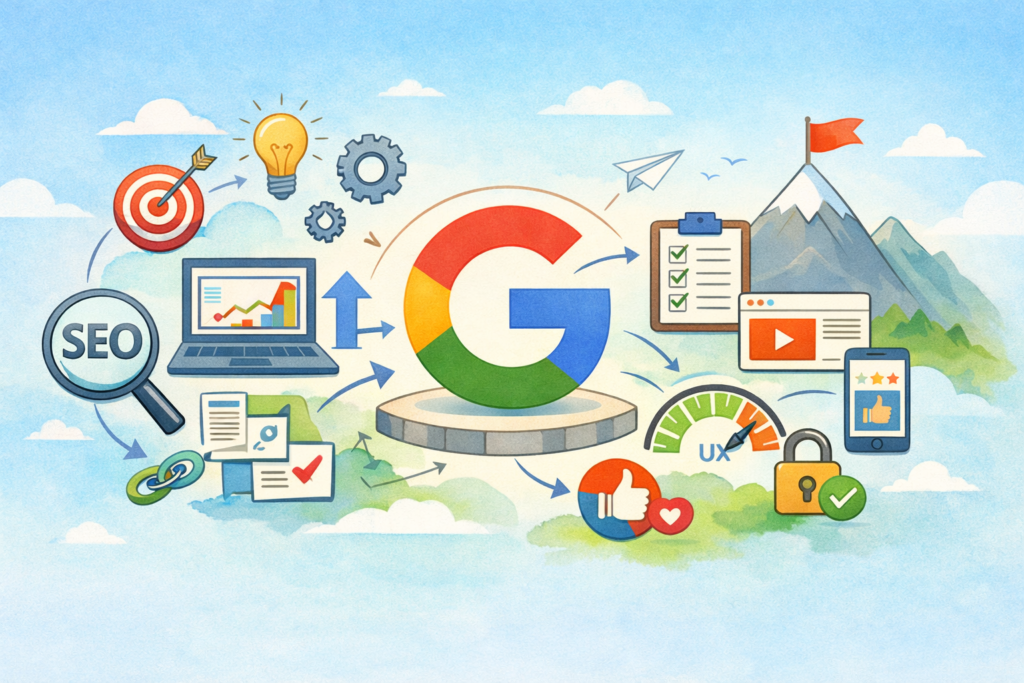
Effective SEO is about aligning with Google’s goals, not tricking it. Good SEO includes:
- Creating valuable content
- Enhancing website usability
- Building genuine authority
- Fixing technical issues
When SEO meets user needs, higher rankings follow naturally.
Key Factors Google Uses to Rank Pages
Google considers hundreds of signals, but they fall into several main categories:
1. Content Relevance

Relevance measures how well a page addresses a user’s query. Google looks at:
- Topic coverage
- Keyword context, not just exact matches
- Depth and usefulness of content
Comprehensive, well-focused content performs better than shallow or generic pages.
2. Content Quality and Value

Google favors content that genuinely helps users. Pages created solely to manipulate rankings are filtered out.
High-quality content is:
- Original and accurate
- Well-organized and readable
- Informative and helpful
- Updated when needed
Quality is one of the strongest factors for sustainable ranking.
3. Website Authority and Trust

Authority is based on signals from external sources. Google measures trustworthiness by:
- Backlinks from reputable sites
- Brand mentions online
- Overall reputation
Websites cited by trusted sources are more likely to rank higher.
4. User Experience Signals

Google monitors how users interact with pages. Positive indicators include:
- Fast-loading pages
- Mobile-friendly design
- Low bounce rates
- Easy navigation
If users leave quickly, Google may interpret the page as unhelpful.
5. Technical Performance

Technical SEO ensures Google can crawl, index, and rank pages efficiently. Important factors include:
- Website speed
- Mobile optimization
- Secure connections (HTTPS)
- Clear site structure
Even with good content, a technically weak site struggles to rank.
6. Page Freshness

For some topics, Google prefers updated content, especially for news, trends, or time-sensitive searches.
Freshness is measured by:
- Recent updates
- New publication dates
- Ongoing relevance
Not all searches require fresh content, but for some queries, it makes a significant difference.
7. Location and Personalisation

Google personalizes results based on:
- User location
- Language preferences
- Search history
Local searches especially depend on proximity and relevance.
How Google Ranking Algorithm Has Evolved
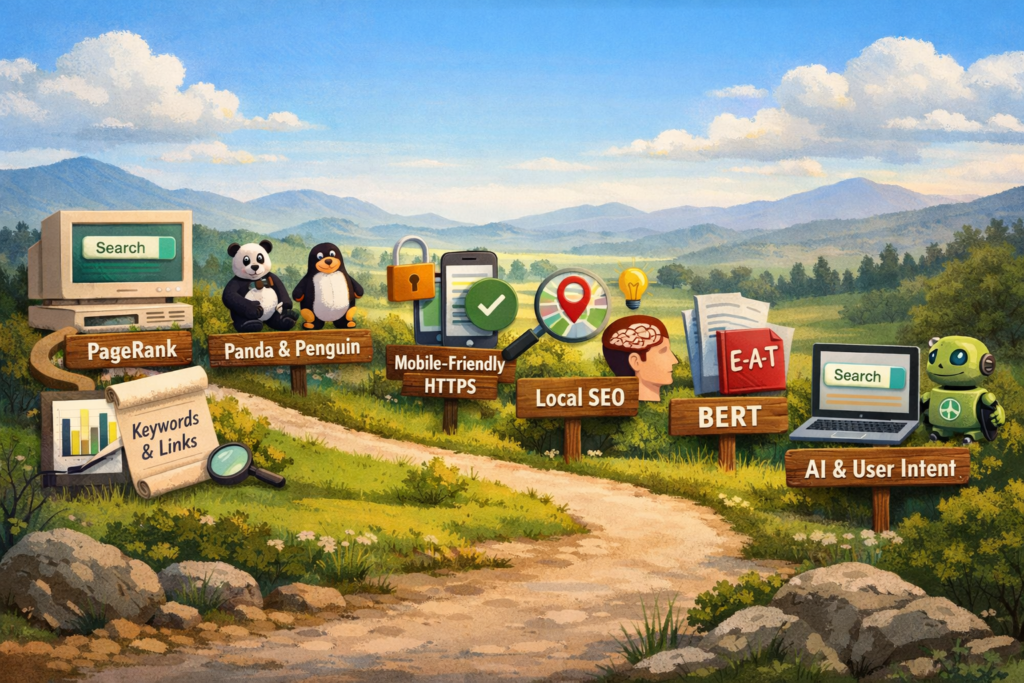
Google’s algorithm changes constantly to improve search quality. Key developments include:
- Moving from simple keyword matching to understanding intent
- Prioritizing mobile-first indexing
- Emphasizing user experience
- Combating spam and low-quality content
Modern rankings focus on usefulness rather than manipulation.
What Google Avoids

Google penalizes practices that manipulate rankings, including:
- Keyword stuffing
- Duplicate content
- Low-quality backlinks
- Hidden text or links
- Other manipulative SEO tactics
Shortcuts may give temporary gains but hurt long-term performance.
- How SEO Aligns With Google’s Algorithm
How Long Does It Take to Rank a Page?

Timing depends on competition, site authority, and optimization quality:
- New pages may take weeks to be indexed
- Ranking improvements often appear within 2–6 months
- Long-term growth accumulates over time
Consistency matters more than speed.
Common Misconceptions About Google Rankings

Many businesses have misconceptions:
- “More keywords guarantee higher rankings”
- “Backlinks alone ensure success”
- “SEO gives instant results”
- “Google favors big brands only”
In reality, relevance and usefulness are the top priorities.
How Businesses Can Improve Rankings Safely

To stay aligned with Google:
- Produce helpful content
- Optimize pages technically
- Improve site speed and usability
- Gain links naturally
- Track performance regularly
Sustainable SEO always beats shortcuts.
Why Understanding Google Algorithm Matters

Understanding how rankings work helps businesses:
- Make better content decisions
- Avoid risky tactics
- Invest in long-term growth
- Maximize marketing ROI
Knowledge leads to smarter strategies.
How Google Ranking Algorithm Works in Simple Terms
In simple terms, the Google ranking algorithm works by finding the most relevant, useful, and trustworthy pages for every search. It crawls the web, indexes content, and ranks pages based on relevance, quality, authority, and user experience.
Businesses that focus on helping users—rather than manipulating rankings—are rewarded with long-term visibility and growth.
Google’s algorithm may be complex, but its goal is simple: deliver the best possible answers.