
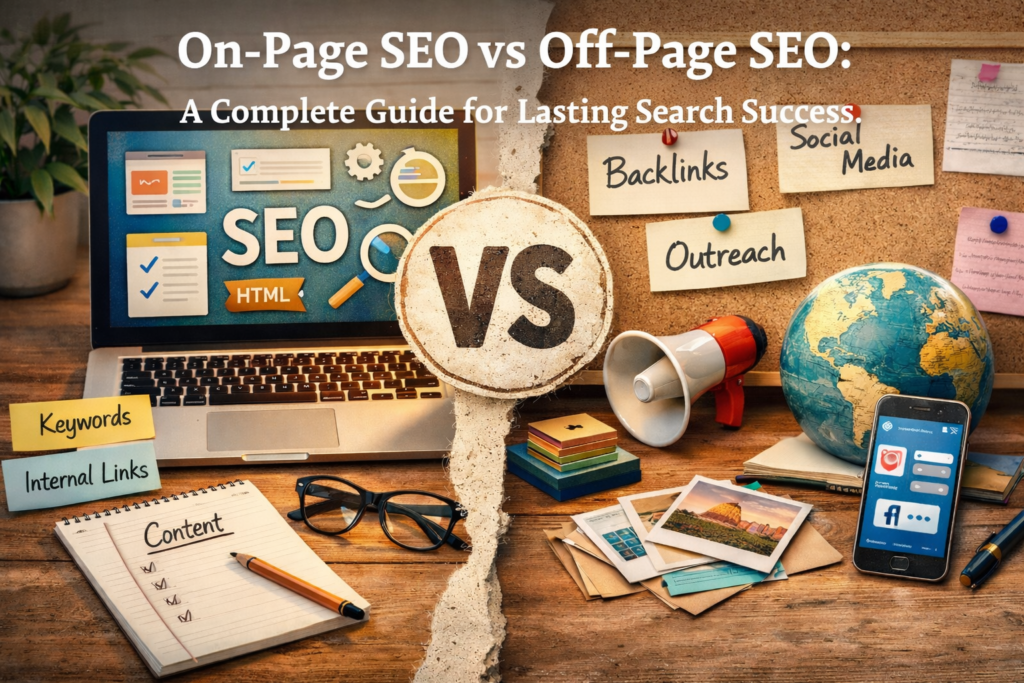
Search Engine Optimization (SEO) is one of the most effective ways to boost a website’s visibility, attract organic traffic, and grow a business online. SEO isn’t a single task—it’s a combination of strategies working together. Two of the most critical aspects are on-page SEO and off-page SEO.
Many businesses struggle because they emphasize one while neglecting the other. Clearly understanding on-page SEO vs off-page SEO enables businesses to create balanced strategies that produce long-term results rather than short-term gains.
This guide covers what on-page and off-page SEO are, how they differ, why both are essential, and how they work together to improve rankings, authority, and conversions.
What Is On-Page SEO?
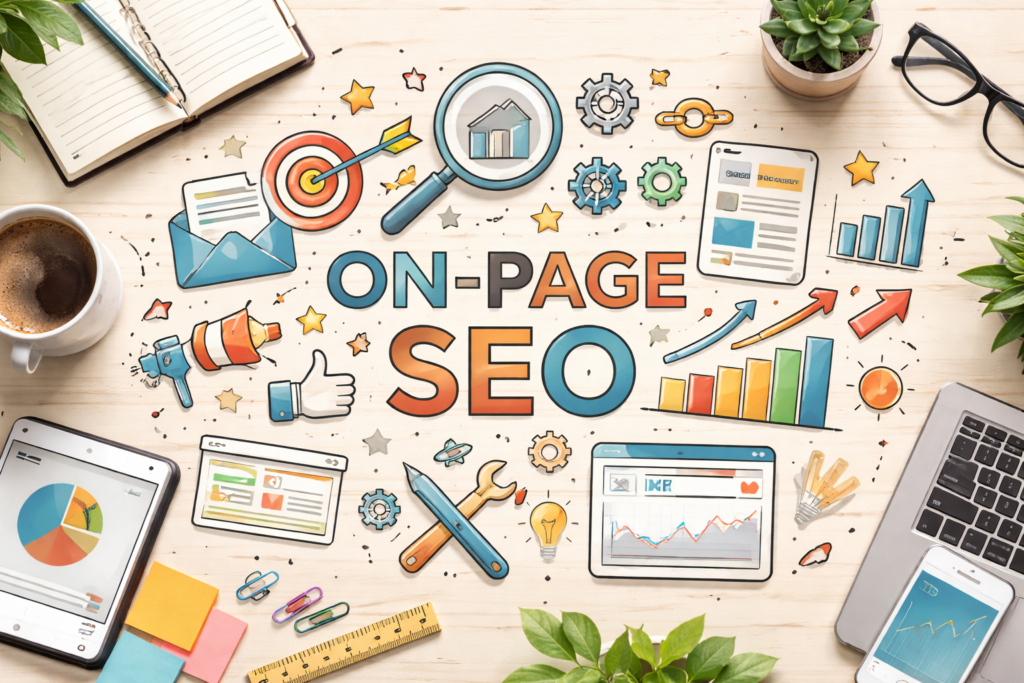
On-page SEO includes all optimization efforts made directly on your website to help search engines understand your content and assess its relevance for specific search queries.
It focuses on making website pages clear, structured, and user-friendly for both visitors and search engines.
Key elements of on-page SEO include:
- Page titles and meta descriptions
- Headings (H1, H2, H3 structure)
- Proper keyword placement
- High-quality, original content
- Internal linking
- URL structure
- Image optimization
- Page speed and mobile usability
- Overall user experience and readability
On-page SEO ensures search engines understand your pages and can display them for the right searches.
Why On-Page SEO Is Important
On-page SEO is the foundation of a strong SEO strategy. Even the best backlinks or campaigns may not work without it.
It helps by:
- Enhancing content relevance for target keywords
- Increasing click-through rates from search results
- Improving user engagement and experience
- Supporting conversions
- Reducing bounce rates
Every page should follow on-page SEO best practices to maximize performance.
What Is Off-Page SEO?
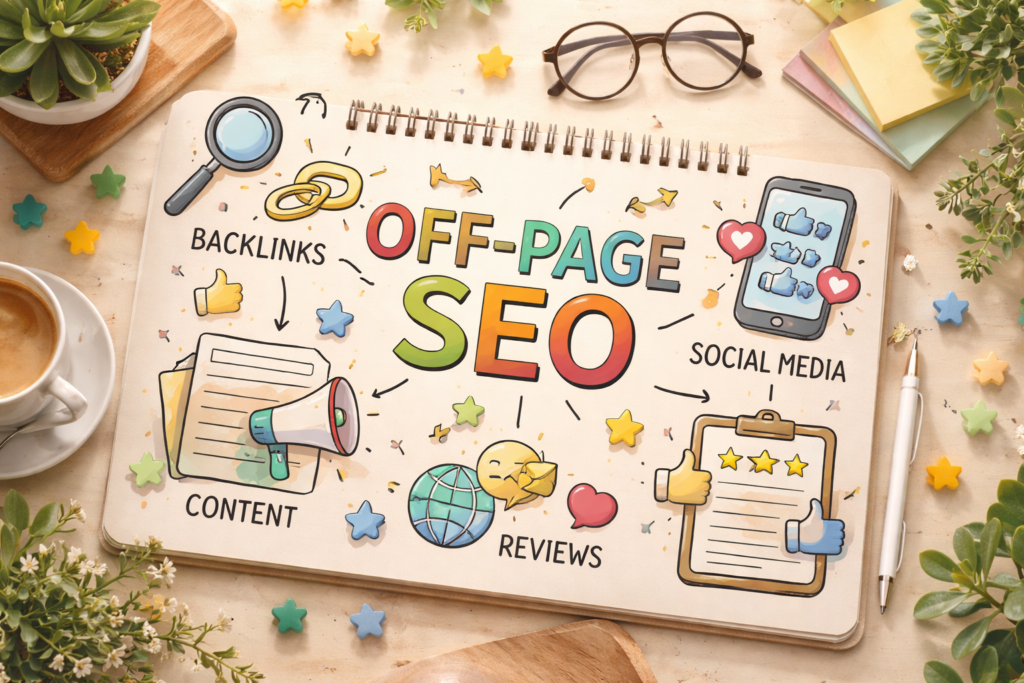
Off-page SEO involves optimization activities outside your website aimed at building authority, trust, and credibility.
Unlike on-page SEO, which you control, off-page SEO depends on how other websites, users, and platforms interact with your site.
Key off-page SEO factors include:
- Backlinks from other websites
- Brand mentions without links
- Online reviews
- Local citations
- Social signals
- Digital PR and outreach
- Guest posting and partnerships
These factors help search engines judge your website’s trustworthiness compared to competitors.
Why Off-Page SEO Matters
Search engines use off-page signals as indicators of trust and authority. Mentions or links from reputable websites signal reliability.
Off-page SEO helps:
- Build website authority
- Improve trust and credibility
- Strengthen competitive rankings
- Enhance brand reputation
Without off-page SEO, ranking for competitive keywords becomes difficult, even with excellent content.
On-Page SEO vs Off-Page SEO: Key Differences
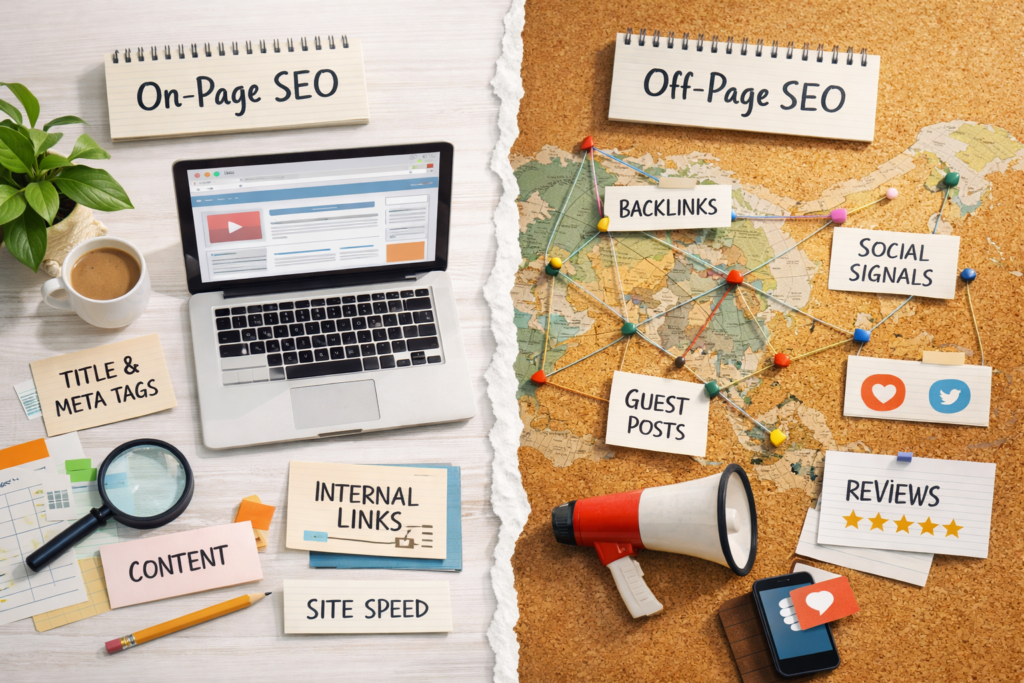
Understanding their differences helps apply the right strategies effectively:
| Feature | On-Page SEO | Off-Page SEO |
| Location | On your website | Outside your website |
| Main Goal | Improve relevance | Build authority |
| Level of Control | High | Limited |
| Key Elements | Content, structure, UX | Backlinks, mentions |
| Speed of Impact | Faster | Slower, but stronger |
| Risk Level | Low | Medium if misused |
| Best For | Keyword targeting | Competitive rankings |
How On-Page SEO Supports Off-Page SEO
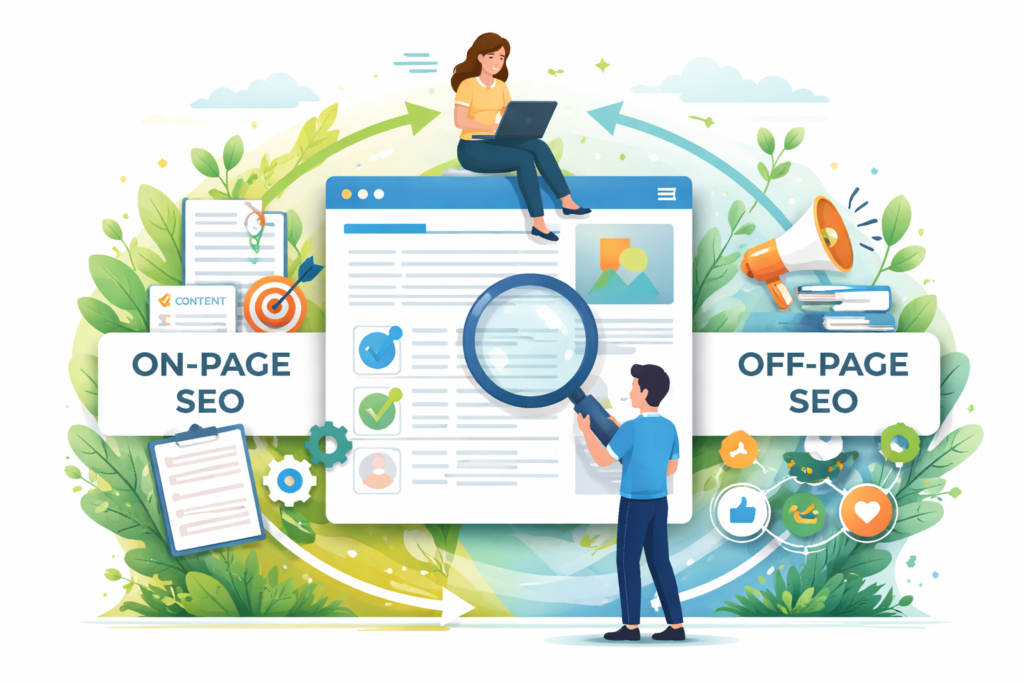
Strong on-page SEO makes off-page efforts more effective. Well-structured, high-quality content naturally attracts backlinks and improves referral traffic.
On-page SEO helps off-page SEO by:
- Creating content worthy of linking
- Enhancing user experience for visitors from backlinks
- Strengthening keyword relevance for linked pages
Without proper on-page SEO, off-page efforts are less impactful.
How Off-Page SEO Strengthens On-Page SEO
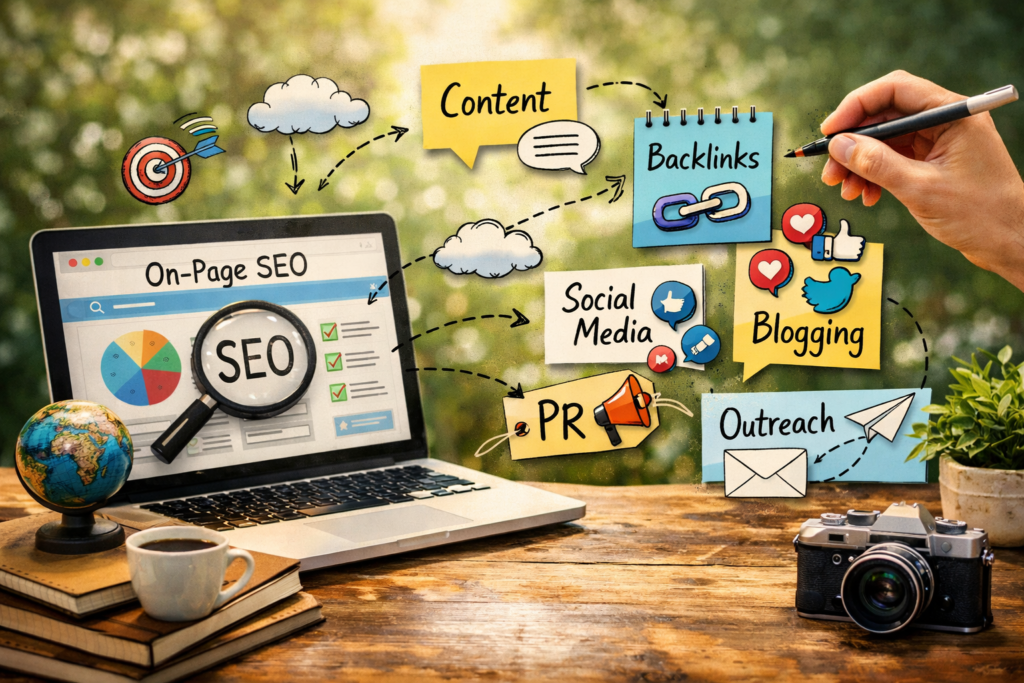
Off-page SEO boosts the ranking potential of optimized pages. Links from authoritative sites signal relevance to search engines.
Off-page SEO supports on-page SEO by:
- Increasing page authority
- Improving keyword ranking potential
- Driving qualified referral traffic
Together, they amplify results.
Common On-Page SEO Mistakes
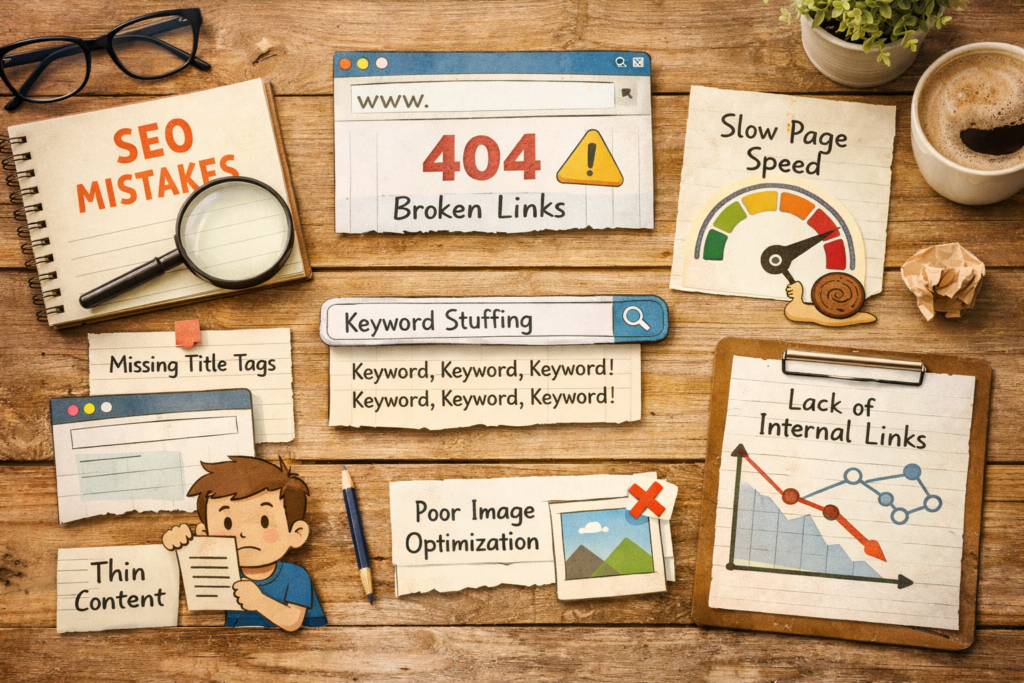
Common on-page errors that weaken SEO include:
- Keyword stuffing
- Thin or duplicate content
- Poor internal linking
- Ignoring mobile optimization
- Slow page speed
Fixing these issues improves relevance and user experience.
Common Off-Page SEO Mistakes
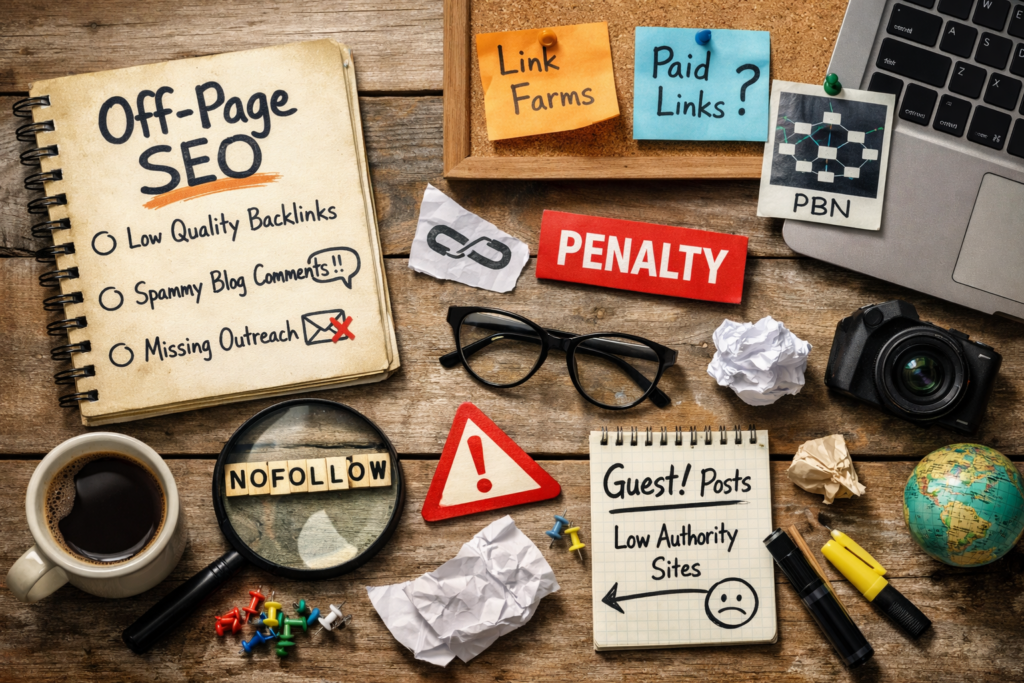
Off-page SEO mistakes can be risky:
- Buying low-quality backlinks
- Using spammy link networks
- Ignoring brand mentions
- Neglecting review management
- Inconsistent local citations
Avoiding risky off-page tactics safeguards rankings and authority.
Which Is More Important: On-Page or Off-Page SEO?
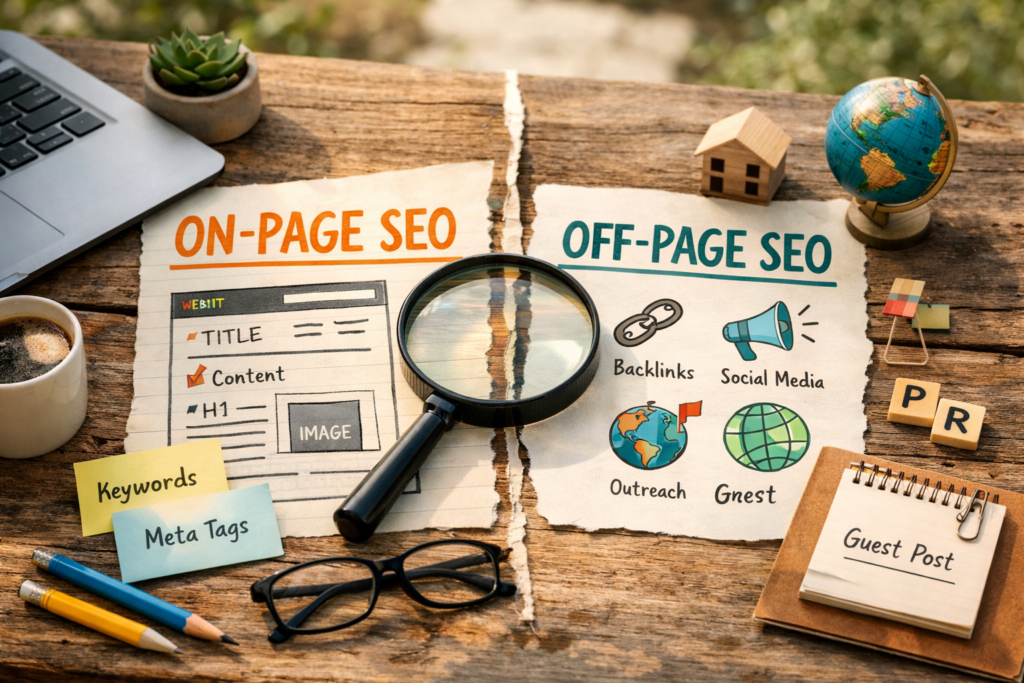
Both are essential. On-page SEO ensures content is relevant and understandable, while off-page SEO builds the authority needed to compete.
Best approach:
- Start with on-page SEO
- Gradually build off-page SEO
- Maintain both consistently
A balanced strategy ensures sustainable growth.
How Long Does SEO Take to Work?
- On-page SEO improvements can show results within weeks to a few months.
- Off-page SEO takes several months to build authority and influence rankings.
Together, they create compounding growth over time.
Building a Balanced SEO Strategy
To maximize SEO success:
- Optimize every page with on-page SEO
- Publish high-quality, valuable content
- Earn backlinks naturally
- Monitor performance
- Adapt to evolving search trends
Consistency is crucial for long-term results.
Conclusion
On-page and off-page SEO are equally vital pillars of a successful SEO strategy. On-page SEO ensures relevance, usability, and clarity, while off-page SEO builds trust and authority.Understanding on-page SEO vs off-page SEO enables businesses to make informed decisions, avoid mistakes, and achieve sustainable search growth. The strongest results occur when both strategies work together consistently over time.