
When you think about SEO, your mind probably jumps straight to your website. You think about keywords, fast loading speeds, and the high-quality content you’ve worked so hard to create. While those “on-page” elements are vital, they only tell half the story.
To truly dominate the search engine results pages (SERPs) in 2026, you need to look beyond your own borders. You need to focus on Off Page SEO.
Think of Off Page SEO as your digital reputation. It’s what the rest of the internet says about you. If On-Page SEO is like having a great resume, Off Page SEO is like having glowing letters of recommendation from industry leaders.
In this comprehensive guide, we are going to break down the exact strategies you need to build a powerhouse digital presence. We will explore high-quality backlinks, social signals, and the modern art of domain authority improvement.
What Exactly is Off Page SEO?
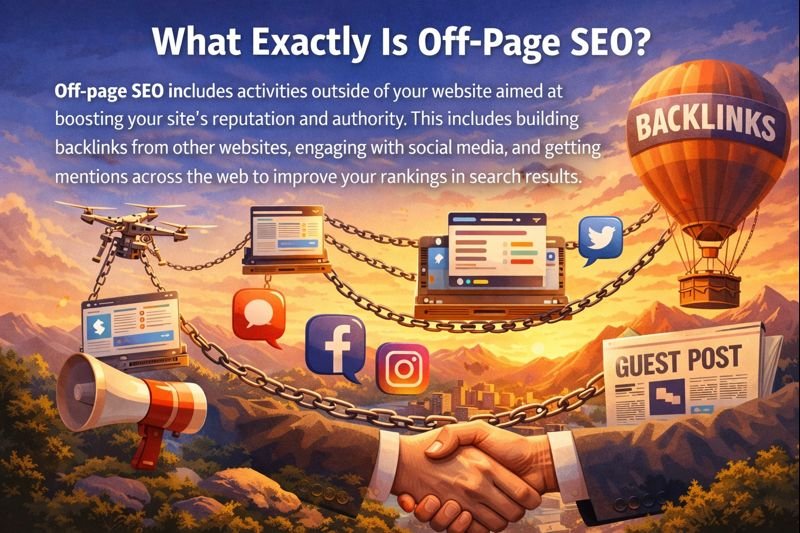
Before we dive into the “how,” let’s clarify the “what.” Off Page SEO refers to all the activities you perform outside of your own website to impact your rankings within search engine results pages.
While many people equate this solely with link building, it has evolved into much more. In the era of AI-driven search and sophisticated algorithms, Off Page SEO is about building Expertise, Experience, Authoritativeness, and Trustworthiness (E-E-A-T).
Search engines like Google use these external signals to determine how much they should trust your content. If reputable sites link to you, and people are talking about you on social media, search engines assume your content is valuable.
The goal is simple: you want to convince both users and search engines that your site is the go-to resource in your niche.
Off Page SEO vs. On Page SEO: Key Differences
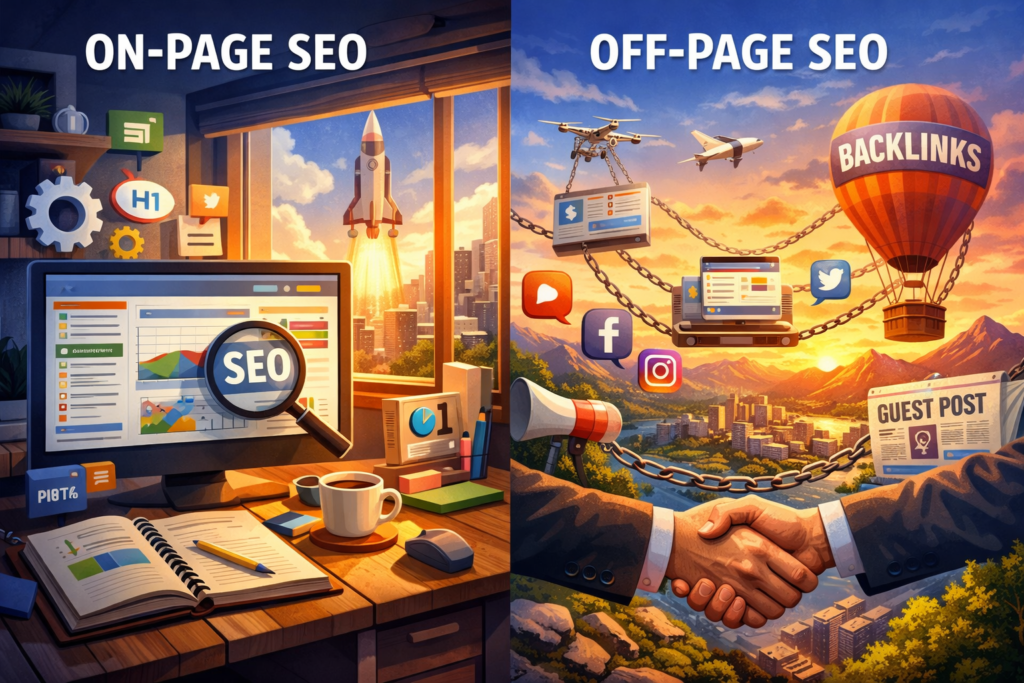
To succeed in digital marketing, you must understand how On-Page and Off-Page SEO work together. While they share the same goal—higher rankings—their methods are completely different.
On-Page SEO consists of actions you take within your own website. This includes writing content, using keywords, optimizing meta tags, and improving site speed. These factors are entirely under your control.
On the other hand, Off Page SEO involves signals that come from outside your website. It tells search engines what others think of your site. If On-Page SEO is your website’s “personality,” then Off-Page SEO is its “popularity.”
A healthy balance is essential. Simply building a great website isn’t enough; you have to prove to the world (and search engines) that your content is credible and worth sharing.
Essential Off Page SEO Techniques for 2026
The landscape of SEO is always shifting. What worked five years ago might get you penalized today. In 2026, the focus has shifted from “quantity” to “meaningful engagement.”
Digital PR and Brand Mentions
One of the most effective off page seo techniques today is Digital PR. This isn’t just about getting a link; it’s about getting mentioned in the news or on high-traffic industry blogs.
Even unlinked brand mentions—where a site talks about your brand but doesn’t include a clickable link—now carry weight. Search engines are now smart enough to associate your brand name with specific topics and authority.
Content Marketing for Natural Backlinks
Content marketing is the engine behind organic off-page growth. When you create content that solves problems or provides new data, people naturally want to reference it.
These are known as “Natural Backlinks.” Google values these links the most because they are given without any incentive. Infographics, original research papers, and detailed “How-to” guides are excellent for earning these assets.
Influencer Collaboration
Collaborating with influencers in your niche can skyrocket your reach. When an authority figure shares your resource, it acts as a massive “vote of confidence.” This doesn’t always require a paid partnership; it often involves co-creating valuable content like webinars or podcasts that benefit both audiences.
White Hat vs. Black Hat Off Page SEO
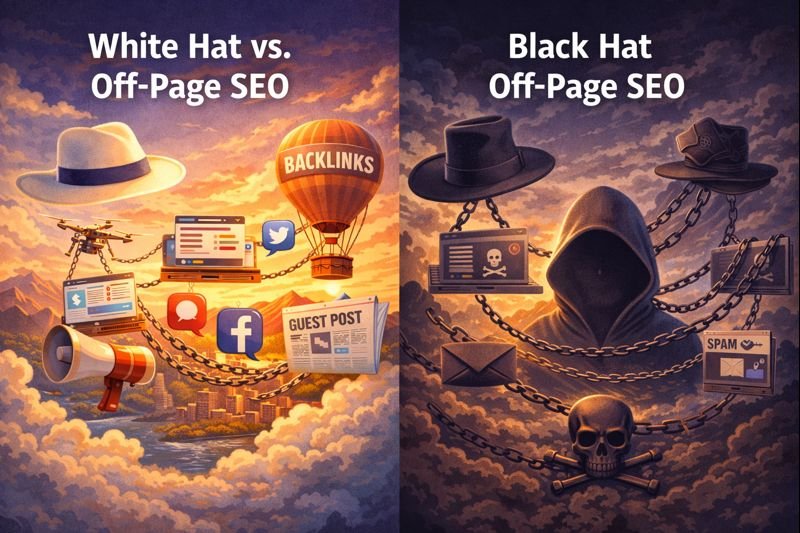
There are two main paths in the SEO world: the ethical route and the dangerous shortcut.
White Hat Off Page SEO refers to ethical practices that follow search engine guidelines. This involves hard work, such as creating great content and building real relationships. The results are long-lasting, and your website remains safe from penalties.
Black Hat Off Page SEO relies on shortcuts and manipulation. This includes buying spammy links, using link farms, and automated software to post thousands of irrelevant comments.
While Black Hat tactics might show a temporary spike in rankings, Google’s AI-driven algorithms are now incredibly efficient at spotting spam. The result is usually a manual penalty or your website being removed from search results entirely.
The Power of High Quality Backlinks
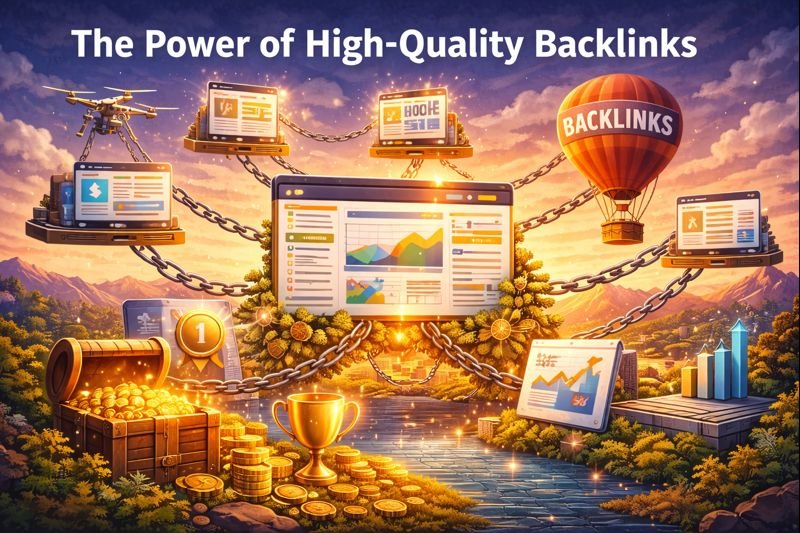
If Off Page SEO is a kingdom, backlinks are the currency. However, not all currency is created equal. In 2026, one link from a prestigious, relevant site is worth more than 1,000 links from random, low-quality blogs.
What Makes a Backlink “High Quality”?
A high-quality backlink has three main characteristics:
- Relevance: The linking site should be in a niche related to yours.
- Authority: Links from sites with high trust scores and significant traffic pass more “link juice.”
Placement: An editorial link placed naturally within a helpful paragraph is far more valuable than a link buried in a footer or sidebar.
The Skyscraper Technique 2.0
To earn these links, you need to create “linkable assets.” Find a piece of content in your niche that is already performing well and getting links. Then, create something even better—more comprehensive, more recent, or better designed. Reach out to those who linked to the original and show them your improved version.
Guest Blogging for SEO: The Right Way
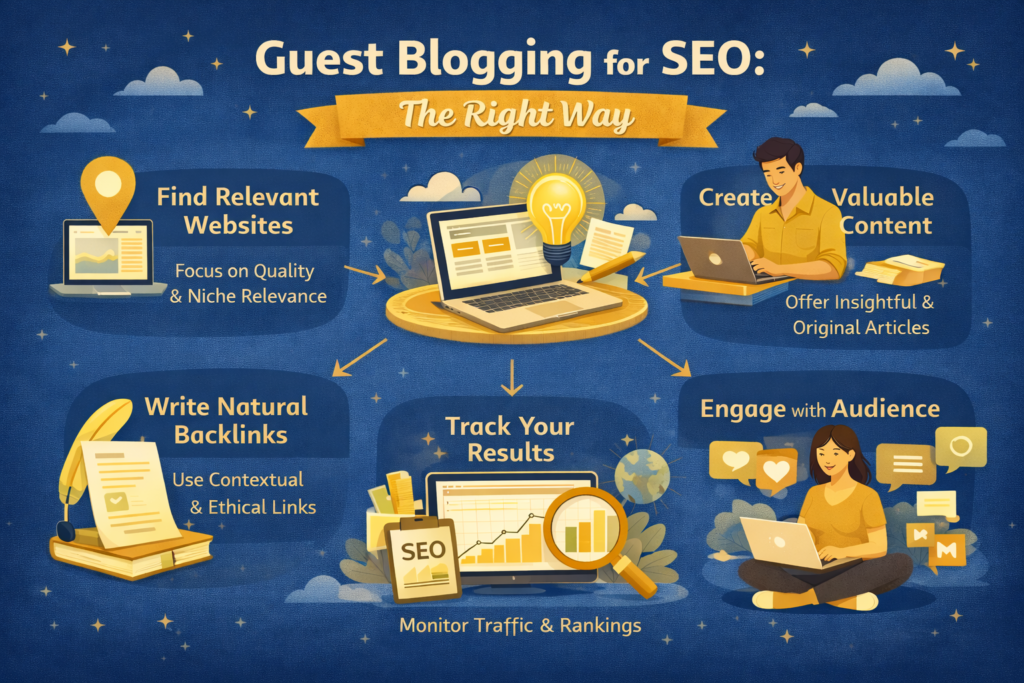
Guest blogging has returned to its roots as a powerful tool for thought leadership rather than a spammy link tactic.
Focus on Value, Not Just Links
When you approach guest blogging for seo, your primary goal should be to provide immense value to the host’s audience. High-tier publications only accept original, well-researched content. By providing this, you establish yourself as an expert, making the backlink a natural byproduct of your authority.
Mastering Social Media SEO
Does a “Like” on social media directly improve your Google ranking? Not exactly. However, social media seo plays a vital indirect role.
Increasing Content Visibility
Social media is a massive distribution engine. Sharing your posts on LinkedIn, X (Twitter), or Instagram increases the chance of an influencer or journalist seeing your work. This visibility is often the spark that leads to high-authority backlinks.
Branded Searches and Trust
A strong social presence encourages “branded searches.” When people see your helpful tips on social media, they are more likely to search for your brand directly on Google. High volumes of branded searches signal to Google that you are a trusted entity.
Domain Authority Improvement Strategies
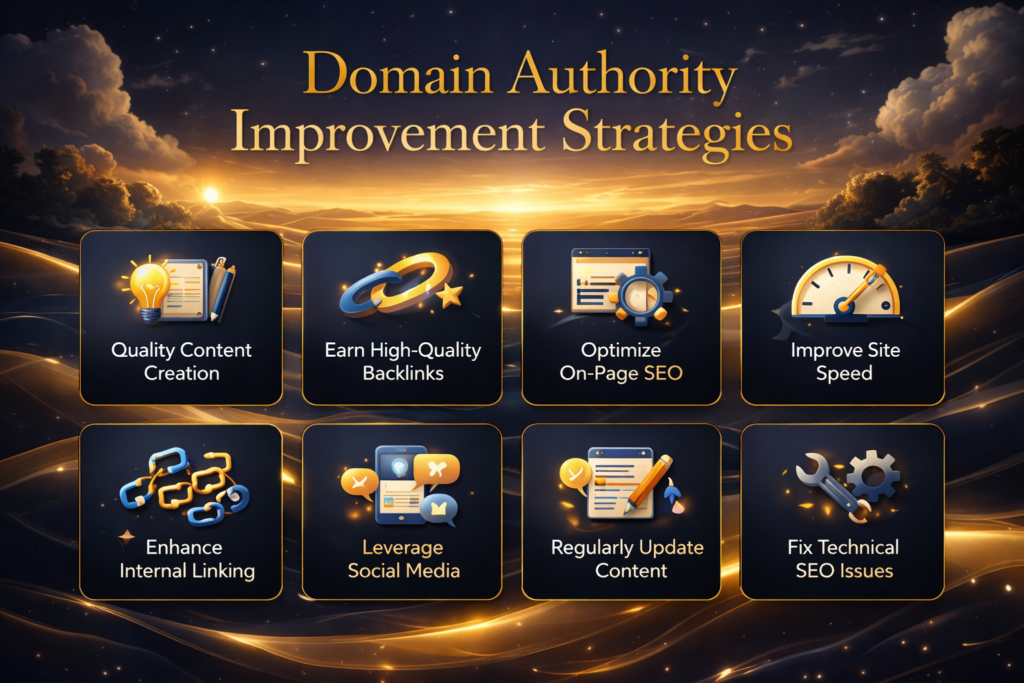
Domain authority improvement is a long-term strategy. It requires a consistent approach to building your site’s reputation across the web.
Consistent Link Velocity
Search engines look for natural growth. Earning 500 links in one day and then none for a month looks suspicious. Aim for a steady “link velocity” by earning high-quality links consistently over time.
Clean Up Your Backlink Profile
Audit your backlinks regularly using tools like Semrush or Ahrefs. If you find toxic or spammy links, use Google’s Disavow Tool to ensure they don’t drag down your site’s reputation.
Common Off Page SEO Mistakes to Avoid
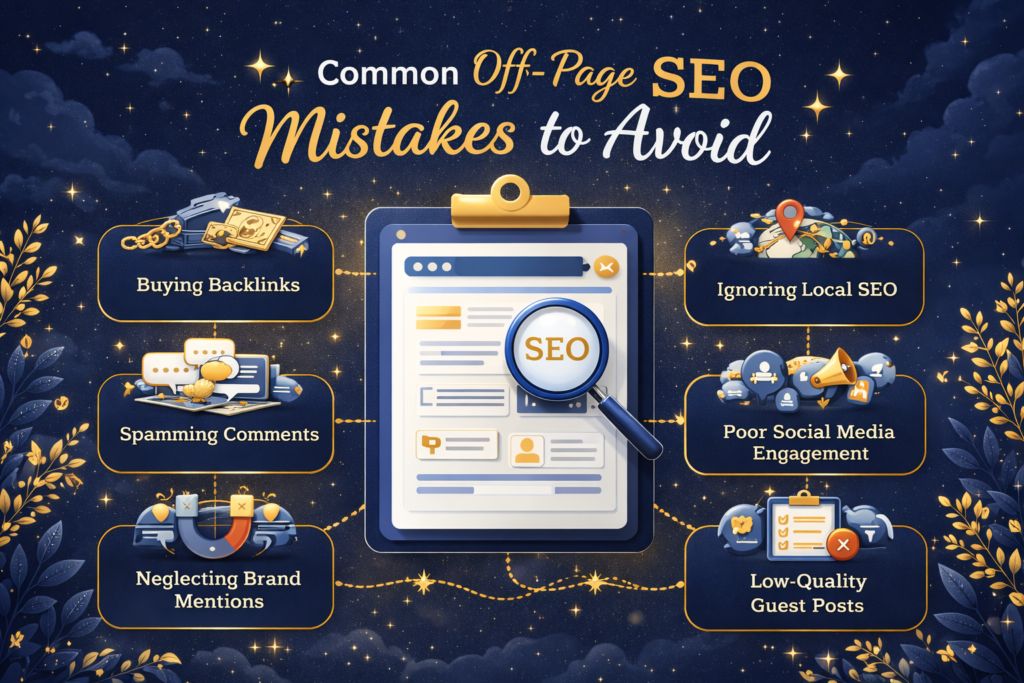
Avoid these common pitfalls that can harm your rankings:
- Quantity Over Quality: Focusing on the number of links rather than the authority of the source.
- Irrelevant Links: Getting links from websites that have nothing to do with your niche.
- Over-Optimized Anchor Text: Using the exact same keyword for every link, which looks unnatural to search engines.
- Buying Links: This is a direct violation of Google’s policies and can lead to permanent bans.
Ignoring No-Follow Links: A natural link profile should have a healthy mix of both Do-Follow and No-Follow links.
Off Page SEO Checklist 2026
Use this checklist to keep your strategy on track:
- [ ] Identify top influencers and bloggers in your niche.
- [ ] Set up Google Alerts to monitor your brand mentions.
- [ ] Aim for at least 2 high-quality guest posts per month.
- [ ] Update old content to make it “link-worthy” again.
- [ ] Optimize your social media bios with relevant keywords.
- [ ] Conduct a monthly audit for broken link building opportunities.
- [ ] Analyze competitor backlinks to find new outreach targets.
FAQs:
1. How important is off-page SEO for rankings?
Off-page signals are among the top ranking factors. While On-page SEO gets you into the race, Off-page SEO is what helps you win it by building authority.
2. Are social media links “Do-Follow”?
Most social media links are “No-Follow,” meaning they don’t pass direct authority. However, they are essential for driving traffic and increasing brand awareness.
3. How many backlinks do I need to rank?
There is no fixed number. It depends on your competition. In some niches, 10 high-quality links are better than 1,000 low-quality ones.
4. Does guest blogging still work in 2026?
Yes, as long as the focus is on providing high-quality content to a relevant audience rather than just “buying” a link.
5. How long does it take to see domain authority improvement?
DA is a slow-moving metric. With a consistent strategy, you can usually see noticeable changes within 3 to 6 months.
Conclusion
Off Page SEO is the art of building a brand that the internet trusts. It is about more than just numbers; it is about building relationships, providing value, and establishing yourself as a leader in your field.
By focusing on high-quality backlinks, strategic guest blogging, and a vibrant social media presence, you create an ecosystem that search engines cannot ignore. Remember, authority is earned through consistency and quality.